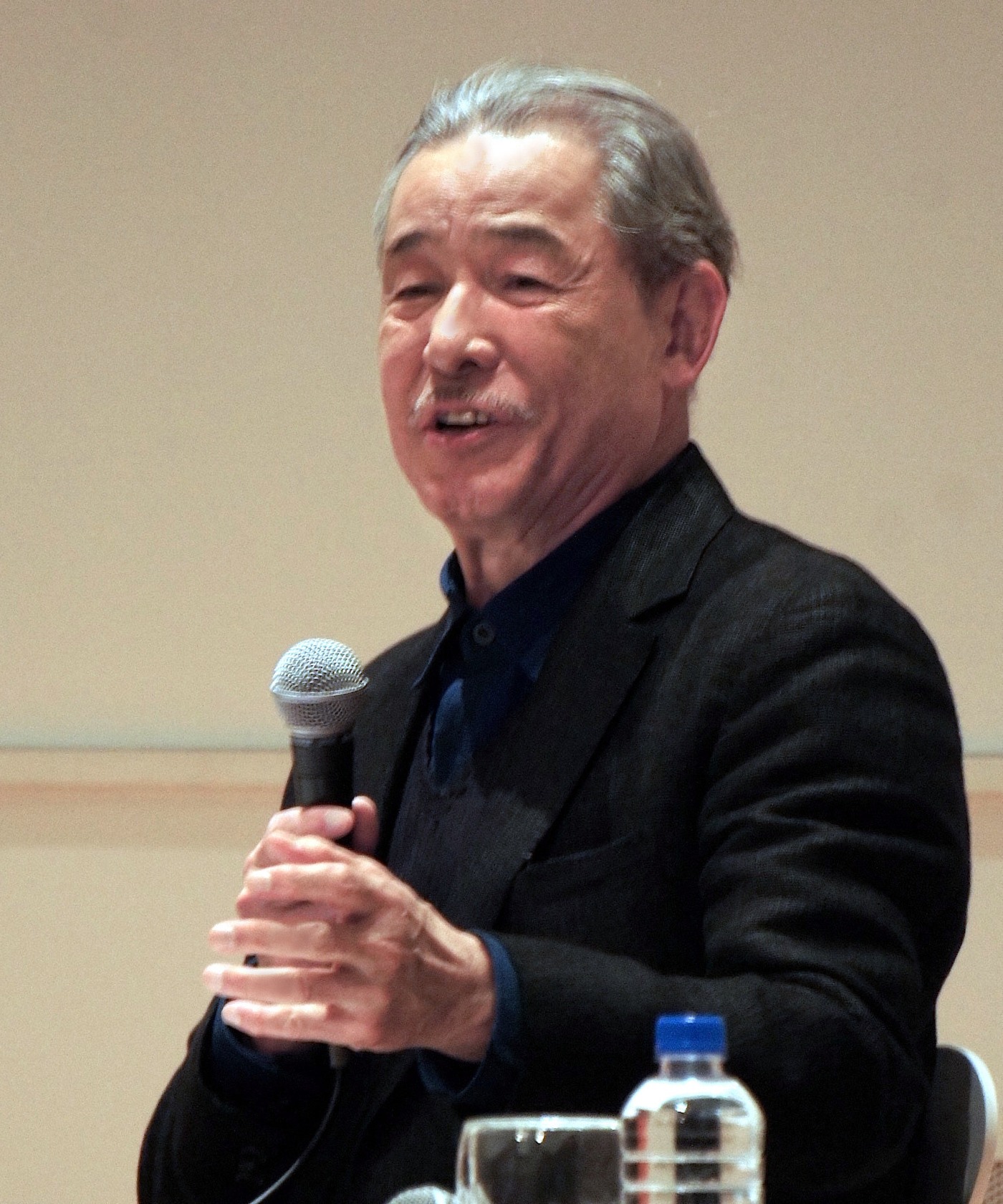
Contents — explore this biography
Tokyo, education and the making of a designerY’s and the arrival in ParisClothing as movement and structureY-3 and work beyond the runwayMuseum recognition and an enduring vocabularyTokyo, education and the making of a designer
Yohji Yamamoto was born in Tokyo in 1943. His route into fashion passed through law studies at Keio University before training at Bunka Fashion College. His mother’s work as a dressmaker provided a close connection to the practical world of clothing, while formal fashion education supplied another framework for developing it. These different experiences matter because his work combines an understanding of construction with a sustained questioning of what clothes are expected to communicate. Rather than treating a garment as a simple display of the body, Yamamoto has explored the space between fabric and wearer as an active part of design.
Y’s and the arrival in Paris
Yamamoto established Y’s in 1972 and presented his first collection in Paris in 1981. The expansion from a Japanese business to the international fashion calendar brought his approach before a wider audience. Asymmetrical cuts, generous proportions and a strong use of black became associated with his work, although its development cannot be reduced to a single color or silhouette. A sleeve, an uneven hem or an unexpected fold can change how the whole figure is perceived. Such decisions ask viewers to consider clothing as a constructed form with its own visual intelligence, rather than merely as decoration added to a conventional outline.
Clothing as movement and structure
The Victoria and Albert Museum describes Yamamoto’s contribution through his challenging of established conventions, his unconventional patterns and his attention to textiles. His designs often allow volume to gather around a wearer instead of fixing the body within a predetermined shape. The resulting relationship can change as someone walks, turns or sits. This helps explain why photographs alone offer an incomplete account of his work: fabric weight, balance and movement are part of the experience. His womenswear and menswear also complicate familiar distinctions between formal dress and informal ease, making room for ambiguity without abandoning careful construction or the demands of making wearable objects.
Y-3 and work beyond the runway
In 2002 Yamamoto began his role as creative director of Y-3, the collaborative project with adidas that connected his design language to sportswear. It represents a partnership between a designer and a major sports company, with technical products and fashion presentation meeting within a shared identity. His wider practice also includes costumes and creative collaborations associated with figures such as Wim Wenders, Takeshi Kitano and Pina Bausch’s Tanztheater Wuppertal. These settings extend the question of movement beyond a fashion show. A costume must participate in a performance and respond to the distinct demands of a stage, a screen or an individual performer.
Museum recognition and an enduring vocabulary
In 2011 the Victoria and Albert Museum presented a major Yamamoto exhibition, its first solo presentation of his work in the United Kingdom. More than sixty womenswear and menswear garments were brought together in an installation designed by Masao Nihei, placing clothing within an environment that invited close attention to form and material. The exhibition followed earlier museum presentations in Florence, Paris and Antwerp. This institutional history gives his career a context beyond seasonal novelty. His significance lies in a sustained vocabulary of proportion, construction and movement that helped broaden international discussion of fashion, while remaining grounded in the particular experience of wearing a garment.
Career timeline
Born in Tokyo, Japan.
Established Y’s.
Presented his first Paris collection.
Began the Y-3 creative partnership with adidas.
The Victoria and Albert Museum staged his first UK solo exhibition.
Selected works & milestones
Y’s
The business through which his independent fashion practice developed.
Paris debut
A collection introducing his approach to the international fashion calendar.
Y-3
A creative partnership connecting his work with adidas sportswear.
Yohji Yamamoto at the V&A
A major museum presentation of womenswear and menswear.
- Yohji Yamamoto — official designer biography
- Victoria and Albert Museum — 2011 exhibition announcement
- Embassy of Japan in the UK — Yamamoto exhibition biography
- Fédération de la Haute Couture et de la Mode — Yohji Yamamoto
Published 2026-11-09. Sources reviewed for this edition. Independent coverage of public professional activity.