Contents — explore this biography
Hiroshima, graphic design and an international educationA piece of cloth and the moving bodyPleats Please and the sequence of manufactureA-POC and collaboration in textile productionInstitutions, recognition and a continuing legacyHiroshima, graphic design and an international education
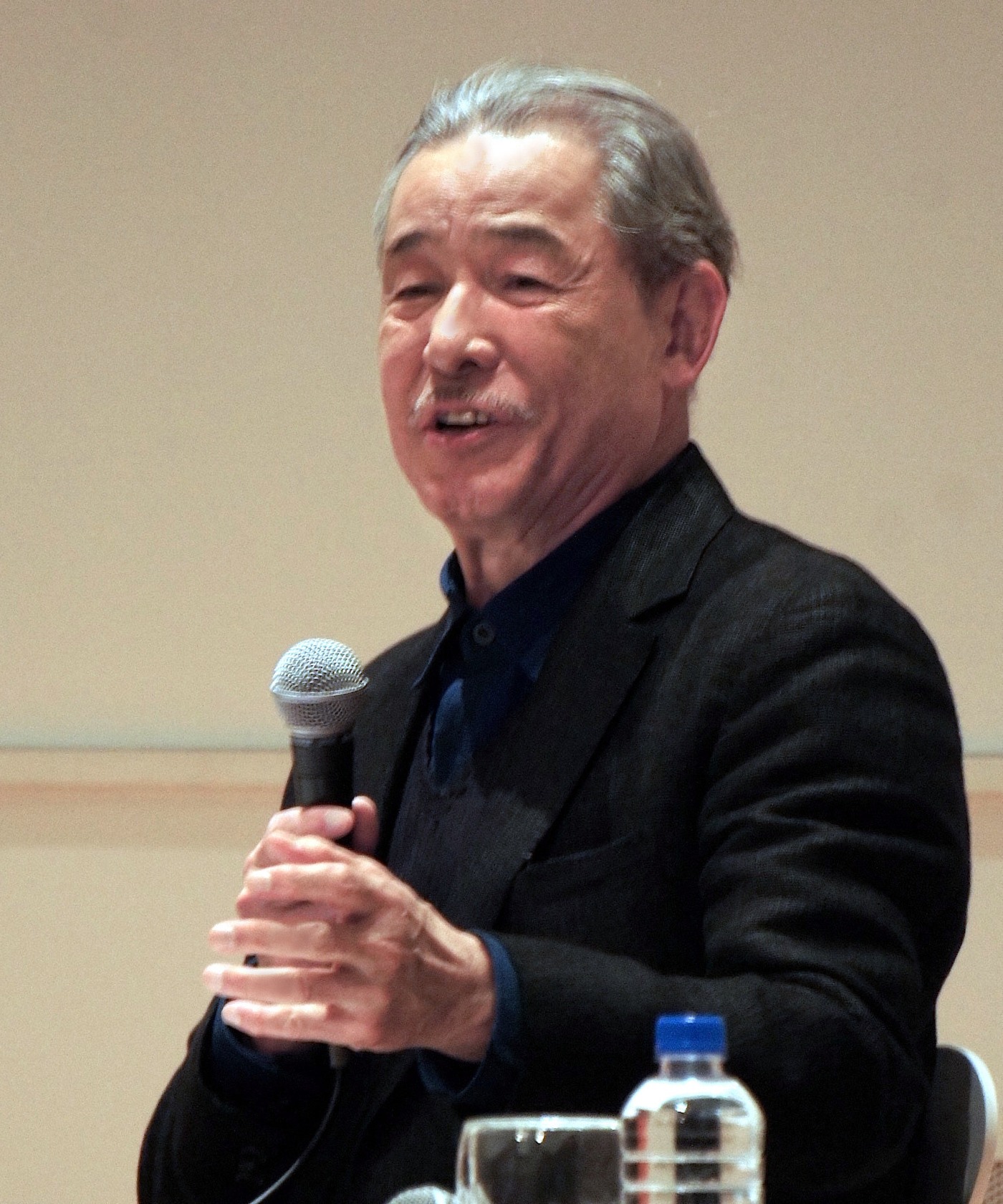
Issey Miyake was born in Hiroshima in 1938 and studied graphic design at Tama Art University. He later worked in Paris and New York before returning to Japan and establishing Miyake Design Studio in 1970. This route connected him with different systems of making and presenting clothing while retaining an interest in the cultural and material traditions of Japan. His biography should therefore be understood through exchange rather than a simple opposition between East and West. He brought questions about movement, textile production and the transformation of flat cloth into three-dimensional form into an international fashion conversation.
A piece of cloth and the moving body
Miyake’s design practice repeatedly returned to the possibilities contained in a piece of cloth. The relationship between a planar material and a moving body could generate forms that differed from conventional tailoring, particularly when folding, wrapping or technically developed textiles became part of the process. Presentations and exhibitions allowed these questions to be explored beyond a standard runway format. The Kyoto Prize recognized his contribution to design through the relationship between fabric, three-dimensionality and everyday use. His experiments were not confined to appearances: they also concerned how clothing could be made, handled, stored and experienced by people with different patterns of movement.
Pleats Please and the sequence of manufacture
Pleats Please became a defining project in the early 1990s. Museum accounts date its launch to 1993, while the company identifies spring/summer 1994 as its first collection presented as an independent brand. The distinction reflects launch timing and fashion seasons rather than two incompatible histories. The process treated completed garments with heat-set pleating, allowing their final form and stretch to emerge through a controlled sequence of making. The resulting clothes combined sculptural possibilities with practical concerns such as lightness and ease of care. They demonstrate how a change in manufacturing method can produce a recognizable aesthetic rather than merely serving an existing design.
A-POC and collaboration in textile production
Developed with Dai Fujiwara, A-POC extended Miyake’s investigation of a piece of cloth into a production system in which garments could emerge from a continuous textile structure. The project brought design into close contact with industrial processes and questioned familiar divisions between a finished object and the material from which it is made. Such work depended on collaboration with textile specialists and manufacturers, and it should not be presented as the result of a single isolated invention. Its importance lies in opening possibilities for how the designer, production system and eventual wearer might participate differently in the creation and adaptation of clothing.
Institutions, recognition and a continuing legacy
Miyake’s exhibitions and awards placed his work within a wider design culture, including the Kyoto Prize in 2006 and the Praemium Imperiale in 2005. The Miyake Issey Foundation, formally established in 2004, connected his interest in making with research, cultural exchange and the development of design understanding. He died in 2022, leaving a body of work that continued through institutions, teams and named projects. His legacy combines accessible clothing with sustained material experimentation. It is best understood by examining specific processes and collaborative achievements, while distinguishing the designer’s lifetime contribution from the subsequent collections produced by the organization carrying his name.
Career timeline
Born in Hiroshima.
Established Miyake Design Studio.
Launched Pleats Please, followed by its spring/summer 1994 independent-brand collection.
Received the Kyoto Prize in Arts and Philosophy.
Died after a career connecting fashion, textiles and design research.
Selected works & milestones
Miyake Design Studio
An institutional base for his clothing and textile experiments.
Pleats Please
Heat-set pleating connected sculptural form with everyday practicality.
A-POC
A collaboration with Dai Fujiwara investigated continuous textile production.
The Miyake Issey Foundation
An institution supporting a broader understanding of design culture.
- Issey Miyake — official selected biography
- Issey Miyake — Pleats Please brand history
- The Met — Pleats Please design and launch
- Kyoto Prize — Issey Miyake biography and citation
- Praemium Imperiale — Issey Miyake
- The Miyake Issey Foundation — institutional history
Published 2026-11-09. Sources reviewed for this edition. Independent coverage of public professional activity.