Contents — explore this biography
Origins and early enterpriseClothing and a changing social worldFragrance and the little black dressWar and the historical recordThe postwar returnFounder and enduring houseOrigins and early enterprise
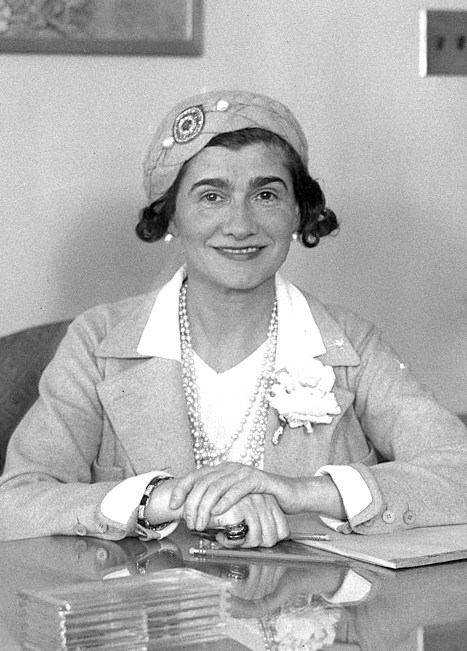
Gabrielle Bonheur Chanel was born in Saumur on 19 August 1883 and grew up in difficult circumstances. Sewing, performance and contact with well-connected patrons preceded her independent fashion business. A millinery shop opened on rue Cambon in 1910, followed by ventures in seaside resorts. Her development depended on customers, financing and skilled workers as well as a distinctive understanding of dress.
Clothing and a changing social world
Chanel adapted elements associated with sportswear and menswear into clothing for women, using materials including jersey. The resulting effect could look simple while requiring careful construction. Her contribution belongs to a broader transformation in women’s clothing rather than the invention of comfort by one person. Changes in work, leisure and public life created an audience for less rigid approaches to fashionable appearance.
Fragrance and the little black dress
Chanel No. 5 appeared in 1921, developed with perfumer Ernest Beaux. Giving the designer all credit for its formula would erase the specialist who created it. The little black dress and coordinated accessories expanded a recognizable visual identity. Clothing, scent and branding reinforced one another, while the commercial arrangements behind perfume involved partners and ownership structures distinct from the couture workshop.
War and the historical record
She closed her couture house in 1939 and remained associated with occupied Paris during the Second World War. Historical research documents her relationship with German officer Hans Günther von Dincklage and involvement in German intelligence-related activity. These issues belong in a full biography rather than being omitted from a fashion success story. Some aspects of the wartime record remain debated, requiring attention to evidence rather than a simplified heroic counter-narrative.
The postwar return
Chanel returned to couture with a new collection in 1954. Her suits, tweeds and accessories found a substantial audience, especially internationally. The 2.55 shoulder bag appeared in 1955. Her late work continued to depend on textile suppliers and specialist makers. The impression of effortless style was produced through a commercial and material network that extended well beyond the designer’s own public image.
Founder and enduring house
Chanel died in Paris in January 1971. The company continued under later ownership and creative leadership, so modern collections should not be attributed to the founder. Her importance includes the integration of products into a coherent identity, alongside changes in silhouette and materials. That design legacy can be studied precisely while retaining the ethical and political dimensions of her life rather than using artistic influence as an excuse to suppress them.
Career timeline
Opens the independent millinery shop on rue Cambon.
Introduces the fragrance created with Ernest Beaux.
The style becomes a defining part of her public reputation.
Presents the postwar return collection.
Introduces the shoulder bag named for its month and year.
Selected works & milestones
Chanel No. 5
Introduces the fragrance created with Ernest Beaux.
Little black dress
The style becomes a defining part of her public reputation.
Couture return
Presents the postwar return collection.
2.55 handbag
Introduces the shoulder bag named for its month and year.
- The Metropolitan Museum of Art — Chanel and the house
- V&A — Chanel’s design vocabulary and Ernest Beaux
- Chanel — founder’s birth record
- HistoryExtra — historical review of Chanel’s wartime activities
- Coco Chanel — biographical reference and source notes
Published 2026-10-31. Sources reviewed for this edition. Independent coverage of public professional activity.