Contents — explore this biography
Before the artistic careerDrawing and the Dutch yearsParis and a changing paletteArles and the imagined studioSaint-Rémy and AuversLetters, circulation and legacyBefore the artistic career
Vincent Willem van Gogh was born in Zundert in 1853. He worked in the art trade, teaching and religious settings before deciding to become an artist around 1880. These changes of direction preceded his celebrated French period. His younger brother Theo provided financial and emotional support, and their letters are essential evidence for understanding the work without relying only on later legends.
Drawing and the Dutch years
Van Gogh initially concentrated on drawing, working people and rural life. The Potato Eaters of 1885 was an ambitious attempt to assemble figures within a dark interior. Its restrained palette differs sharply from the colour associated with his later reputation. The development makes clear that his mature visual language was learned and revised rather than arriving as an unchanging instinct at the beginning.
Paris and a changing palette
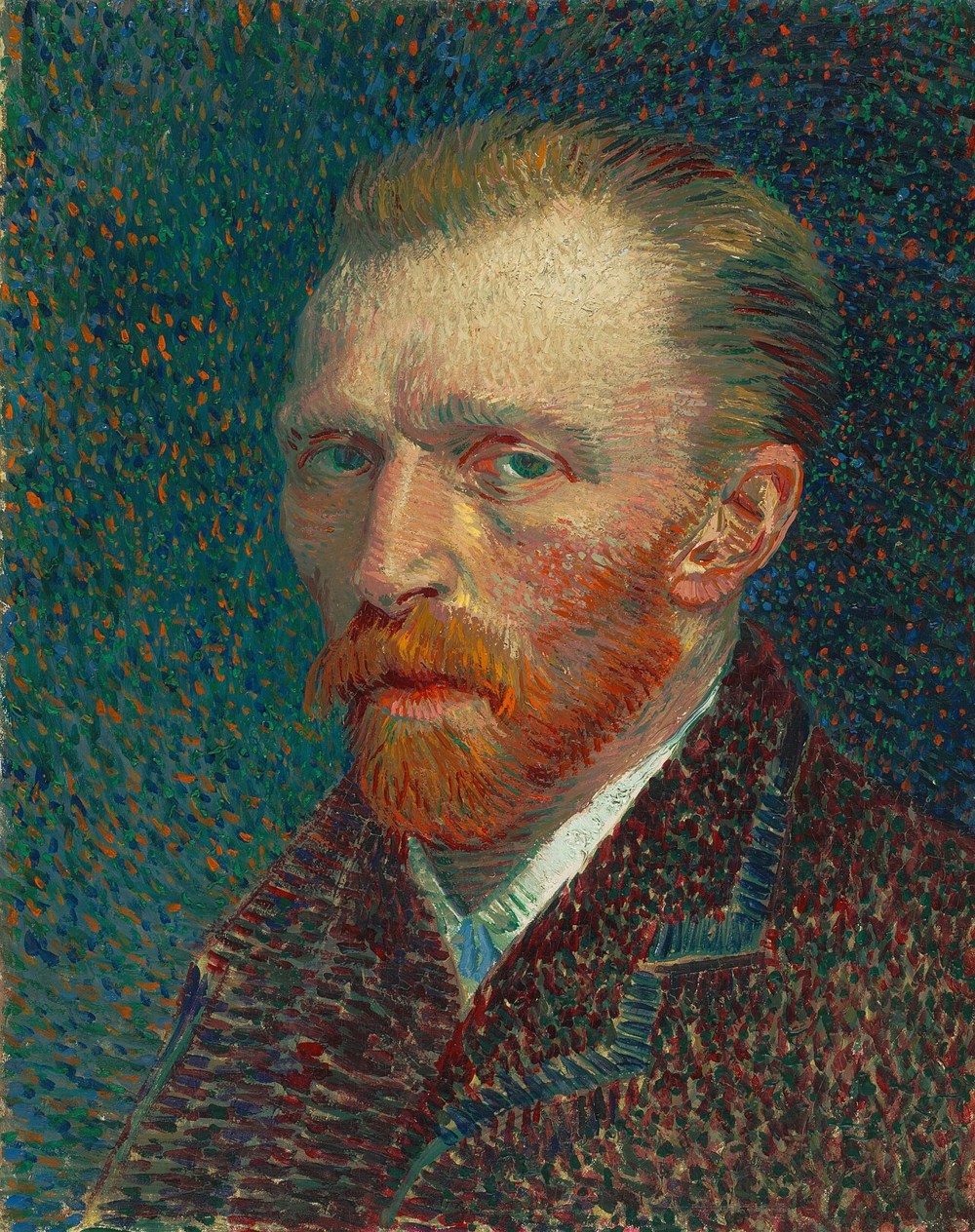
In 1886 he joined Theo in Paris, where encounters with Impressionism, Neo-Impressionism and Japanese prints changed his approach. Brighter colour and varied brushwork entered his paintings. He also experimented with self-portraiture, an accessible means of studying a figure without paying a model. These images are exercises in pictorial decisions as well as records of his face.
Arles and the imagined studio
He moved to Arles in 1888 and painted orchards, sunflowers, bedrooms and local people. He hoped to establish a community of artists, and Paul Gauguin stayed with him that autumn. The relationship ended amid a serious crisis. The paintings should not be treated as simple medical symptoms: they involve deliberate decisions about colour, outline and emotional emphasis within an ambitious artistic programme.
Saint-Rémy and Auvers
Van Gogh entered a hospital at Saint-Rémy in 1889 and continued working when able, producing landscapes, studies and compositions including The Starry Night. In 1890 he moved to Auvers-sur-Oise, where he worked intensively before dying on 29 July. Retrospective diagnoses remain disputed. The documented chronology supports serious illness without making speculation about a precise condition the centre of the biography.
Letters, circulation and legacy
Theo and, subsequently, Johanna van Gogh-Bonger helped preserve and promote the work. Its later fame depended on this sustained activity as well as the paintings themselves. The correspondence reveals attention to other artists, materials, reading and audiences. Van Gogh’s contribution lies in purposeful transformations of observed experience, while the familiar story of an isolated genius can conceal both his artistic exchanges and the people who protected his legacy.
Career timeline
Commits to developing as an artist after earlier occupations.
Paints the major Dutch-period composition.
Moves to Paris and encounters new colour and print traditions.
Creates the Sunflowers and other defining southern-French works.
Paints the nocturnal composition during the Saint-Rémy period.
Selected works & milestones
The Potato Eaters
Paints the major Dutch-period composition.
Paris
Moves to Paris and encounters new colour and print traditions.
Arles
Creates the Sunflowers and other defining southern-French works.
The Starry Night
Paints the nocturnal composition during the Saint-Rémy period.
- Van Gogh Museum — life, works and archival context
- Van Gogh Letters — scholarly edition of the correspondence
- Vincent van Gogh — biographical reference and source notes
Published 2026-10-31. Sources reviewed for this edition. Independent coverage of public professional activity.