Contents — explore this biography
Le Havre and painting outdoorsModern subjects and an independent exhibitionLight as a sustained problemSeries and changing conditionsGiverny and the water gardenLater years and receptionLe Havre and painting outdoors
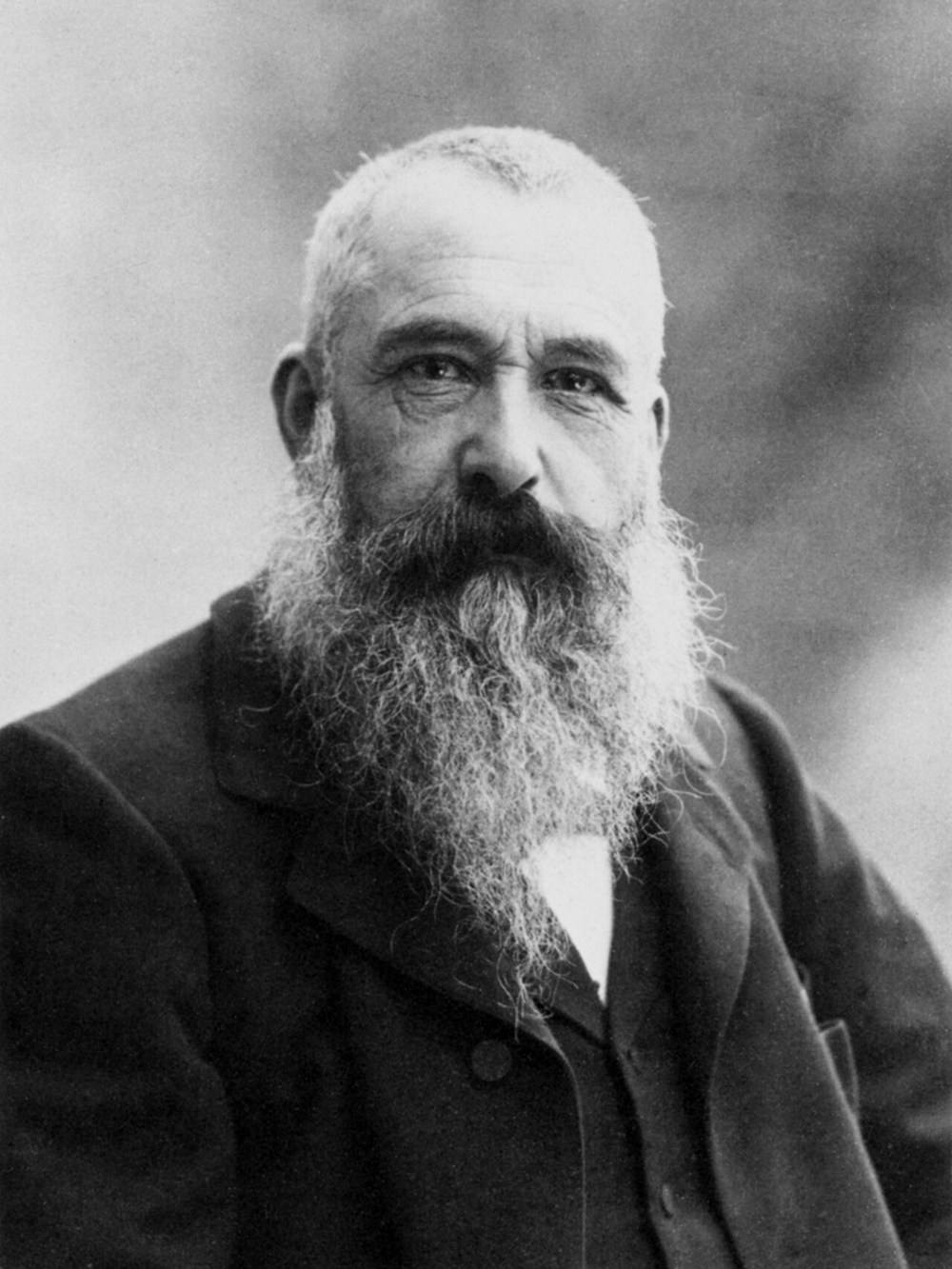
Oscar-Claude Monet was born in Paris in 1840 and grew up in Le Havre. Eugène Boudin encouraged him to paint directly from nature, an important influence on his development. In Paris he encountered other young painters, including Renoir, Sisley and Bazille. The exchange of methods among these artists preceded the later public recognition of Impressionism as a coherent movement.
Modern subjects and an independent exhibition
Monet painted rivers, railway environments, urban scenes and leisure alongside more traditional landscape subjects. The independent exhibition of 1874 included Impression, Sunrise, a painting whose title helped supply the movement’s name through a critic’s response. The event was a collective initiative. Monet’s prominence should not erase the other artists who created and contested the new exhibition culture.
Light as a sustained problem
His pictures often register the effects of atmosphere through visible touches of colour. This does not mean every canvas was completed at a single outdoor sitting. Paintings could be reworked and compared over time. The apparent immediacy of a scene is an artistic construction, involving choices about edges, colour relationships and what the viewer should recognize as a passing visual experience.
Series and changing conditions
From the late nineteenth century Monet developed groups of related subjects, including grainstacks, poplars and Rouen Cathedral. Repetition made it possible to compare differences in light and weather against a relatively stable motif. The series did not simply duplicate a successful image: their purpose depended on variation. Individual canvases also acquired new meaning when viewed as parts of a sustained investigation.
Giverny and the water garden
He settled at Giverny in 1883 and shaped the garden that supplied material for many later works. Water lilies, reflections and the Japanese-style bridge became recurring subjects. In the large late paintings, horizon and solid ground can recede, leaving the viewer surrounded by water, colour and reflected light. The garden was both a lived environment and a carefully cultivated artistic resource.
Later years and reception
Monet died at Giverny in 1926. The large Water Lilies ensemble installed at the Musée de l’Orangerie opened to the public in 1927. Later artists and critics have seen connections between these paintings and abstraction, but Monet remained engaged with observed motifs. His career is best understood as a prolonged examination of perception rather than a simple rejection of recognizable subject matter.
Career timeline
Exhibits Impression, Sunrise in the first Impressionist exhibition.
Settles in the village that becomes central to his later work.
Develops major grainstack and cathedral sequences.
Works on increasingly large images of the water garden.
The large Water Lilies rooms open after his death.
Selected works & milestones
Giverny
Settles in the village that becomes central to his later work.
Serial subjects
Develops major grainstack and cathedral sequences.
Water Lilies
Works on increasingly large images of the water garden.
Orangerie installation
The large Water Lilies rooms open after his death.
- National Gallery — Monet biography
- Musée de l’Orangerie — the Water Lilies
- Claude Monet — biographical reference and source notes
Published 2026-10-31. Sources reviewed for this edition. Independent coverage of public professional activity.