Contents — explore this biography
Pittsburgh and commercial trainingConsumer images and PopSilkscreen and the repeated faceThe Factory and moving imagesViolence, publishing and later commissionsHistorical meaningPittsburgh and commercial training
Andrew Warhola was born in Pittsburgh in 1928 to a family of Central European background. He studied at the Carnegie Institute of Technology and moved to New York after graduating in 1949. Commercial illustration gave him experience in the production of persuasive, reproducible images. His later fine art developed from this professional knowledge rather than from an absolute separation between advertising and artistic practice.
Consumer images and Pop
In the early 1960s Warhol brought familiar commercial subjects into paintings, including Campbell’s soup cans and Coca-Cola bottles. The 1962 soup-can exhibition made repetition central to the encounter with the work. He was a leading figure in Pop art, alongside others working with popular imagery. Calling him its sole inventor would erase the different artists and national contexts through which the movement emerged.
Silkscreen and the repeated face
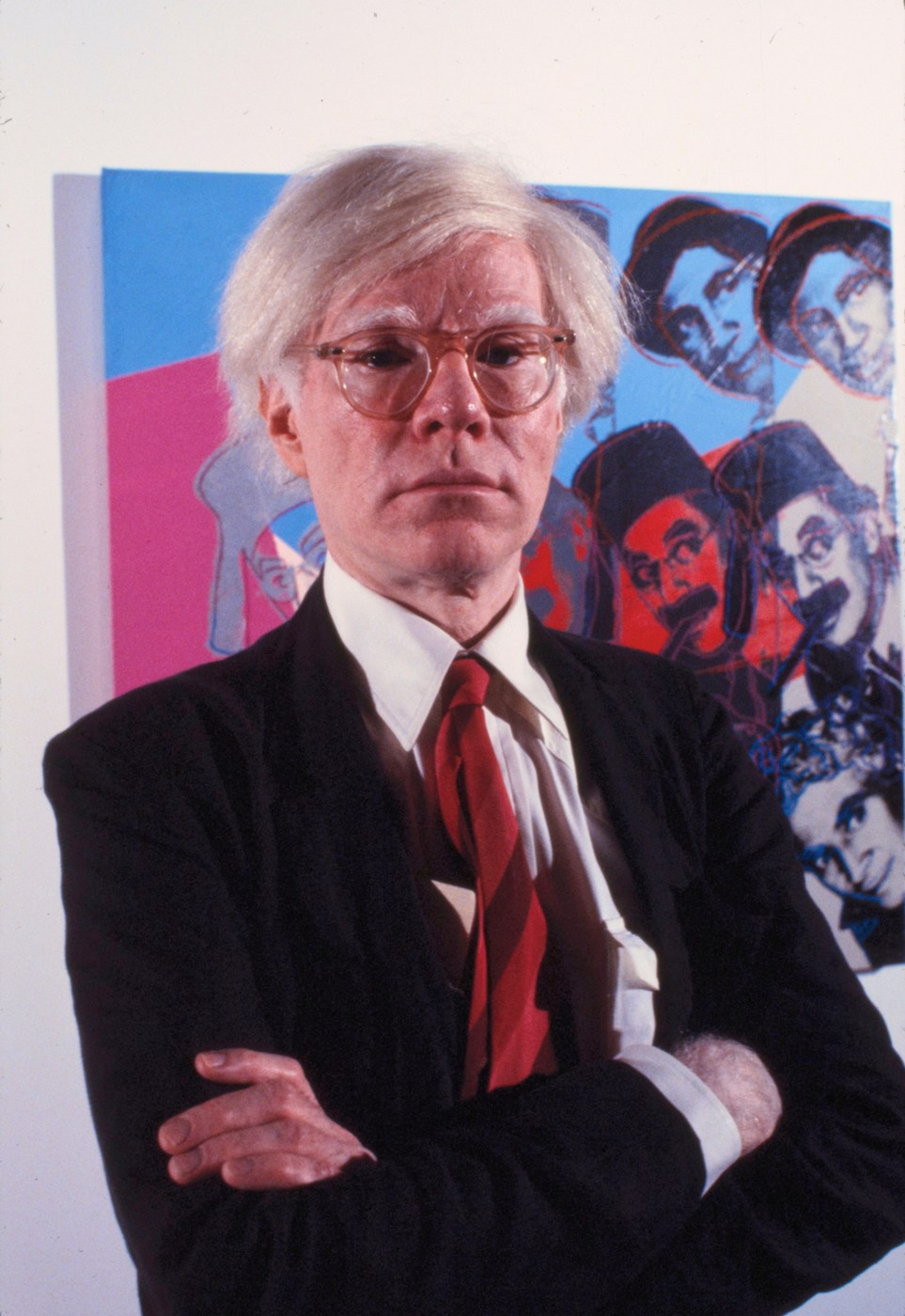
Photographic silkscreen allowed the same source image to recur with variations in ink, colour and registration. Marilyn Monroe, Elvis Presley and political figures appeared as both individuals and already-circulating media images. Repetition can create recognition while draining an image of apparent intimacy. The uneven surface of a print also prevents these works from being perfectly identical industrial copies.
The Factory and moving images
His studio, known as the Factory, became a production space and social setting involving assistants, performers and collaborators. Films such as Sleep and Empire tested expectations about duration and action. The Screen Tests used a minimal filming situation to make self-presentation visible. Painting, cinema and the public persona belonged to a connected practice rather than separate careers pursued without overlap.
Violence, publishing and later commissions
The Death and Disaster pictures brought accidents and public violence into the same repeated-image language as consumer goods. Warhol survived a shooting in 1968 and later continued with commissioned portraits, publishing and other projects. Interview magazine began in 1969. These activities reveal a working artist attentive to distribution and social networks as well as the images displayed on gallery walls.
Historical meaning
Warhol died in New York in 1987. His work remains useful for examining how an image becomes familiar and how familiarity becomes commercial or social value. That relevance should not turn a historical biography into a claim that he predicted every digital platform. The documented practice already offers a precise account of replication, celebrity, collaborative labour and the uneasy relationship between visibility and human presence.
Career timeline
Moves to New York after graduating in art.
Exhibits the Campbell’s Soup Cans series.
Develops a collaborative studio and experimental film practice.
Establishes the magazine with collaborators.
Dies in New York after a multidisciplinary career.
Selected works & milestones
Soup cans
Exhibits the Campbell’s Soup Cans series.
Factory and film
Develops a collaborative studio and experimental film practice.
Interview
Establishes the magazine with collaborators.
Death
Dies in New York after a multidisciplinary career.
- Whitney Museum — Warhol biography and media practice
- National Gallery of Art — Warhol career and collection
- The Andy Warhol Museum — life and work
- Andy Warhol — biographical reference and source notes
Published 2026-10-31. Sources reviewed for this edition. Independent coverage of public professional activity.