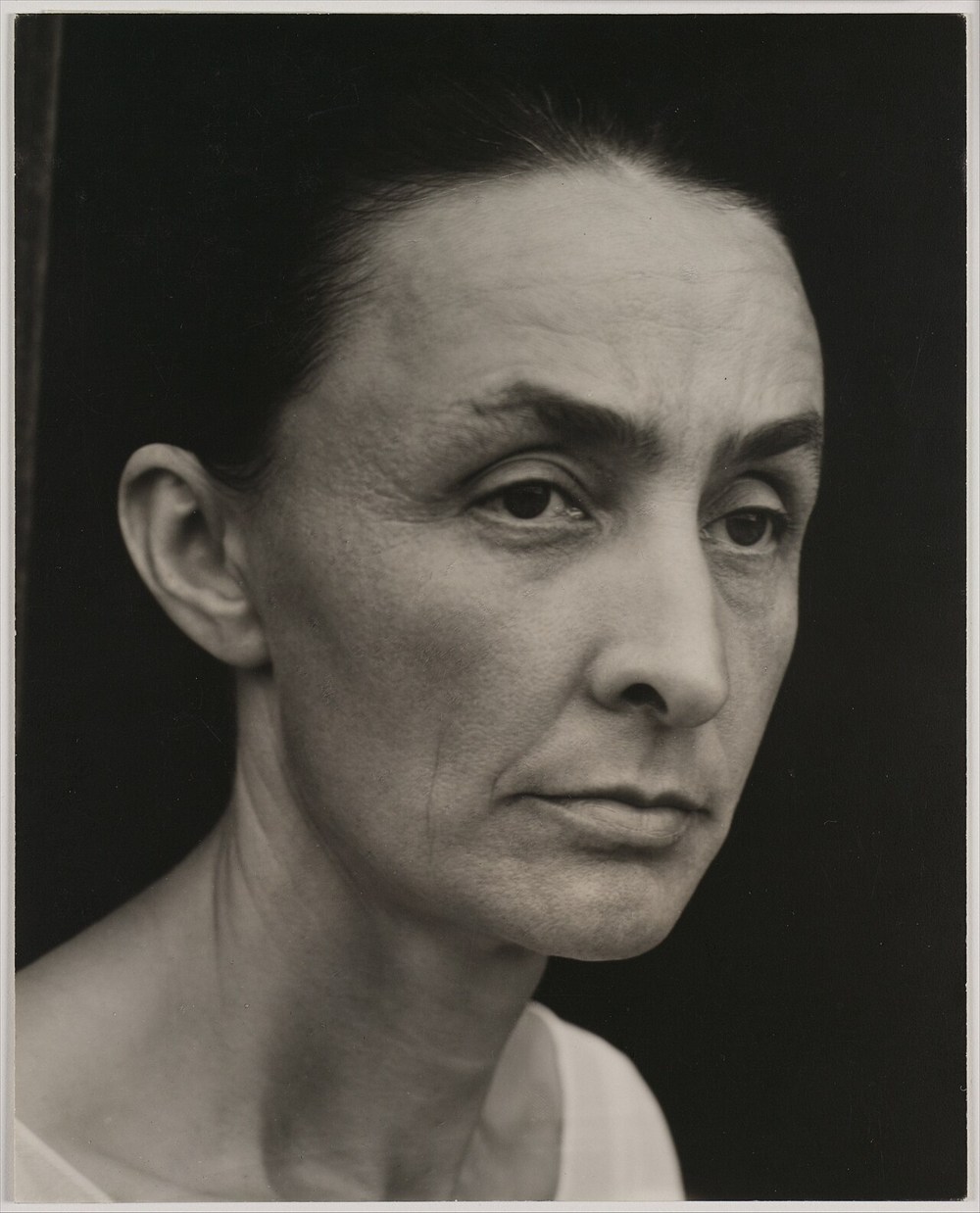
Contents — explore this biography
Study and the search for a languageCharcoal drawings and New YorkFlowers, scale and interpretationArchitecture and the SouthwestPermanent move and late practiceA distinct modernismStudy and the search for a language
Georgia Totto O’Keeffe was born near Sun Prairie, Wisconsin, in 1887. She studied at the Art Institute of Chicago and the Art Students League in New York before working and teaching. Exposure to Arthur Wesley Dow’s ideas encouraged her to think about composition through relationships of line and colour. The shift gave her a means of moving beyond the realistic exercises of her early training.
Charcoal drawings and New York
Her abstract charcoal drawings reached Alfred Stieglitz, who exhibited them at his gallery in 1916. She later moved to New York and developed a professional and personal relationship with him; they married in 1924. His support mattered, but it should not substitute for an account of her own decisions. The drawings already demonstrate a deliberate attempt to establish an independent visual vocabulary.
Flowers, scale and interpretation
O’Keeffe’s enlarged flower paintings turn familiar forms into complex arrangements of contours and colour. Their scale directs attention to subjects that might otherwise be overlooked. Critics frequently imposed gendered or sexual interpretations that she disputed. A responsible account distinguishes those interpretations from the artist’s stated aims and avoids presenting one reading as the hidden truth of every flower image.
Architecture and the Southwest
New York skyscrapers offered another field of simplified shape and scale. A 1929 visit to New Mexico opened a different sustained relationship with place, including mountains, architecture, bones and desert plants. These subjects are more than decorative signs of the American West: their arrangement tests the boundary between identifiable things and increasingly abstract patterns. Repeated visits deepened that investigation over decades.
Permanent move and late practice
After Stieglitz’s death, O’Keeffe settled permanently in New Mexico in 1949. Her homes at Ghost Ranch and Abiquiú became important working environments. Travel and aerial viewpoints also influenced later images. Declining eyesight eventually changed how she worked, but she continued artistic activity with assistance. Her late career therefore includes adaptation rather than a simple endpoint at the first sign of physical limitation.
A distinct modernism
O’Keeffe died in 1986. Her work offers a sustained response to the seen world without fitting neatly into a choice between pure abstraction and literal description. The controlled edges, cropping and shifts in scale are central to that response. Her biography also shows how an artist can benefit from a powerful professional circle while resisting the interpretations and public identity that the same circle helps create.
Career timeline
Stieglitz exhibits her abstract charcoal drawings in New York.
Marries Stieglitz while developing major flower and city subjects.
Makes the visit that begins a sustained Southwestern connection.
Moves permanently to New Mexico.
Dies after a career spanning much of American modernism.
Selected works & milestones
Marriage and mature period
Marries Stieglitz while developing major flower and city subjects.
New Mexico
Makes the visit that begins a sustained Southwestern connection.
Permanent relocation
Moves permanently to New Mexico.
Death
Dies after a career spanning much of American modernism.
- Georgia O’Keeffe Museum — artist biography
- Smithsonian American Art Museum — career and collection
- Georgia O’Keeffe — biographical reference and source notes
Published 2026-10-31. Sources reviewed for this edition. Independent coverage of public professional activity.