Contents — explore this biography
From factory work to an unusual opportunityThe women’s cosmonaut groupVostok 6 and the first female spaceflightEducation and a highly visible public roleA milestone and the question of continuityFrom factory work to an unusual opportunity
Valentina Vladimirovna Tereshkova was born in 1937 in Maslennikovo, near Yaroslavl, in the Soviet Union. Her early working life included employment in the textile industry, while she continued her education through correspondence study. Amateur parachuting became especially important to her future. She made her first jump in 1959 and developed skills that matched the demands of the Vostok spacecraft, whose occupants returned to the ground separately from their capsules. Her selection therefore emerged from a particular combination of working experience, physical preparation and the priorities of the Soviet space programme.
The women’s cosmonaut group
In 1962 Tereshkova joined a group of five women chosen for cosmonaut training. Preparation included physical testing, isolation exercises, weightless flights and parachute practice. The selection took place during the Cold War, when space achievements carried diplomatic and ideological weight as well as scientific importance. Soviet authorities wanted to demonstrate that a woman could undertake orbital flight. The programme gave its candidates demanding operational responsibilities, but it also placed them within a tightly managed public narrative. Tereshkova’s achievement is best understood by holding those technical and political settings together.
Vostok 6 and the first female spaceflight
Tereshkova launched aboard Vostok 6 on June 16, 1963, becoming the first woman in space. During a flight lasting nearly three days she completed 48 orbits of Earth. Vostok 5, carrying Valery Bykovsky, was also in orbit during part of her mission. The flights did not involve docking, although they formed a coordinated programme. Tereshkova communicated with the ground and carried out observations while adapting to the conditions of flight. On June 19 she returned to Earth, ejecting from the capsule and landing by parachute in accordance with Vostok procedures.
Education and a highly visible public role
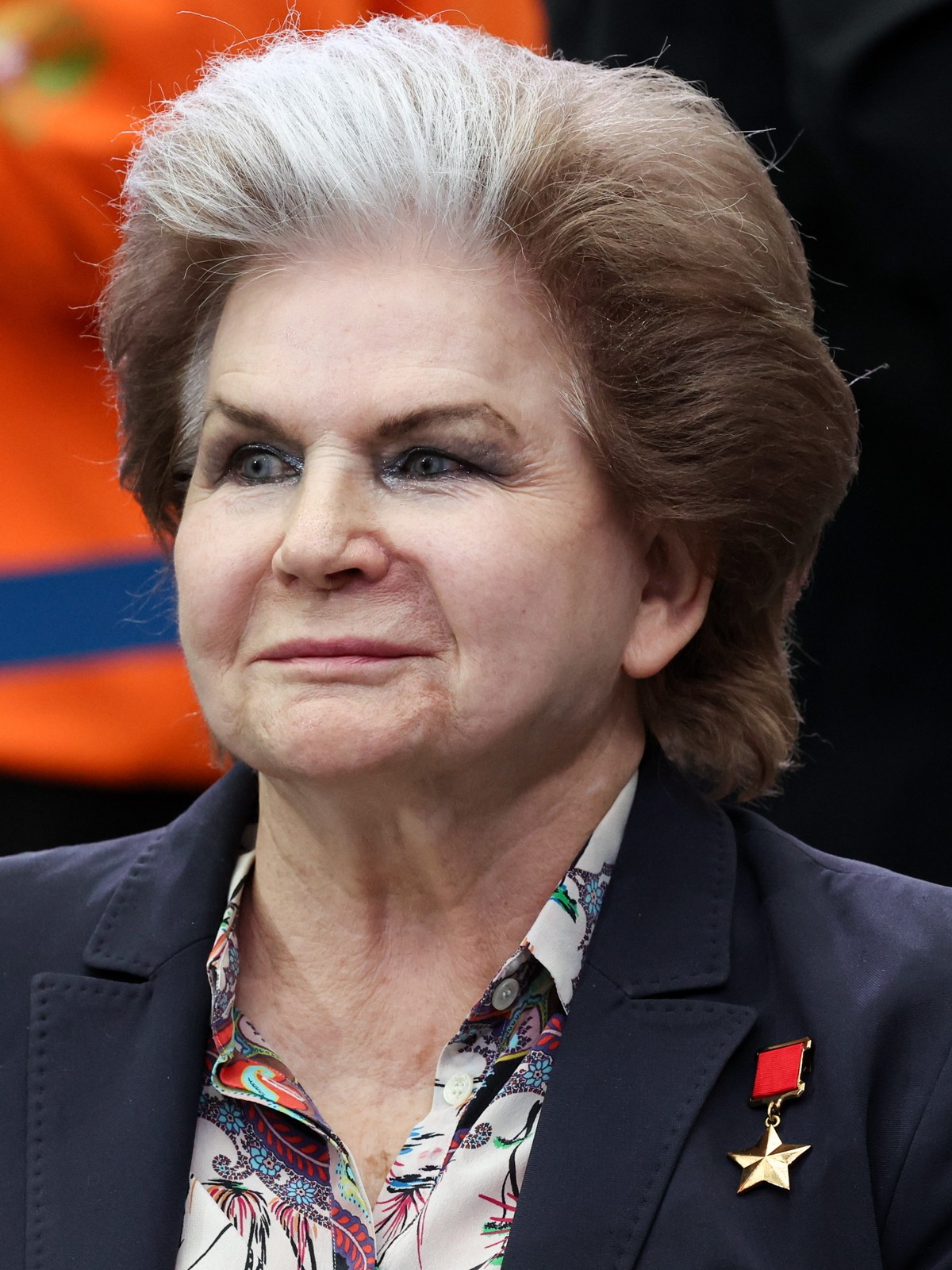
After the mission, Tereshkova received the title Hero of the Soviet Union and became an internationally recognizable representative of Soviet spaceflight. She studied at the Zhukovsky Air Force Engineering Academy, graduating in 1969. Her subsequent career included political and representative work rather than another space mission. This distinction matters because recognition as a pioneering cosmonaut did not mean a continuous sequence of later flights. Her public appearances, international visits and organizational responsibilities turned the experience of one orbital mission into a much longer career in public life.
A milestone and the question of continuity
Tereshkova’s flight expanded the demonstrated possibilities of human space exploration, yet women’s participation did not immediately become routine. Almost two decades passed before another woman flew in space. That gap shows why a first achievement and lasting institutional access are different historical developments. Her biography consequently belongs both to the history of spacecraft operations and to the history of representation. The importance of Vostok 6 rests on an accomplished mission whose significance extended beyond its duration, while the wider story requires attention to the opportunities available to those who followed. The next woman to reach space was Soviet cosmonaut Svetlana Savitskaya, in 1982.
Career timeline
Born in Maslennikovo, near Yaroslavl.
Made her first parachute jump.
Selected for the women’s cosmonaut training group.
Flew Vostok 6 from June 16 to June 19.
Graduated from the Zhukovsky Air Force Engineering Academy.
Selected works & milestones
Cosmonaut training
Prepared through physical, operational and parachute training.
Vostok 6
First spaceflight by a woman, completing 48 Earth orbits.
Hero of the Soviet Union
State honour awarded following the mission.
Engineering academy graduation
Continued technical education after her historic flight.
- European Space Agency — first woman in space
- NASA — Valentina Tereshkova
- New Mexico Museum of Space History — Tereshkova
- NASA — Ride and Tereshkova in spaceflight history
Published 2026-11-07. Sources reviewed for this edition. Independent coverage of public professional activity.