Contents — explore this biography
Mathematics and the decision to change careersThe West Area Computing UnitLeadership under unequal conditionsPreparing for electronic computationRecognition of a collective contributionMathematics and the decision to change careers
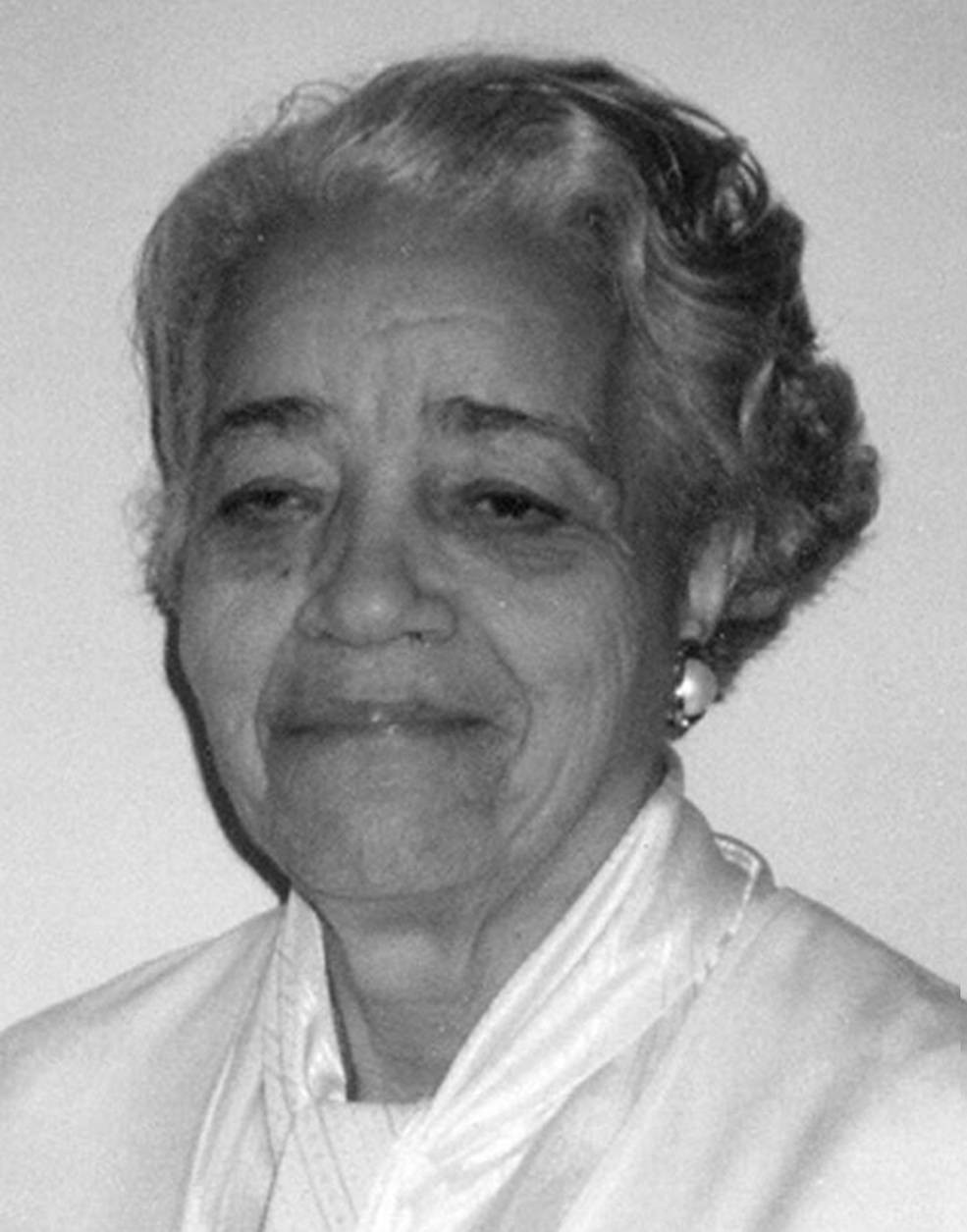
Dorothy Johnson Vaughan was born in Kansas City, Missouri, in 1910. She graduated from Wilberforce University in 1929 with a mathematics degree and worked as a teacher before entering aeronautical research. In 1943 she joined the National Advisory Committee for Aeronautics at Langley in Virginia. Wartime demand created opportunities for mathematically trained women, although access remained shaped by racial segregation and unequal professional expectations. Vaughan brought classroom experience into a setting where calculations had immediate engineering uses, beginning a career that would span both human calculation and electronic computing.
The West Area Computing Unit
At Langley, Vaughan worked in the segregated West Area Computing Unit, whose Black women employees performed mathematical analysis for research projects. Their work involved processing experimental information and producing dependable numerical results for engineers. The word computer then described a person as well as an emerging machine. Understanding that usage helps recover the intellectual work behind a title that can otherwise sound mechanical. Accuracy required technical knowledge, judgment and the ability to connect a calculation with the problem it was intended to solve, often under demanding schedules.
Leadership under unequal conditions
In 1949 Vaughan became head of the West Area Computing Unit, a significant supervisory appointment at NACA. She assigned work, developed the capabilities of her team and advocated for employees across an institution where authority was unequally distributed. Her importance therefore includes management as well as individual calculation. A research laboratory depends on the organization of work: someone must recognize skills, communicate requirements and ensure that results can be trusted. Vaughan’s leadership helped make those processes function while her colleagues navigated barriers that extended well beyond the mathematics itself.
Preparing for electronic computation
As electronic machines changed research practice, Vaughan developed expertise in FORTRAN programming and encouraged others to prepare for the transition. In 1958 NACA became NASA, and the segregated computing unit was dissolved as operations were reorganized. Vaughan joined the Analysis and Computation Division, working within the expanding field of electronic computation. NASA’s account also connects her with the Scout launch-vehicle programme. Her career illustrates how professional survival can require learning a new method while retaining the analytical understanding that makes the method useful. The arrival of machines changed the work without eliminating the need for human expertise.
Recognition of a collective contribution
Vaughan retired in 1971 and died in 2008. Later public attention, including the history presented in Hidden Figures, brought her work to audiences who had rarely encountered the people behind aeronautical calculation. Recognition should not reduce her to a supporting character in another person’s achievement. She was a mathematician, a supervisor and a participant in a major technological transition. Her legacy also directs attention toward the collaborative nature of research: laboratories advance through the connected efforts of people whose names are not always attached to the final aircraft, mission or published result.
Career timeline
Born in Kansas City, Missouri.
Graduated in mathematics from Wilberforce University.
Joined NACA at Langley.
Became head of the West Area Computing Unit.
Died on November 10, after retiring from NASA in 1971.
Selected works & milestones
Langley computing work
Applied mathematical analysis to aeronautical research.
West Area leadership
Led the unit until its dissolution in 1958.
Analysis and Computation Division
Moved into the reorganized NASA computing structure.
FORTRAN and Scout work
Contributed to the transition to electronic computation.
- NASA — Dorothy Vaughan biography
- NASA Langley — Dorothy J. Vaughan
- National Park Service — Places of Hidden Figures
- NASA — Vaughan’s retirement party
Published 2026-11-07. Sources reviewed for this edition. Independent coverage of public professional activity.