Contents — explore this biography
A physicist before a public milestoneSelection and the work of a mission specialistTwo Challenger missionsInvestigation, research and public responsibilityMaking science feel attainableA physicist before a public milestone
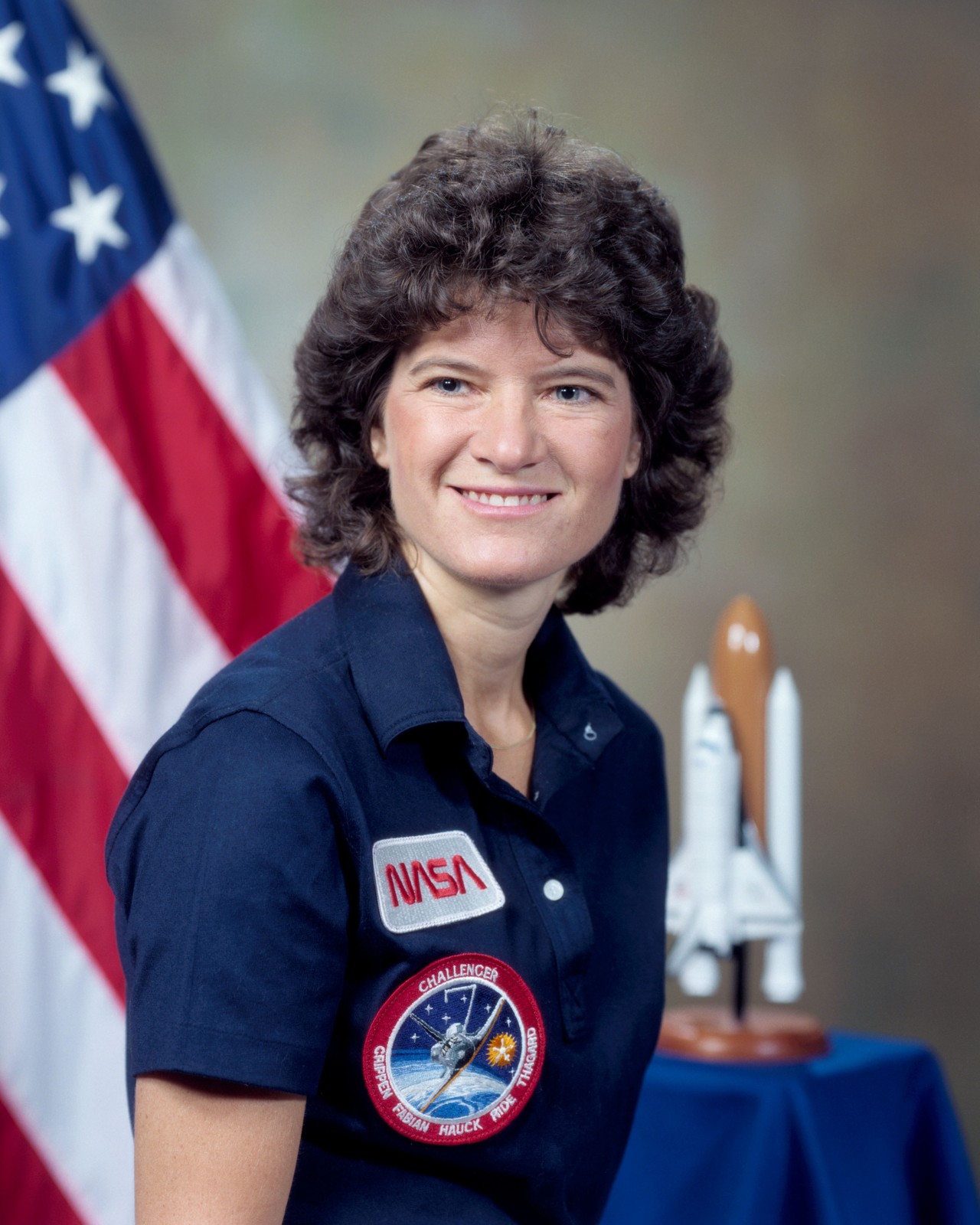
Sally Kristen Ride was born in Los Angeles in 1951. Her education brought together interests that were sometimes treated as separate: literature, experimental science and competitive sport. At Stanford University she earned undergraduate degrees in physics and English, then continued through a doctorate in physics in 1978. This training provided the technical foundation for her later astronaut career. Her importance is often introduced through a single historic flight, but that flight depended on years of study, selection and preparation. Understanding her scientific background helps explain the professional work behind the public symbol.
Selection and the work of a mission specialist
NASA selected Ride in 1978 as part of an astronaut class that included the agency’s first six female astronaut candidates. She trained for the space shuttle programme, a system designed to combine transport, research and satellite operations. The mission specialist role required familiarity with equipment and procedures rather than simply occupying a passenger seat. Ride worked on the shuttle’s robotic arm and served in communications duties before flying. These responsibilities connected laboratory thinking with operational discipline: a task had to be understood well enough to be performed reliably inside a complicated spacecraft.
Two Challenger missions
On June 18, 1983, Ride launched aboard Challenger on STS-7, becoming the first American woman in space. The crew deployed communications satellites and worked with a recoverable research platform. Her second mission, STS-41-G in 1984, again took place aboard Challenger and included Earth-observation work. These flights belonged to a collective enterprise involving astronauts, flight controllers, engineers and researchers. Her historic first did not make her the first woman in space worldwide; Soviet cosmonaut Valentina Tereshkova had flown in 1963. Preserving that distinction makes both achievements clearer.
Investigation, research and public responsibility
Ride’s career also involved assessing the risks and future direction of human spaceflight. She served on the commission investigating the 1986 Challenger accident and later participated in the investigation of the 2003 Columbia disaster. She led a strategic study commonly called the Ride Report, published in 1987, examining possibilities for NASA’s future. After leaving the astronaut corps, she pursued university research and teaching, including a professorship at the University of California, San Diego. These activities extended her contribution from operating spacecraft to scrutinizing institutions and helping shape scientific priorities.
Making science feel attainable
In 2001 Ride co-founded Sally Ride Science with Tam O’Shaughnessy and three colleagues. The organization developed educational programmes and resources intended to broaden participation in science, technology, engineering and mathematics. Role models mattered in this work because students often judge what is possible partly through the people they see doing it. Ride died in 2012. Her legacy joins technical competence, institutional service and education. It is strongest when the visibility of her achievement directs attention toward the training, opportunities and encouragement that allow more people to enter scientific work. Ride’s support for EarthKAM also connected students with the practical study of Earth from orbit.
Career timeline
Born in Los Angeles.
Completed her physics doctorate and was selected by NASA.
Became the first American woman in space on STS-7.
Co-founded Sally Ride Science.
Died on July 23.
Selected works & milestones
STS-7
Space shuttle mission involving satellite deployment and retrieval work.
STS-41-G
Second shuttle flight, including Earth-observation activities.
Ride Report
Strategic assessment titled NASA Leadership and America’s Future in Space.
Sally Ride Science
Educational enterprise promoting participation and science literacy.
- NASA — Sally Ride
- Smithsonian — Sally Ride collection
- UC San Diego — Dr. Sally Ride
- UC San Diego — Sally Ride Science history
Published 2026-11-07. Sources reviewed for this edition. Independent coverage of public professional activity.