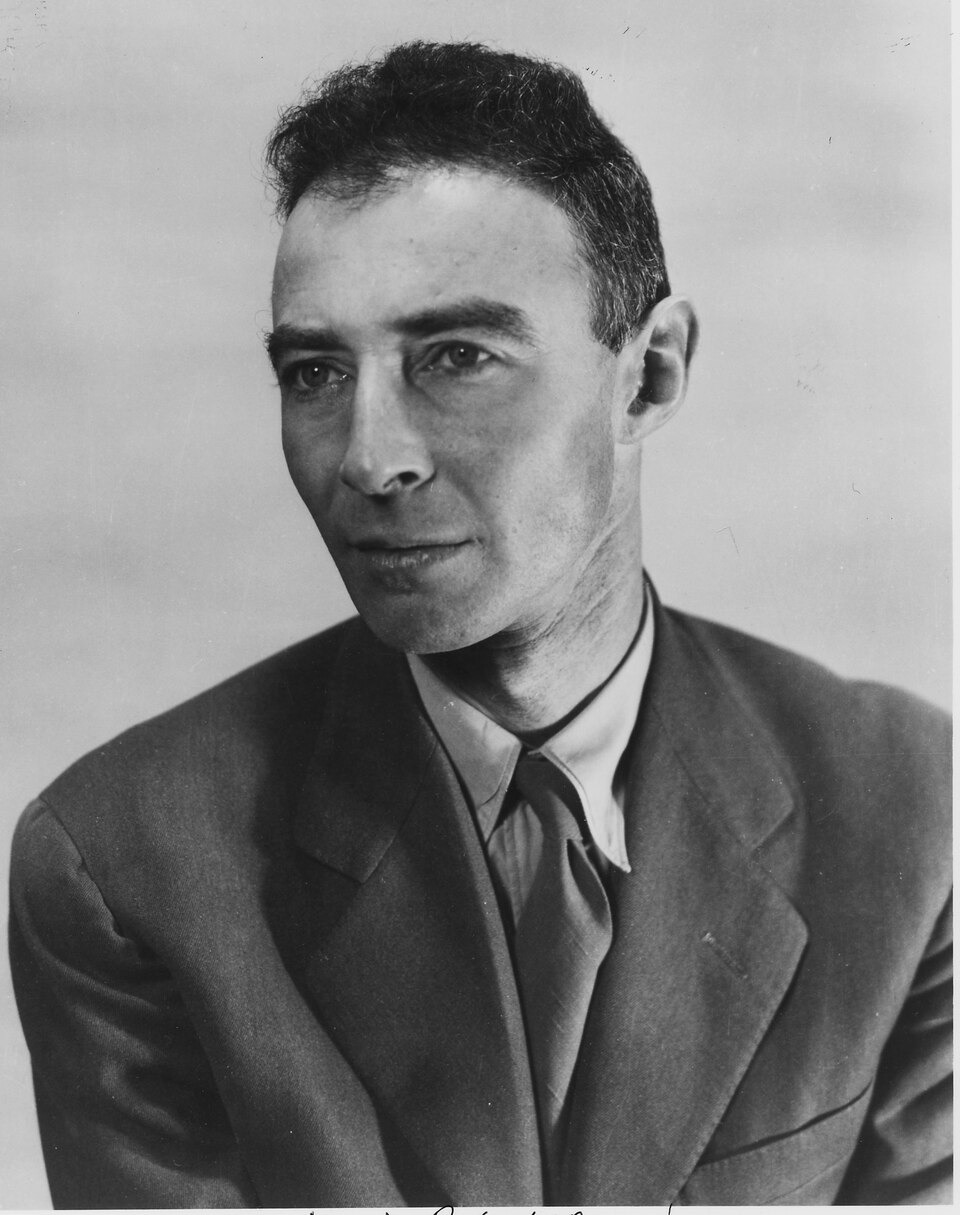
Contents — explore this biography
An education in theoretical physicsResearch, students and the organization of knowledgeLos Alamos and the Manhattan ProjectPostwar influence and the clearance hearingRecognition and the reassessment of a legacyAn education in theoretical physics
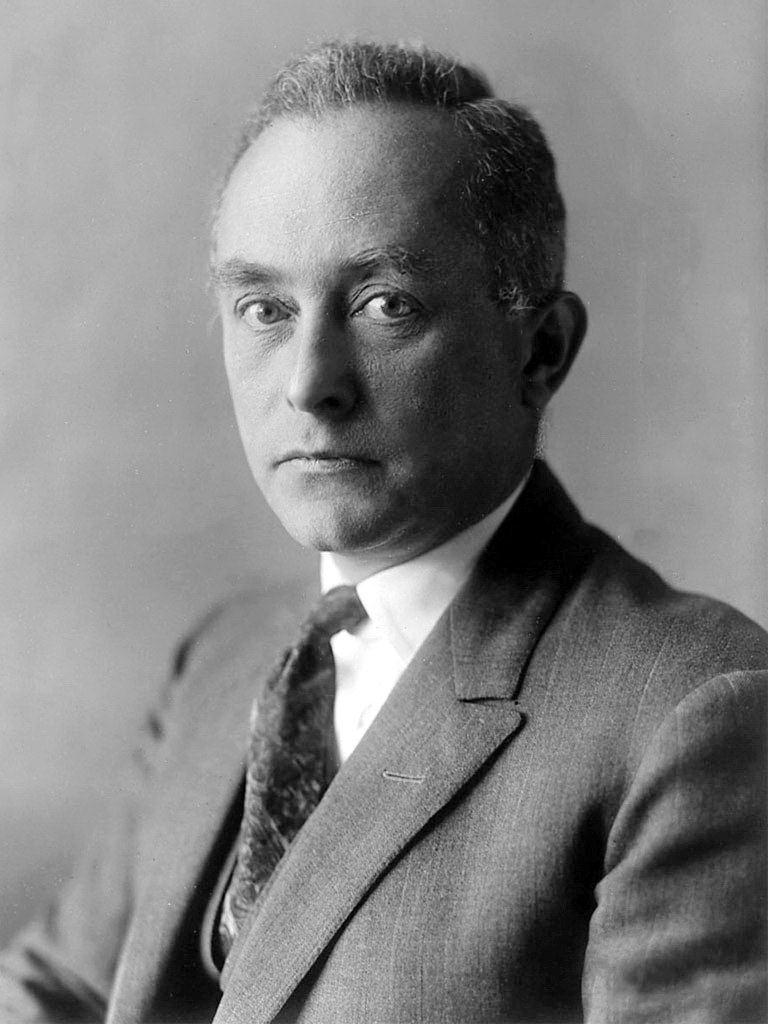
J. Robert Oppenheimer was born in New York City in 1904 and studied at Harvard before continuing his scientific education in Europe. At Göttingen he worked in the rapidly developing field of quantum mechanics and received his doctorate in 1927. His collaboration with Max Born produced the Born–Oppenheimer approximation, a method that separates electronic and nuclear motion when studying molecules. He later taught at Berkeley and Caltech, attracting students to theoretical physics. His intellectual range extended well beyond the laboratory, but his standing among physicists grew from research, teaching and the ability to engage difficult problems.
Research, students and the organization of knowledge
Before the Manhattan Project, Oppenheimer helped build an American community of theoretical physicists through graduate training and discussion. His work ranged across atomic and nuclear questions and the physics of dense stars. The lasting importance of this period is partly institutional: students and colleagues carried methods and problems between universities, connecting American research with developments in Europe. His later administrative effectiveness drew on the same capacity to understand different specialists and identify the central issue in a complicated argument. That capacity did not make him the sole originator of the discoveries associated with the teams he led.
Los Alamos and the Manhattan Project
During the Second World War, Oppenheimer was selected to lead the weapons laboratory at Los Alamos within the Manhattan Project. The assignment required coordinating physicists, chemists, engineers and military administrators under conditions of secrecy and intense pressure. The laboratory’s work culminated in the Trinity nuclear test on July 16, 1945, followed by the use of atomic bombs against Hiroshima and Nagasaki. His role was scientific and organizational within a much larger programme. Any account of that achievement must also acknowledge its consequences: the weapons caused immense human destruction and introduced a new scale of power into international affairs.
Postwar influence and the clearance hearing
After the war, Oppenheimer advised the Atomic Energy Commission and chaired its General Advisory Committee. He also became director of the Institute for Advanced Study in 1947. Debates over nuclear strategy, including his position on the hydrogen bomb, brought scientific advice into conflict with Cold War politics. In 1954 the Atomic Energy Commission revoked his security clearance after a deeply contested proceeding. The decision reduced his access to government policy circles while he continued leading the Institute. The case became an enduring example of the tension between intellectual independence, state security and the political conditions under which expertise is heard.
Recognition and the reassessment of a legacy
Oppenheimer received the Enrico Fermi Award in 1963, retired as Institute director in 1966 and died in 1967. In December 2022, the United States Department of Energy formally vacated the 1954 clearance decision, describing defects in the process. That later action changed the official standing of the decision without erasing the historical dispute or its impact on his life. His biography remains inseparable from both theoretical science and the responsibilities created when research enters military policy. Reducing it to either personal tragedy or technical triumph misses the institutional and moral complexity of the work he helped organize.
Career timeline
Born in New York City.
Received his doctorate at Göttingen and collaborated with Max Born.
Began directing the Los Alamos laboratory.
The Atomic Energy Commission revoked his security clearance.
The Department of Energy vacated the 1954 decision.
Selected works & milestones
Born–Oppenheimer approximation
A foundational method in molecular quantum mechanics.
Los Alamos leadership
Coordinated the Manhattan Project’s weapons laboratory through 1945.
Institute for Advanced Study
Began a directorship that lasted until 1966.
Enrico Fermi Award
Received official recognition for scientific and administrative contributions.
- Institute for Advanced Study — life and legacy
- Institute for Advanced Study — appointments and awards
- National Park Service — Manhattan Project biography
- Department of Energy — 2022 clearance decision
- Physical Review — On Massive Neutron Cores (1939)
Published 2026-11-05. Sources reviewed for this edition. Independent coverage of public professional activity.