Contents — explore this biography
Training across European physicsStatistics and beta decayThe Rome neutron experimentsChicago Pile-1 and the wartime contextTeaching and an enduring technical vocabularyTraining across European physics
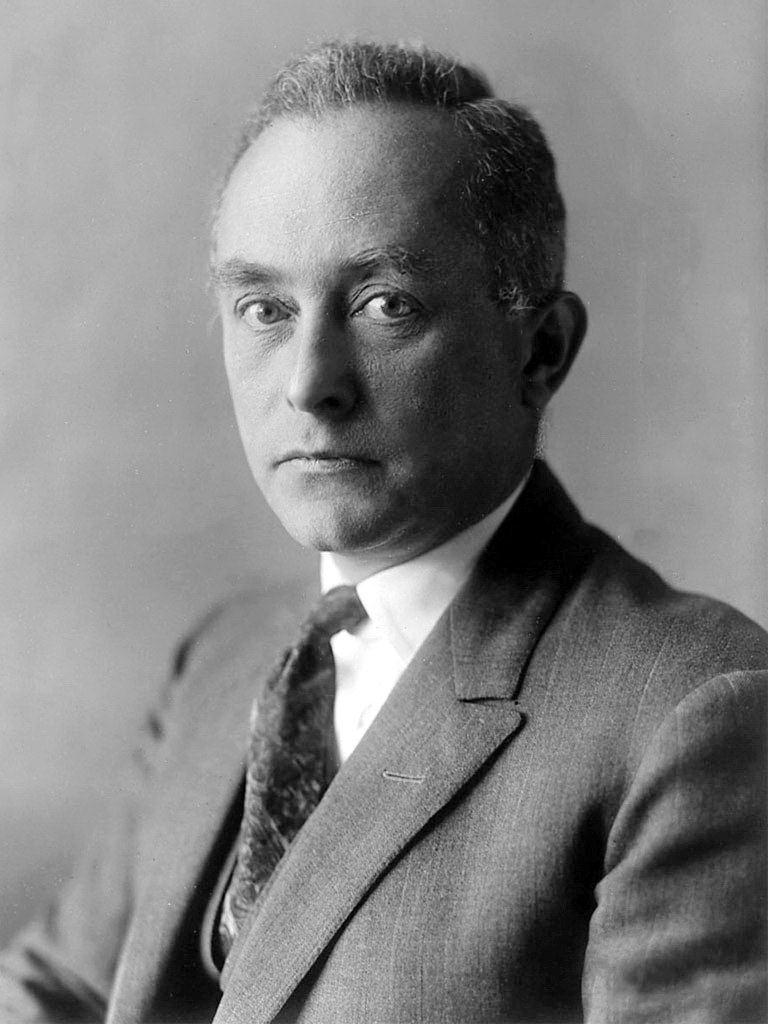
Fermi was born in Rome in 1901 and completed his doctorate in Pisa in 1922. Research visits included work with Max Born in Göttingen and Paul Ehrenfest in Leiden. Returning to Italy, he developed a career that was unusual for its command of mathematical theory, practical experimentation and the organization of collaborative laboratory work.
Statistics and beta decay
In 1926 Fermi developed a statistical description for particles obeying the exclusion principle, work associated with the name Fermi–Dirac statistics. His later theory of beta decay incorporated the neutrino hypothesis into a mathematical treatment of nuclear processes. These contributions belong to distinct problems, but both helped establish the conceptual tools of twentieth-century physics.
The Rome neutron experiments
Fermi and his collaborators in Rome investigated radioactivity produced by neutron bombardment. Their discovery that slow neutrons could be especially effective became central to subsequent nuclear research. The Nobel Prize in Physics in 1938 recognized these investigations. Historical descriptions of the award should distinguish the original interpretation of the experiments from the later understanding of nuclear fission.
Chicago Pile-1 and the wartime context
After leaving fascist Italy in 1938, Fermi worked in the United States. On 2 December 1942 the Chicago Pile-1 team achieved a controlled, self-sustaining nuclear chain reaction beneath the University of Chicago’s Stagg Field stands. This was a collective experimental achievement within a wartime programme, with consequences for nuclear energy as well as weapons development.
Teaching and an enduring technical vocabulary
Fermi became a United States citizen in 1944 and later taught at the University of Chicago until his death in 1954. Terms including fermion and Fermi energy reflect the reach of his work. His biography brings scientific ingenuity together with the institutions and ethical questions surrounding the transformation of atomic research into large-scale nuclear technology.
Career timeline
Born in Rome.
Completed his doctorate in Pisa.
Developed his statistical treatment of fermions.
Awarded the Nobel Prize and left Italy.
Led the Chicago Pile-1 chain-reaction experiment.
Selected works & milestones
Fermi statistics
A statistical framework for particles subject to exclusion.
Beta-decay theory
Connected nuclear decay with the neutrino hypothesis.
Slow-neutron research
Demonstrated the effectiveness of moderated neutrons.
Chicago Pile-1
Team demonstration of a controlled self-sustaining chain reaction.
- Nobel Prize — biographical record
- Nobel Prize — award and facts
- Biographical references and further reading
Published 2026-11-02. Sources reviewed for this edition. Independent coverage of public professional activity.