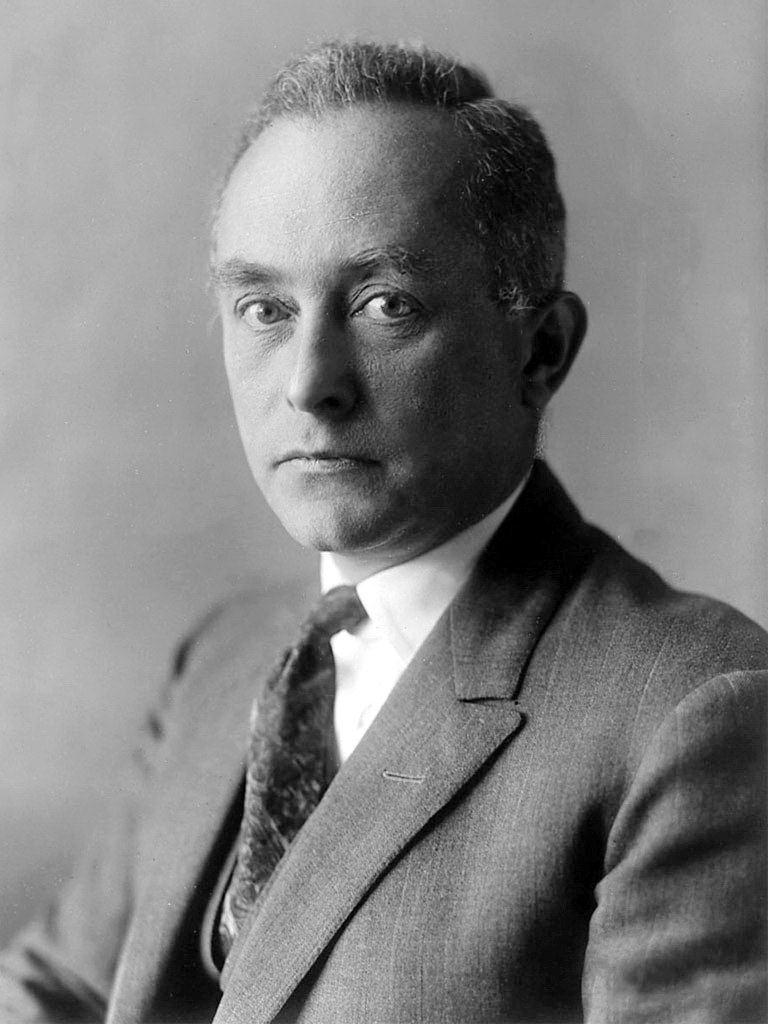
Contents — explore this biography
A mathematical route into physicsGöttingen and the new quantum mechanicsWhat a wavefunction predictsExile and the Edinburgh yearsRecognition, teaching and lasting influenceA mathematical route into physics
Born was born in Breslau in 1882 and studied at several European universities before completing his doctorate in Göttingen in 1906. His formation combined mathematics and physics. That combination mattered throughout his career, particularly when the behaviour of atoms required mathematical tools and concepts that differed sharply from the trajectories familiar in classical mechanics.
Göttingen and the new quantum mechanics
As a professor in Göttingen from 1921, Born worked in an exceptionally active theoretical community. Building on Werner Heisenberg’s 1925 work, Born and collaborators helped formulate matrix mechanics. The achievement was collective: different researchers supplied mathematical structures, physical questions and experimental connections that made the emerging theory more than an isolated calculation.
What a wavefunction predicts
Born’s 1926 interpretation connected a wavefunction with probabilities of experimental outcomes. The shift was fundamental: the theory could predict statistical distributions without assigning a definite classical path to every event. His contribution should be distinguished from the separate development of the wave equation itself and from later philosophical claims made in the name of quantum physics.
Exile and the Edinburgh years
After the Nazis took power in 1933, Born left Germany and continued his academic career in Britain. He became a professor at the University of Edinburgh in 1936. His displacement forms part of the wider history of persecution that transformed international science, as universities lost researchers and new centres absorbed their expertise and teaching traditions.
Recognition, teaching and lasting influence
The 1954 Nobel Prize in Physics recognized Born’s fundamental quantum research, particularly the statistical interpretation of the wavefunction; he shared the award with Walther Bothe. Born died in 1970. His scientific legacy includes textbooks, students and a vocabulary of probability that remains essential to understanding how quantum theory connects mathematical expressions with measurable physical results.
Career timeline
Born in Breslau, now Wrocław.
Completed his doctorate in Göttingen.
Became a professor at Göttingen.
Proposed the probabilistic interpretation of the wavefunction.
Shared the Nobel Prize in Physics with Walther Bothe.
Selected works & milestones
Matrix mechanics
Contributed mathematical foundations to the emerging quantum theory.
Probability interpretation
Related the wavefunction to statistical predictions.
Edinburgh professorship
Continued research and teaching following exile from Germany.
Nobel Prize in Physics
Recognized fundamental research in quantum mechanics.
- Nobel Prize — biographical record
- Nobel Prize — award and facts
- Biographical references and further reading
Published 2026-11-02. Sources reviewed for this edition. Independent coverage of public professional activity.