Contents — explore this biography
Leiden and professional trainingAmsterdam and commissioned portraitureLight, movement and narrativePrintmaking and workshop practiceFinancial difficulty and late workThe completed careerLeiden and professional training
Rembrandt Harmenszoon van Rijn was born in Leiden in 1606. After attending Latin school and briefly enrolling at the university, he chose painting and trained with local master Jacob van Swanenburg and, in Amsterdam, Pieter Lastman. He then worked independently in Leiden. Historical and biblical subjects gave him opportunities to study expressive action before the larger Amsterdam portrait market became central to his career.
Amsterdam and commissioned portraiture
He moved to Amsterdam around 1631 and developed a successful portrait practice. The Anatomy Lesson of Dr Nicolaes Tulp, painted in 1632, turns a professional group commission into a scene of collective attention. Marriage to Saskia van Uylenburgh followed in 1634. Work for wealthy individuals and civic organizations made his professional life part of the commercial culture of the Dutch Republic.
Light, movement and narrative
Rembrandt uses illumination to guide attention and to suggest psychological depth. The Night Watch of 1642 is a civic guard portrait arranged through movement rather than a static row of equal likenesses. Its familiar title is later than the work itself. Dramatic lighting should not be confused with a scene literally occurring at night, nor should the painting be reduced to the myths attached to its subsequent reputation.
Printmaking and workshop practice
Etching offered another field of invention, combining fine line with rich areas of darkness and revisions across successive states. He drew extensively and taught pupils in a busy workshop. That environment complicates attribution because students studied his methods and compositions. Modern catalogues distinguish works securely by Rembrandt from those assigned to his circle, while technical examination continues to refine some judgments.
Financial difficulty and late work
In 1656 he sought a formal arrangement with creditors and his collection and possessions were sold. Financial trouble did not end his work: later paintings often feature broader handling and dense surfaces. Personal bereavements also marked these years. It is misleading to treat either hardship or a change in painting technique as a complete explanation of every late image.
The completed career
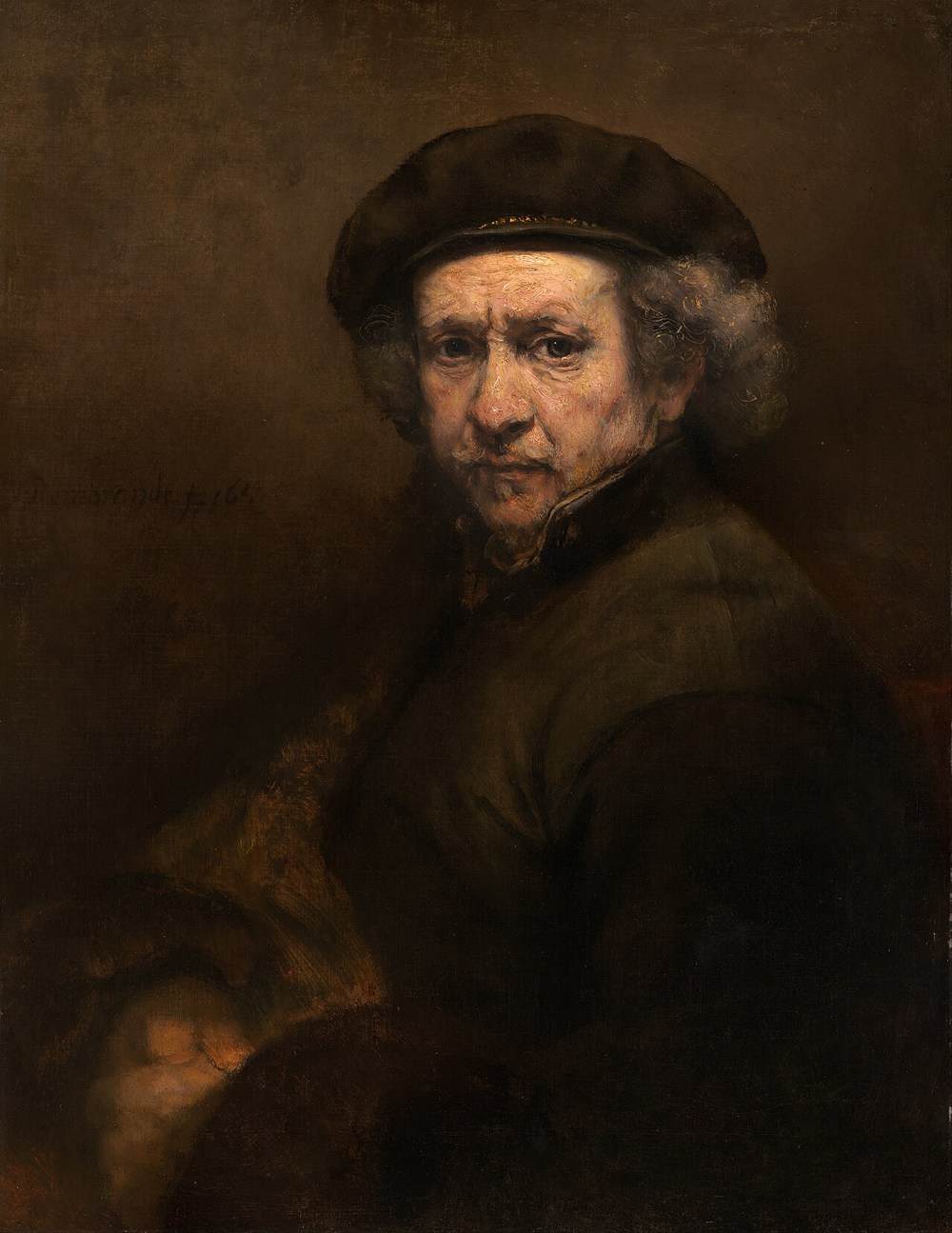
Rembrandt died in Amsterdam in 1669. The self-portraits offer repeated studies of appearance and artistic identity rather than a transparent psychological diary. His significance includes the practical transformation of paint and etched line into convincing human presence. The record also makes clear that artistic achievement and financial security are separate outcomes, even for an artist highly valued by clients during much of his lifetime.
Career timeline
Born into a Leiden family.
Paints the group portrait of Dr Nicolaes Tulp.
Completes the major civic guard commission.
His possessions are inventoried during financial restructuring.
Dies after a productive late period.
Selected works & milestones
Anatomy Lesson
Paints the group portrait of Dr Nicolaes Tulp.
The Night Watch
Completes the major civic guard commission.
Creditors arrangement
His possessions are inventoried during financial restructuring.
Death in Amsterdam
Dies after a productive late period.
- National Gallery — Rembrandt biography
- Rijksmuseum — Rembrandt collection and research
- Rembrandt — biographical reference and source notes
Published 2026-10-31. Sources reviewed for this edition. Independent coverage of public professional activity.