Contents — explore this biography
Urbino and early trainingFlorence and artistic exchangeThe Vatican roomsPortraiture and a large workshopArchitecture and the later careerReception and legacyUrbino and early training
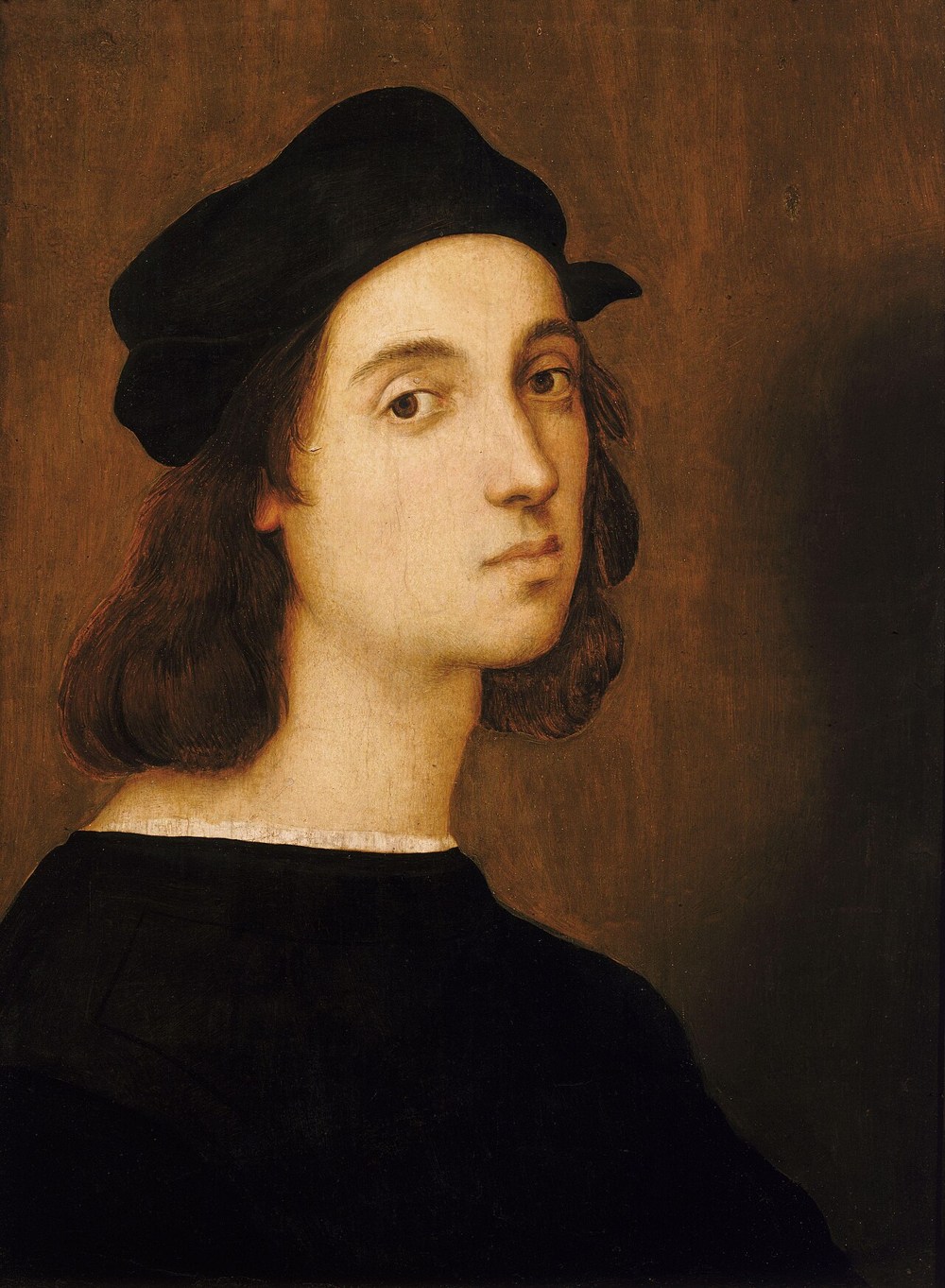
Raffaello Santi, usually called Raphael, was born in Urbino in 1483. His father Giovanni Santi was a court painter, giving the young artist early access to a sophisticated artistic environment. His formative work also shows the strong example of Perugino. Sources differ over Raphael’s exact birth day, so this profile records the securely established year without using a disputed date for birthday features.
Florence and artistic exchange
In the years before his move to Rome he worked across central Italy and absorbed the achievements of Leonardo and Michelangelo in Florence. His Madonnas develop balanced groups through glances, gestures and carefully adjusted poses. Influence did not mean passive copying: he reorganized what he encountered into compositions valued for their clarity. That adaptability helps explain the speed with which his reputation expanded.
The Vatican rooms
Pope Julius II called Raphael to Rome in 1508. His frescoes for the papal apartments include The School of Athens, where a classical architectural setting frames an assembly of philosophers. Other paintings in the same decorative programme address theology, poetry and law. Their effect relies on relationships across a room, making the original architectural setting important to understanding pictures often reproduced separately.
Portraiture and a large workshop
Raphael painted prominent patrons and cultivated a workshop able to undertake numerous commissions. Assistants helped translate designs into finished works, and prints spread his compositions beyond the original locations. Attribution can therefore involve distinctions between Raphael’s conception, his own execution and the work of collaborators. The workshop’s success was an organizational achievement as well as a measure of individual artistic skill.
Architecture and the later career
After Bramante’s death in 1514 Raphael was appointed architect in charge of St Peter’s. He also engaged with ancient Roman architecture and its preservation. Architectural responsibilities overlapped with painting rather than replacing it. The Transfiguration, left at his death in 1520, brings together different registers of action and became an important focus of his posthumous reputation.
Reception and legacy
Raphael died in Rome at thirty-seven and was buried in the Pantheon. Later academies frequently treated his work as a model of ideal composition and expressive restraint. That long reception should not obscure his practical responsiveness to patrons and collaborators. His historical importance rests on the integration of figures, narrative and setting, together with the productive structure of a workshop that continued to shape art after his death.
Career timeline
Works in the artistic environment shaped by Leonardo and Michelangelo.
Begins work for Julius II in the Vatican.
Creates the philosophical fresco in the Stanza della Segnatura.
Succeeds Bramante as architect in charge of the basilica.
Dies in Rome with the Transfiguration central to his final artistic period.
Selected works & milestones
Roman invitation
Begins work for Julius II in the Vatican.
School of Athens
Creates the philosophical fresco in the Stanza della Segnatura.
St Peter’s architect
Succeeds Bramante as architect in charge of the basilica.
Death and final work
Dies in Rome with the Transfiguration central to his final artistic period.
- National Gallery — Raphael biography
- Vatican Museums — Raphael Rooms
- Raphael — biographical reference and source notes
Published 2026-10-31. Sources reviewed for this edition. Independent coverage of public professional activity.