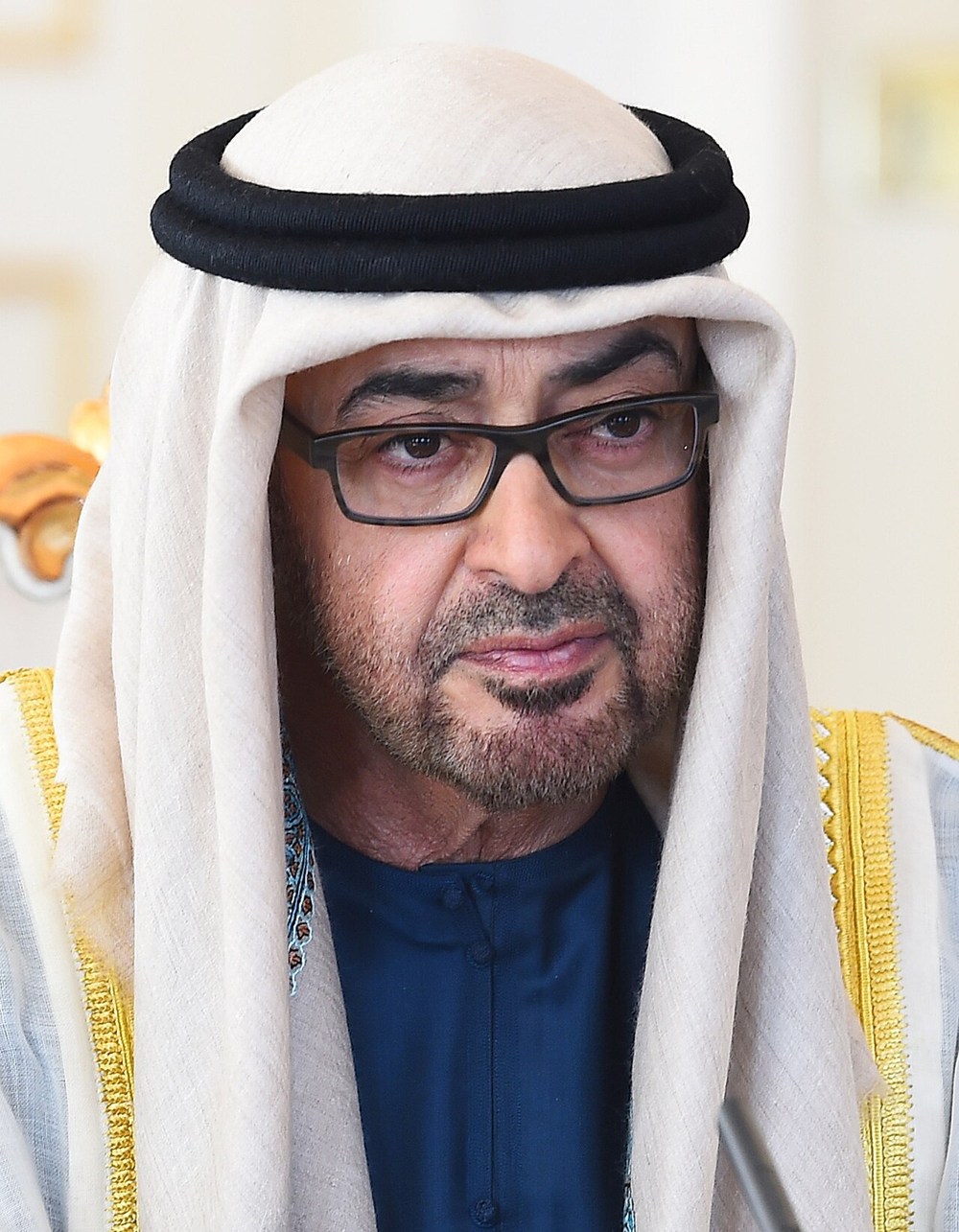
Contents — explore this biography
Family and the formation of the federationEducation and military serviceCrown Prince of Abu DhabiAccession and the federal presidencyPublic policy and international relationsReading the royal and governmental rolesFamily and the formation of the federation
Mohamed bin Zayed is a son of Sheikh Zayed bin Sultan Al Nahyan, the first president of the United Arab Emirates. Born in Al Ain, he grew up during the changes surrounding the federation’s establishment in 1971. His family belongs to Abu Dhabi’s Al Nahyan ruling house. The connection is both dynastic and institutional: leadership of an emirate and the presidency of a federation are distinct positions.
Education and military service
He graduated from the Royal Military Academy Sandhurst in 1979 and pursued a career in the UAE armed forces, including aviation and command responsibilities. Those posts preceded his later political titles. Military service is a significant part of the public biography because defense institutions helped shape his early responsibilities, professional relationships and experience of federal rather than only emirate-level administration.
Crown Prince of Abu Dhabi
He became Crown Prince of Abu Dhabi in 2004 following the accession of his brother Khalifa. The position placed him within the emirate’s succession structure and its executive leadership. In the following years his role in national affairs expanded, especially after Khalifa’s 2014 stroke. That period should be distinguished from the formal presidency, which he did not assume until 2022.
Accession and the federal presidency
After Khalifa’s death in May 2022, Mohamed became Ruler of Abu Dhabi. The Federal Supreme Council elected him President of the UAE on 14 May. The council consists of the rulers of the seven emirates. His royal-family membership explains one part of the succession, while the federal election explains the national office; describing him simply as a king would misstate the UAE’s institutional structure.
Public policy and international relations
His public responsibilities include national security, foreign relations and coordination across federal institutions. Official policy statements emphasize development, energy transition and economic diversification. These are agendas and objectives rather than automatic evidence of completed results. Abu Dhabi’s energy resources and investment institutions form an important context, but their activities involve organizations and officials beyond the president personally.
Reading the royal and governmental roles
This profile identifies his current public offices separately from the Al Nahyan family connection. The UAE presidency, the Abu Dhabi rulership and military responsibilities have different institutional histories. Understanding those distinctions provides a firmer account than estimates of personal influence or wealth. Official government records establish the titles and succession dates used here; a biography of one ruler does not constitute a complete history of the federation.
Career timeline
Graduates from the Royal Military Academy Sandhurst.
Becomes Crown Prince of Abu Dhabi.
Takes an expanded public leadership role following Khalifa’s illness.
Succeeds Khalifa as Ruler of Abu Dhabi.
Is elected President of the UAE by the Federal Supreme Council.
Selected works & milestones
Military education
An early foundation for a career in the federal armed forces.
Abu Dhabi crown-prince role
A succession and public-leadership position within the emirate.
Abu Dhabi rulership
Succeeds his brother Khalifa as ruler of the emirate.
Federal presidency
Becomes the third President of the United Arab Emirates.
- Mohamed bin Zayed Al Nahyan — biographical reference and cited sources
- UAE Government — official leadership directory
- National Media Authority — leadership biography
Published 2026-10-31. Sources reviewed for this edition. Independent coverage of public professional activity.