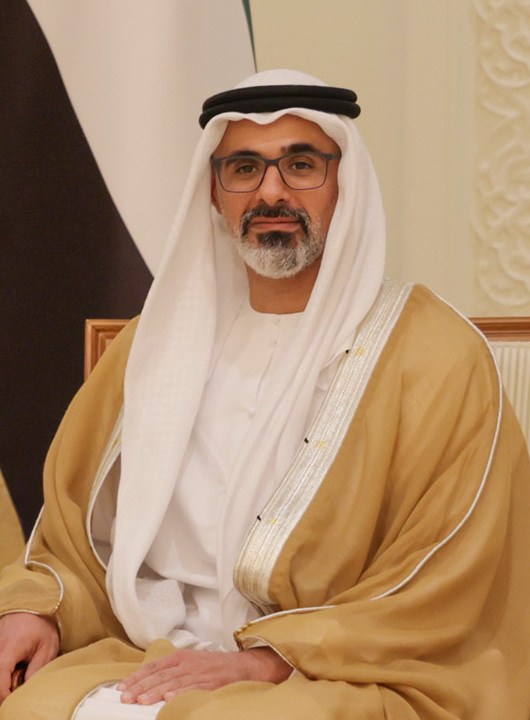
Contents — explore this biography
Family and early lifeEducation and preparationEarlier government appointmentsAppointment as crown princeThe Executive CouncilPosition within the Al Nahyan familyFamily and early life
Khaled was born in Abu Dhabi in 1982, a son of Mohamed bin Zayed Al Nahyan and Salama bint Hamdan. He is a grandson of Zayed bin Sultan Al Nahyan, the UAE’s first president. The family relationship connects three generations, but it does not make the federal presidency a title automatically inherited through a father-to-son succession.
Education and preparation
His education and early public career preceded his designation as crown prince. Official appointments brought responsibilities in security and government before the later succession title. The distinction matters because a public biography should show the sequence of offices rather than project the authority of a current title backward onto every earlier activity. His career developed within both federal and Abu Dhabi institutions.
Earlier government appointments
In 2016 Khaled became head of the State Security Department, followed by a deputy national-security-adviser appointment in 2017. He later joined Abu Dhabi’s Executive Council and chaired the Executive Office. These posts locate his preparation in named institutions and periods. They also separate federal security responsibilities from the emirate-level administration that became more prominent in his later public programme.
Appointment as crown prince
On 29 March 2023, Mohamed bin Zayed appointed Khaled Crown Prince of Abu Dhabi in his capacity as ruler of the emirate. The official decree identifies an Abu Dhabi succession position. It should not be described as an election to the UAE presidency, because that federal office is filled through the Federal Supreme Council rather than simply by inheriting an emirate title.
The Executive Council
Khaled also chairs Abu Dhabi’s Executive Council, the body central to the emirate’s government administration. Its agenda spans public services, development and coordination across departments. Those responsibilities differ from ceremonial representation and from the purely future-facing meaning of an heir’s title. Programmes approved by a council still depend on departments, budgets and implementation; an announcement alone is not a measured outcome.
Position within the Al Nahyan family
Mohamed’s profile explains the sovereign and federal roles, while Mansour’s covers a different set of national offices. Khaled’s place in the family diagram is specifically that of Mohamed’s son and designated emirate heir. Connecting these biographies helps readers follow relationships without confusing a president, a vice president and a crown prince, even when all belong to the same ruling house.
Career timeline
Is appointed head of the State Security Department.
Becomes deputy national security adviser.
Takes a prominent role in Abu Dhabi executive administration.
Is appointed Crown Prince of Abu Dhabi.
Becomes Chairman of the Abu Dhabi Executive Council.
Selected works & milestones
Education & early career
Is appointed head of the State Security Department.
Public responsibilities
Becomes deputy national security adviser.
A defining milestone
Is appointed Crown Prince of Abu Dhabi.
Royal role & continuity
Becomes Chairman of the Abu Dhabi Executive Council.
- UAE Foreign Ministry — crown-prince decree
- UAE Government — Abu Dhabi leadership
- Khaled bin Mohamed Al Nahyan — biographical reference and cited sources
Published 2026-10-31. Sources reviewed for this edition. Independent coverage of public professional activity.