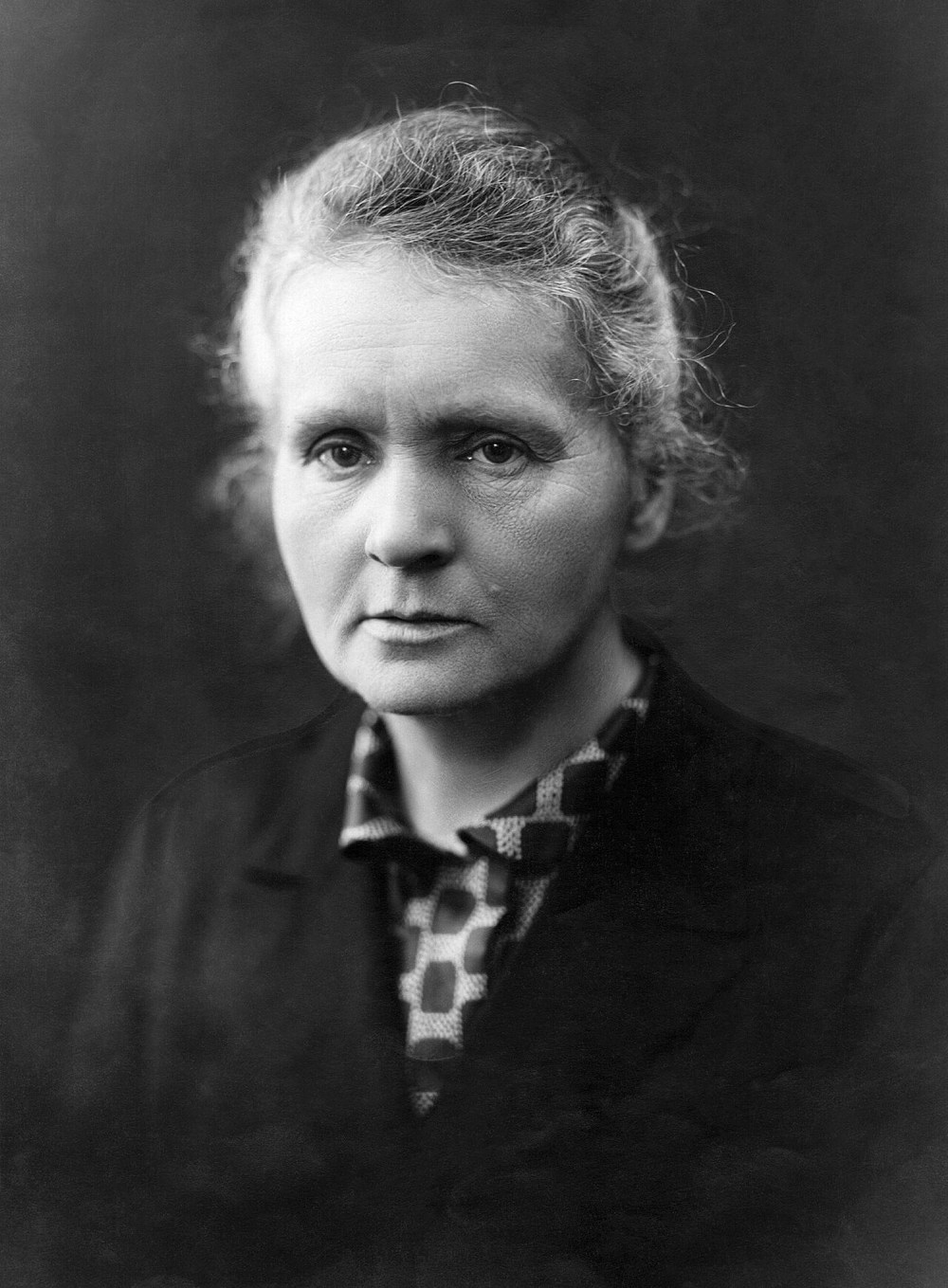
Contents — explore this biography
Warsaw and access to scientific educationInvestigating an unexplained source of radiationPolonium, radium and experimental laborTwo Nobel Prizes and an academic firstWartime radiography and research institutionsA legacy grounded in evidenceWarsaw and access to scientific education
Marie Curie was born Maria Skłodowska in Warsaw, then under Russian rule. She pursued education in circumstances that restricted women’s opportunities and later moved to Paris in 1891 to study at the Sorbonne. The transition combined intellectual ambition with practical difficulties of money and access. Her scientific development depended on sustained formal study and laboratory work, rather than an isolated moment of discovery outside the institutions of research.
Investigating an unexplained source of radiation
Curie investigated the radiation associated with uranium following Henri Becquerel’s work. Careful measurements led her to examine whether the phenomenon depended on the element itself rather than an ordinary chemical arrangement. Some minerals were more active than their known uranium content could explain. That observation turned measurement into a research programme: identifying additional substances required repeated chemical separation, comparison and confirmation rather than simply naming an interesting effect.
Polonium, radium and experimental labor
In 1898 Marie and Pierre Curie announced polonium, followed by the announcement of radium with collaborator Gustave Bémont. The work required processing mineral material and separating very small quantities of active substances. Its historical importance includes the experimental persistence necessary to move from evidence of an unknown component to a better-established chemical identity. The discoveries were collaborative, and the laboratory effort should remain visible alongside the famous names attached to them.
Two Nobel Prizes and an academic first
Curie shared the 1903 Nobel Prize in Physics with Pierre Curie and Henri Becquerel for research connected with radioactivity. After Pierre’s death in 1906, she continued her work and became the first woman to hold a professorship at the University of Paris. In 1911 she received the Nobel Prize in Chemistry for work on radium and polonium. The two awards recognized related research through different scientific disciplines, rather than repeating the same honor without distinction.
Wartime radiography and research institutions
During the First World War, Curie helped develop mobile radiography services and train people to use X-ray equipment in medical settings. This was a practical application of physical knowledge, distinct from the discovery of radioactive elements themselves. She also contributed to the growth of institutions for research on radioactivity. Her public role thus extended beyond individual publications into equipment, training and the infrastructure through which other researchers and practitioners could work.
A legacy grounded in evidence
Curie died in 1934. Her career remains important both for scientific results and for the barriers she crossed within European academic life. That legacy should not become a vague endorsement of anything described as energy or radiation. Her achievements came from quantitative measurement, chemical separation and reproducible investigation. Remembering the method as well as the honors preserves the difference between the actual work of science and the mythology that can grow around a celebrated scientist.
Career timeline
Moves from Warsaw to Paris to pursue higher scientific study.
Announces polonium and, with collaborators, radium.
Shares the Nobel Prize in Physics with Pierre Curie and Henri Becquerel.
Becomes the first woman professor at the University of Paris.
Receives the Nobel Prize in Chemistry for research on radium and polonium.
Selected works & milestones
Polonium research
Evidence for a new element arising from investigations of strongly radioactive minerals.
Radium research
An announcement and subsequent work developed with Pierre Curie and collaborators.
Nobel Prize in Physics
Shared recognition for research on the radiation phenomena studied by Becquerel and the Curies.
Nobel Prize in Chemistry
Recognition for the discovery and study of radium and polonium.
- Marie Curie — biographical reference and cited sources
- Nobel Prize — chemistry biography
- Science History Institute — scientific biography
- Nobel Prize — discovery history
Published 2026-10-31. Sources reviewed for this edition. Independent coverage of public professional activity.