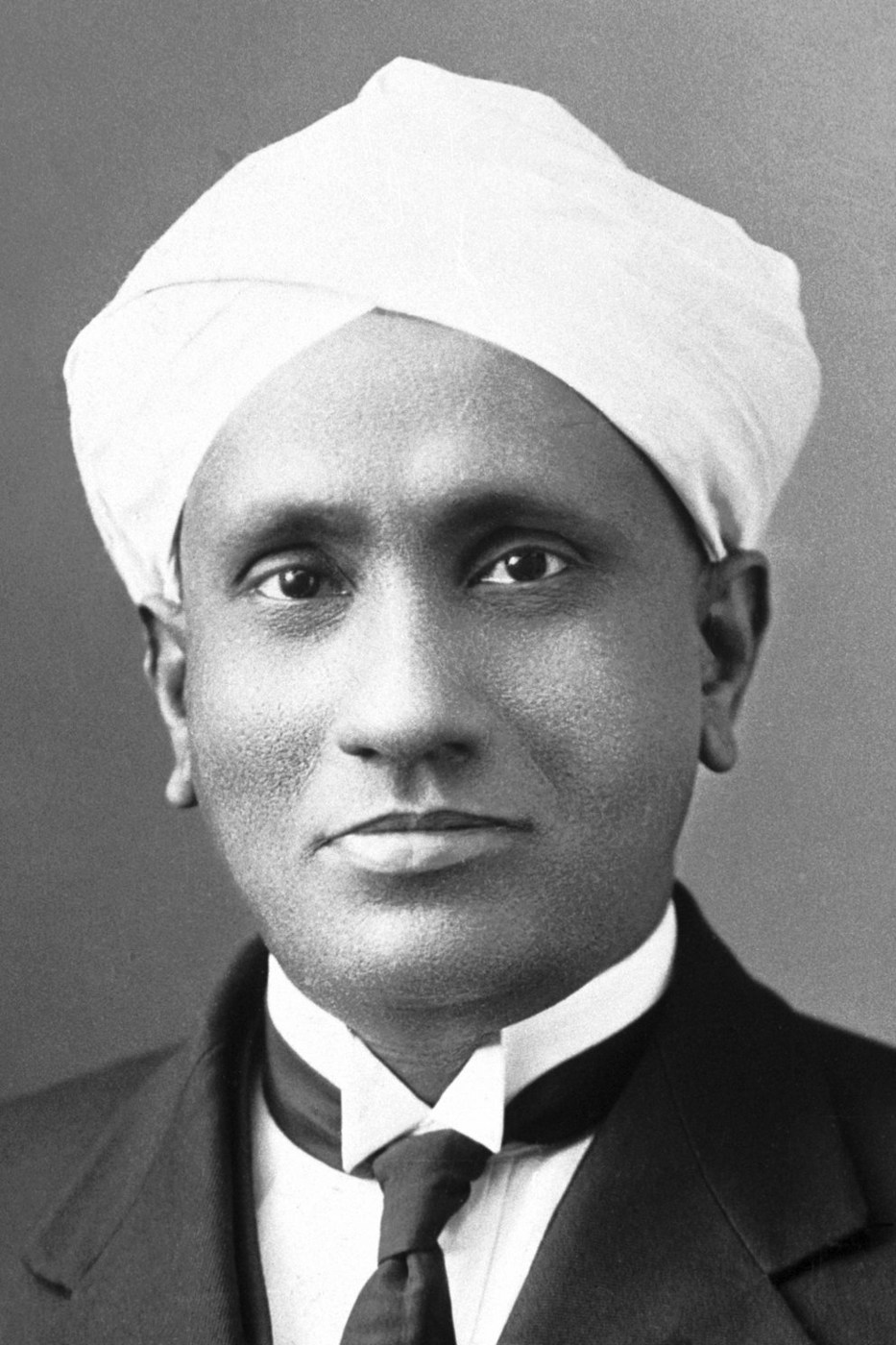
Contents — explore this biography
Education and research outside office hoursSound and optical questionsThe discovery of modified scatteringFrom an effect to spectroscopyRecognition and institution-buildingA scientific legacy in India and beyondEducation and research outside office hours
Chandrasekhara Venkata Raman studied at Presidency College in Madras and initially entered government financial service. While working in Calcutta, he pursued experiments through the Indian Association for the Cultivation of Science. That combination reflects both his scientific determination and the institutional opportunities available in colonial India. His research did not begin only after a major professorship or a fully established laboratory of his own.
Sound and optical questions
His early investigations included musical instruments, vibration and acoustics, alongside growing interests in optics. These topics shared questions about waves and material behavior but required different apparatus. In 1917 he became Palit Professor of Physics at the University of Calcutta, making research a central professional responsibility. The appointment helped support a continuing experimental programme rather than a single isolated discovery.
The discovery of modified scattering
In 1928 Raman and K. S. Krishnan investigated how light changes when scattered by a material. A small fraction emerges with altered frequencies because energy is exchanged with molecular motions. The finding became known as the Raman effect. Acknowledging Krishnan and the laboratory team matters, while distinguishing the effect from ordinary scattering explains why the observation carried information about molecular structure.
From an effect to spectroscopy
The frequency shifts can reveal characteristic vibrational information, making Raman spectroscopy useful for examining substances. Modern instruments often employ lasers and sensitive detectors developed long after the original experiments. Raman did not invent all those later devices. His contribution established a physical effect that subsequent scientists and engineers turned into a versatile analytical method across chemistry, materials research and other fields.
Recognition and institution-building
Raman received the Nobel Prize in Physics in 1930. He later led the Indian Institute of Science in Bangalore and founded the Raman Research Institute in 1948. These roles involved creating settings in which other researchers could work, not simply extending a personal reputation. His later interests included crystals, optics and colour, sustaining a broad experimental career beyond the result for which he became internationally known.
A scientific legacy in India and beyond
He died in 1970. India’s National Science Day commemorates the 1928 discovery on 28 February. The continuing importance of Raman methods rests on reproducible interactions between light and matter, rather than national symbolism alone. His biography brings together that physical explanation, collaborative laboratory work and the development of research institutions, showing how an experimental result can support scientific practices far beyond its original setting.
Career timeline
Begins government service while continuing experimental research in Calcutta.
Becomes Palit Professor of Physics at the University of Calcutta.
With K. S. Krishnan and colleagues, establishes frequency changes in scattered light.
Receives the Nobel Prize in Physics for work on light scattering.
Establishes the Raman Research Institute in Bangalore.
Selected works & milestones
Calcutta professorship
Becomes Palit Professor of Physics at the University of Calcutta.
Raman effect
With K. S. Krishnan and colleagues, establishes frequency changes in scattered light.
Nobel Prize
Receives the Nobel Prize in Physics for work on light scattering.
Research institute
Establishes the Raman Research Institute in Bangalore.
- Nobel Prize — Raman biographical account
- American Chemical Society — Raman effect historical landmark
- Raman Research Institute — founder and institutional history
- Optica — scientific biography
- C. V. Raman — biographical reference and bibliography
- Birth date — institutional biographical record
Published 2026-10-31. Sources reviewed for this edition. Independent coverage of public professional activity.