Contents — explore this biography
Education in China and CaliforniaColumbia and wartime researchThe question of parityThe cobalt-60 experimentRecognition and the Nobel distinctionA standard of experimental precisionEducation in China and California
Wu was born in Jiangsu in 1912 and studied physics in China before moving to the United States in 1936. She completed her doctorate at the University of California, Berkeley, in 1940. Experimental nuclear physics demanded control of instruments and careful interpretation of radioactive processes. Her training established those skills before the later experiment that would make her central to the history of fundamental symmetry.
Columbia and wartime research
After early teaching appointments, she joined Columbia during the Second World War and contributed to Manhattan Project research. Her later Columbia career concentrated on experimental nuclear physics, particularly beta decay. That work made her a specialist whom theoretical colleagues could consult when a difficult hypothesis required a realistic laboratory test. Her expertise was built across many measurements, rather than emerging from one dramatic experiment without preparation.
The question of parity
In 1956 Tsung-Dao Lee and Chen-Ning Yang questioned whether weak interactions necessarily preserved mirror symmetry, or parity. A mirror-reversed physical process had often been assumed to be equally possible. Wu recognized how polarized radioactive nuclei could provide a test. The question concerned a specific symmetry in a particular class of interactions, not the claim that every physical process distinguishes left from right in the same way.
The cobalt-60 experiment
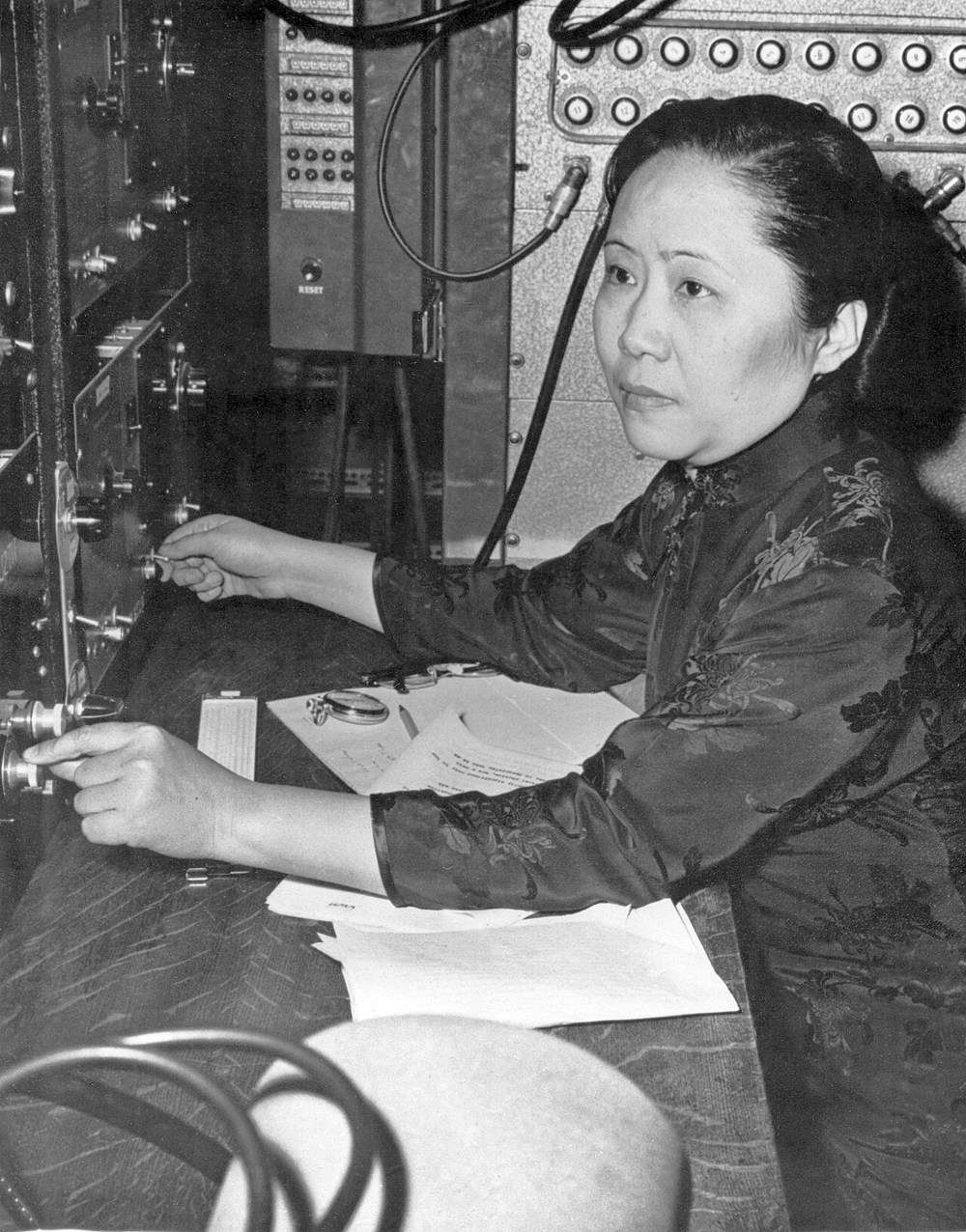
Working with Ernest Ambler and colleagues at the US National Bureau of Standards, she studied beta decay from cobalt-60 nuclei aligned at very low temperatures. The emitted electrons showed an asymmetry demonstrating parity violation in weak interactions. The results were announced and published in 1957. Cooling, polarization and detection were essential collaborative technical achievements, making the result more than a theoretical suggestion or a visual demonstration.
Recognition and the Nobel distinction
Lee and Yang received the 1957 Nobel Prize in Physics; Wu did not share that award. She later received major honours including the National Medal of Science and the Wolf Prize, and became the first woman president of the American Physical Society in 1975. Recording these distinctions accurately recognizes her achievement without inventing a Nobel award or reducing her entire career to the question of exclusion.
A standard of experimental precision
Wu published Beta Decay in 1965 and continued research and advocacy before her death in 1997. Her legacy illustrates the decisive role of experiments capable of separating competing physical claims. Theories raised a possibility, but apparatus and measurement established what nature actually did. Her work belongs to both the history of nuclear physics and the wider story of researchers whose experimental leadership exceeded the public recognition they initially received.
Career timeline
Completes doctoral research in experimental nuclear physics.
Joins the wartime Columbia research environment.
The collaborative cobalt-60 experiment establishes parity violation in weak interactions.
Publishes the influential specialist book.
Becomes the first woman president of the American Physical Society.
Selected works & milestones
Columbia research
Joins the wartime Columbia research environment.
Parity violation
The collaborative cobalt-60 experiment establishes parity violation in weak interactions.
Beta Decay
Publishes the influential specialist book.
APS presidency
Becomes the first woman president of the American Physical Society.
- Columbia University — Wu and the parity experiment
- Smithsonian — original Wu experiment apparatus and collaborators
- National Women’s History Museum — education and full biography
- Chien-Shiung Wu — biographical reference and bibliography
Published 2026-10-31. Sources reviewed for this edition. Independent coverage of public professional activity.