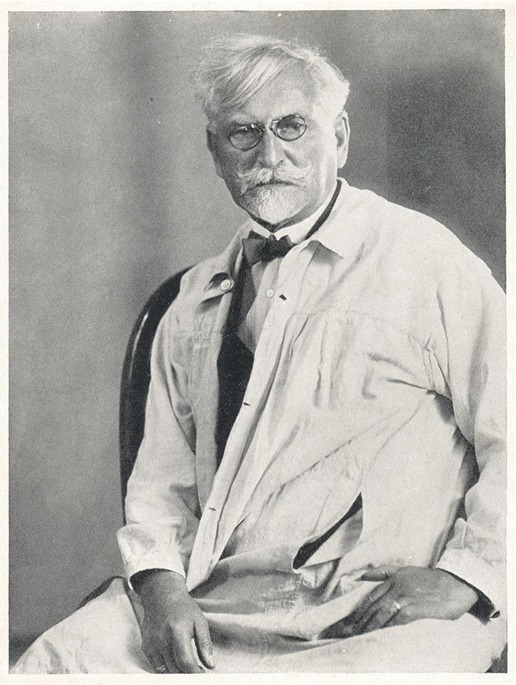
Contents — explore this biography
Moravian beginnings and the making of a professional artistSarah Bernhardt and the sudden visibility of GismondaDecorative panels and the circulation of Art NouveauThe Slav Epic and a different scale of ambitionCultural identity, public commissions and legacyMoravian beginnings and the making of a professional artist
Alphonse Mucha was born in Ivančice in Moravia in 1860, when the region belonged to the Austrian Empire. His path into professional art passed through theatrical scenery, decorative commissions and support from aristocratic patrons. Study in Munich was followed by a move to Paris in 1887. These experiences brought him into contact with different uses of images: the theatre required effects that could work at a distance, while illustration depended on reproducibility and a clear relationship between picture and page. His later success would combine those practical concerns with an elaborate and immediately recognizable decorative vocabulary.
Sarah Bernhardt and the sudden visibility of Gismonda
At the end of 1894 Mucha designed a poster for Sarah Bernhardt’s production of Gismonda, which appeared on Paris streets in 1895. Its elongated format, subdued colour and dignified central figure offered a striking alternative to more crowded publicity designs. The commission led to a continuing working relationship with Bernhardt, including posters and theatrical designs. The familiar story of sudden discovery has some truth, but it can conceal the preparation behind the breakthrough. Mucha already possessed the drawing skills, compositional experience and professional discipline needed to turn an urgent commercial request into a distinctive public image.
Decorative panels and the circulation of Art Nouveau
Mucha’s work spread through advertisements, calendars, packaging and decorative panels, including The Seasons. Flowing contours, patterned backgrounds, flowers and carefully arranged lettering helped unite figure and ornament. These images belonged to a world of modern printing and consumer circulation, not simply to the private space of an individual painting. Repetition could strengthen recognition, while variations in format allowed a coherent visual style to serve many clients and uses. His relationship with Art Nouveau is therefore both aesthetic and commercial: the work helped make a decorative language visible in everyday environments and accessible to a broad public.
The Slav Epic and a different scale of ambition
Despite his association with Parisian posters, Mucha understood his artistic purpose more broadly. He travelled repeatedly to the United States while seeking support for a monumental cycle about Slavic history. Patronage from Charles Richard Crane allowed him to return to his homeland in 1910 and pursue the project. The Slav Epic consists of twenty large canvases addressing historical and cultural subjects across Slavic regions. Its scale, narrative purpose and idealism differ markedly from his commercial designs. The contrast demonstrates why his biography cannot be contained within a single poster style, even when those posters remain his most familiar achievement.
Cultural identity, public commissions and legacy
Mucha also contributed to the visual identity of the new Czechoslovak state through designs for public use, and his work continued to connect decorative skill with a sense of cultural responsibility. He died in Prague in 1939, during the German occupation. His legacy now encompasses graphic design, painting, photography and the unresolved questions that accompany the stewardship of a major artistic estate. Looking at these areas together makes the career more intelligible. The artist who created elegant commercial images also sought to address collective memory, historical suffering and the capacity of art to give a community an imaginative account of itself.
Career timeline
Born in Ivančice, Moravia.
Moved to Paris to continue his artistic development.
Gismonda brought wide recognition and collaboration with Sarah Bernhardt.
Returned to his homeland to pursue the Slav Epic.
Died in Prague.
Selected works & milestones
Gismonda
The theatrical poster that established his Parisian reputation.
The Seasons
A decorative panel series designed for a wider public.
Documents décoratifs
A portfolio demonstrating decorative design principles.
The Slav Epic project
Twenty monumental canvases interpreting Slavic history and culture.
- Mucha Foundation — biography at a glance
- Mucha Foundation — timeline
- Mucha Foundation — The Slav Epic
- Mucha Museum — biography
Published 2026-11-09. Sources reviewed for this edition. Independent coverage of public professional activity.