Contents — explore this biography
Education across Pakistan and CambridgeThe search for a unified description of interactionsImperial College and an international research networkICTP and the possibility of returning homeRecognition, public service and a continuing institutional legacyEducation across Pakistan and Cambridge
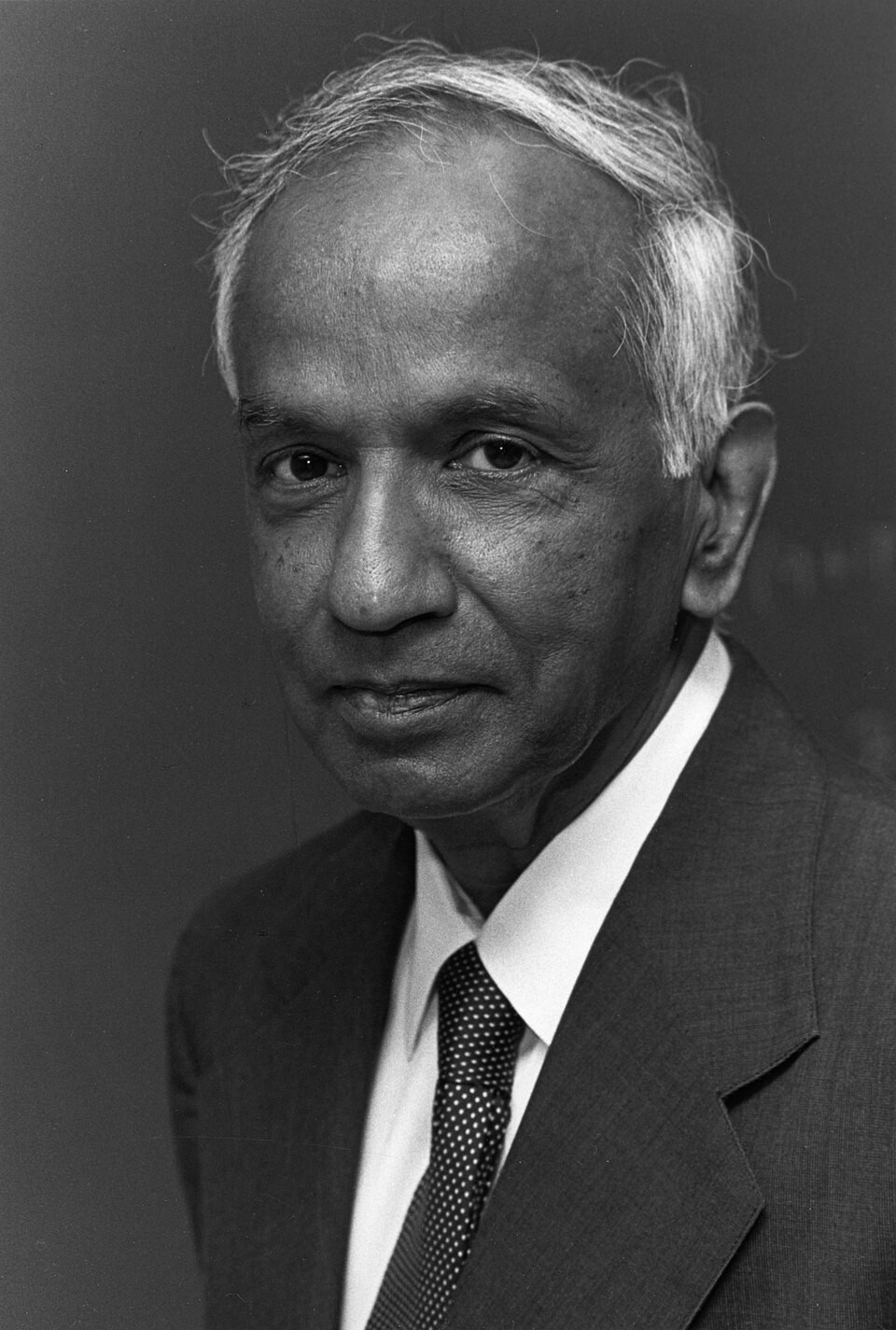
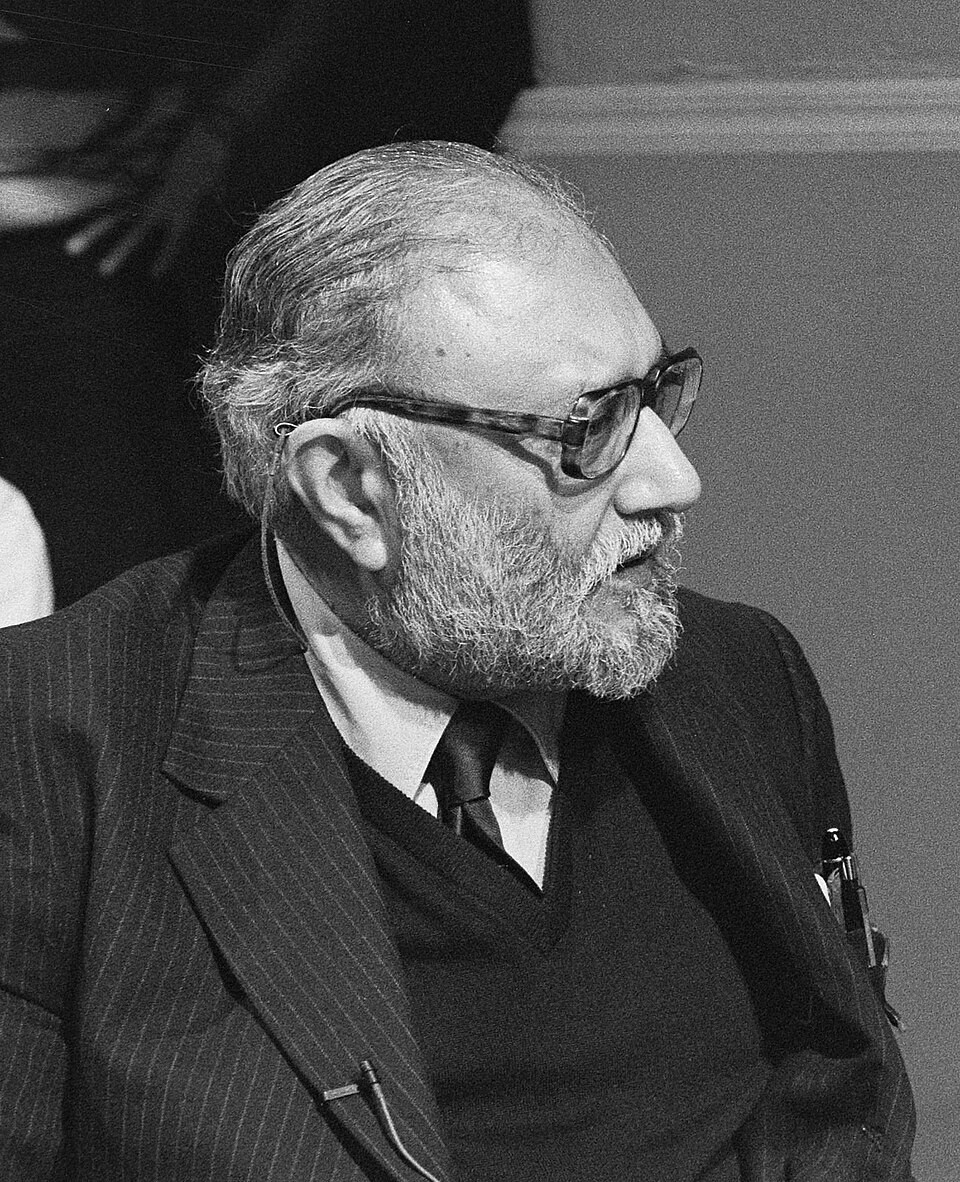
Abdus Salam was born in Jhang in 1926, in what is now Pakistan. His education took him through Government College in Lahore and then to St John’s College, Cambridge, where he studied mathematics and physics. Research in theoretical physics brought international recognition early in his career. He returned to Pakistan to teach, but the limited opportunities for sustained specialist research presented a difficult choice. His later work abroad was shaped by that experience. The problem was not simply personal advancement; it concerned whether talented scientists could remain connected to active research while continuing to serve universities in countries with fewer scientific resources.
The search for a unified description of interactions
Salam’s physics addressed fundamental particles and the mathematical theories describing their interactions. His best-known contribution helped establish the electroweak framework, connecting electromagnetic and weak interactions within a unified theoretical description. Sheldon Glashow and Steven Weinberg made independently important contributions to that development, and the three shared the 1979 Nobel Prize in Physics. This was not a claim to have unified every force in nature. It was a specific advance involving two interactions, with consequences that could be confronted with experiment. The prediction and subsequent confirmation of neutral weak currents helped demonstrate the framework’s physical significance.
Imperial College and an international research network
From 1957 Salam held a professorship at Imperial College London, where he contributed to the development of a major theoretical-physics community. His career combined technical research with collaboration, teaching and the formation of international networks. Such networks mattered because modern particle physics depended on discussion across laboratories and national borders. They also offered a practical answer to intellectual isolation. Salam’s reputation gave him access to institutions and policymakers, but the durable part of the work required programmes that other scientists could actually use. His academic appointments and institutional commitments therefore developed together rather than representing separate phases of his life.
ICTP and the possibility of returning home
In 1964 Salam and Paolo Budinich established the International Centre for Theoretical Physics in Trieste with international and Italian support. The centre enabled researchers, particularly from developing countries, to participate in advanced work without necessarily abandoning their home institutions permanently. Its associateship model made repeated visits and continuing collaboration central to that ambition. Salam directed ICTP until 1993. The institution’s importance is visible in this practical structure: scientific opportunity could be organized through access to colleagues, time, training and facilities. That approach addressed inequalities in the conditions of research rather than assuming that individual talent alone could overcome them.
Recognition, public service and a continuing institutional legacy
Salam also advised on science policy and helped promote scientific cooperation beyond his own speciality. His religious identity and the discrimination faced by Pakistan’s Ahmadi community form part of the historical context of his relationship with his country. A careful biography can acknowledge that context while keeping his research and institutional achievements specific. He died in Oxford in 1996. ICTP continues to carry his name and to pursue international scientific exchange. His legacy combines an experimentally consequential theory with an argument expressed through institutions: the geography of a scientist’s birthplace should not determine the intellectual opportunities available throughout a working life.
Career timeline
Born in Jhang.
Became a professor at Imperial College London.
Helped establish ICTP in Trieste.
Shared the Nobel Prize in Physics.
Died in Oxford.
Selected works & milestones
Research in quantum field theory
Early theoretical work established an international scientific reputation.
International Centre for Theoretical Physics
Founded with Paolo Budinich to support research and scientific exchange.
Electroweak theory
Contributions to the unified treatment of weak and electromagnetic interactions.
Nobel Prize in Physics
Shared with Sheldon Glashow and Steven Weinberg.
- Nobel Prize — Salam facts
- Nobel Prize — Salam biography
- Imperial College London — Abdus Salam
- ICTP — institutional history
- Royal Society — Salam record
Published 2026-11-09. Sources reviewed for this edition. Independent coverage of public professional activity.