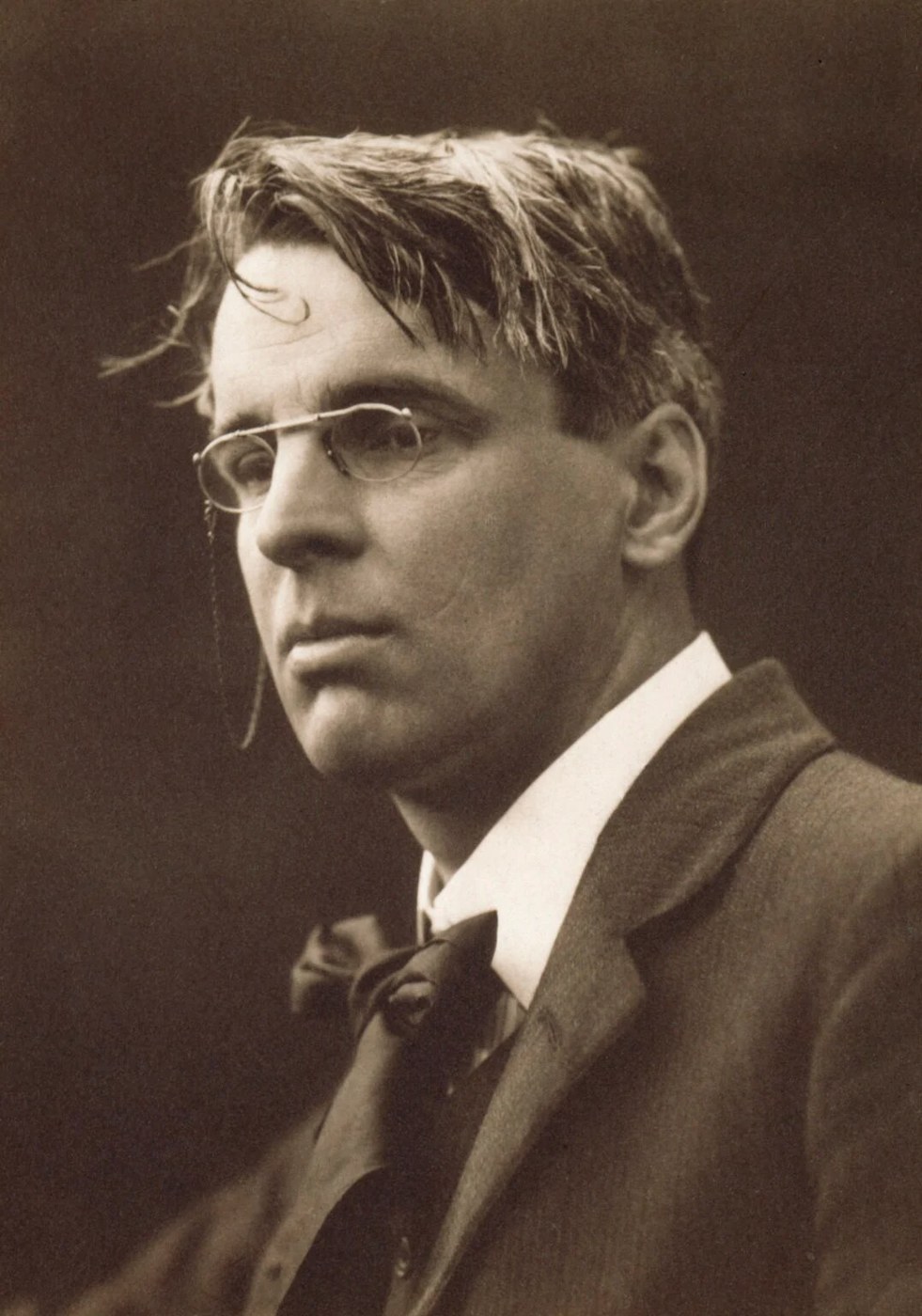
Contents — explore this biography
Irish places and an imaginative inheritancePoetry and the Irish literary revivalTheatre as a cultural institutionHistory, modernism and public serviceNobel recognition and the late poemsIrish places and an imaginative inheritance
Yeats was born in Dublin in 1865 and spent formative periods between Ireland and England. The landscape and traditions associated with Sligo became particularly important to his imagination. His early poetry drew on folklore, legend and symbolic imagery, connecting literary ambition with a wider effort to develop an identifiable Irish cultural voice.
Poetry and the Irish literary revival
Collections and plays helped establish Yeats within the Irish literary revival. His interest in inherited stories was not simply antiquarian: myth supplied a language through which contemporary identity and artistic independence could be explored. Early lyricism gradually gave way to a more compressed and argumentative poetry, capable of bringing personal experience into contact with public events.
Theatre as a cultural institution
With collaborators including Lady Gregory, Yeats helped develop the movement that led to Dublin’s Abbey Theatre, opened in 1904. Theatre-building involved practical organization as well as literary production. The project created a public stage for Irish writing, while disputes over plays and audiences exposed tensions between artistic freedom, national representation and competing moral expectations.
History, modernism and public service
Poems such as Easter 1916 and The Second Coming confront upheaval without functioning as uncomplicated political declarations. Yeats also served in the senate of the Irish Free State. His political positions and cultural assumptions require historical scrutiny; the power of the poetry does not remove contradictions within the public life or make its speakers transparent statements of fact.
Nobel recognition and the late poems
Yeats received the Nobel Prize in Literature in 1923. Collections including The Tower and The Winding Stair and Other Poems demonstrate the force of his later writing, with ageing, artistic achievement and historical violence recurring throughout. He died in France in 1939. His legacy combines an individual poetic voice with institutions that helped sustain Irish literary production.
Career timeline
Born in Sandymount, Dublin.
Published The Celtic Twilight.
The Abbey Theatre opened in Dublin.
Awarded the Nobel Prize in Literature.
Published The Tower.
Selected works & milestones
The Celtic Twilight
Prose drawing on Irish folklore and storytelling.
Michael Robartes and the Dancer
A collection including The Second Coming.
The Tower
A major collection of his mature poetry.
The Winding Stair and Other Poems
Late poems on history, age and artistic life.
- Dictionary of Irish Biography — Yeats
- Nobel Prize — biographical record
- Nobel Prize — award and facts
- Biographical references and further reading
Published 2026-11-02. Sources reviewed for this edition. Independent coverage of public professional activity.