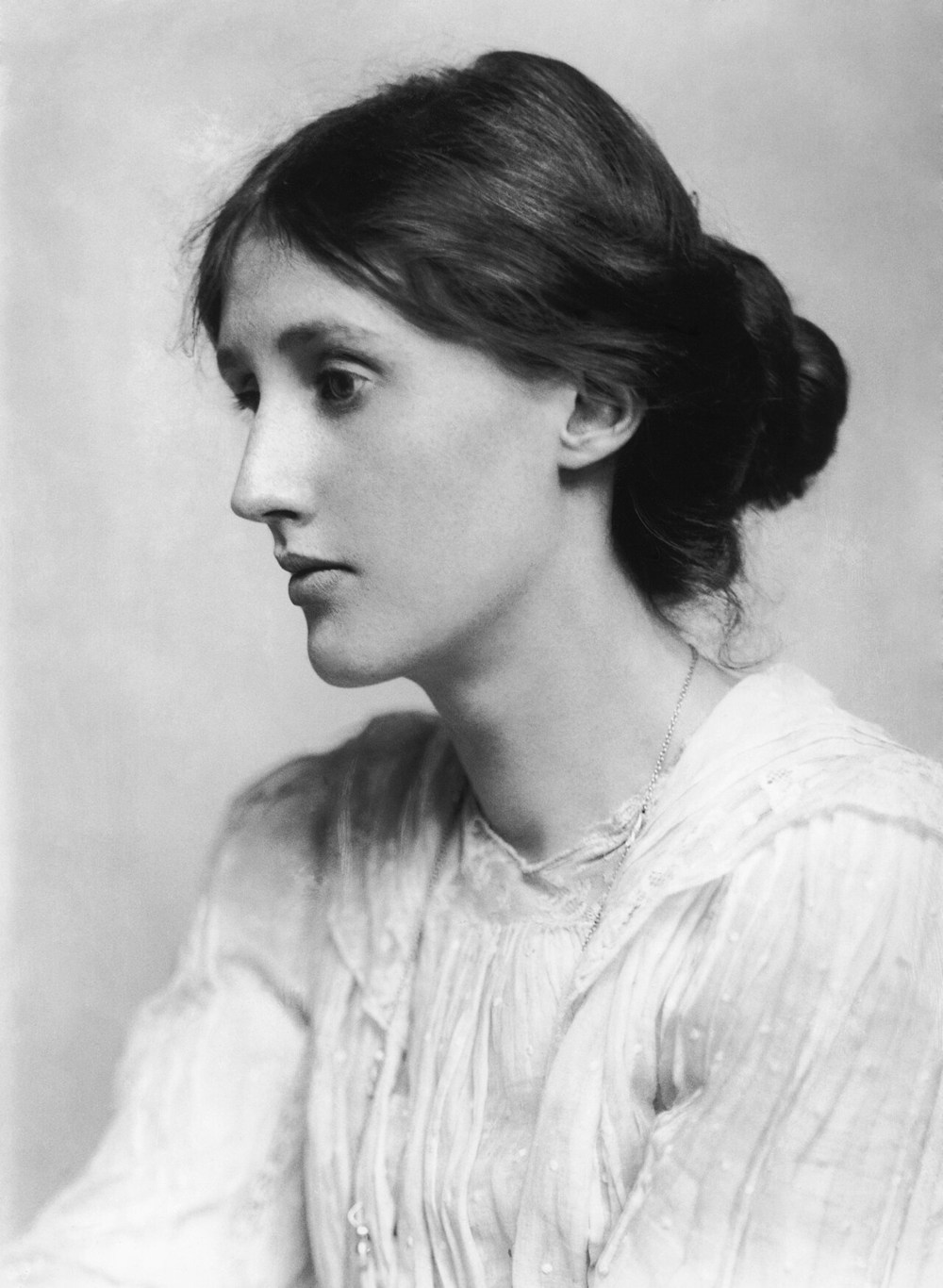
Contents — explore this biography
Education and a literary inheritanceBloomsbury and a publishing partnershipA different organization of fictionGender, history and literary resourcesThe later experiments and the final yearsReading the work after modernismEducation and a literary inheritance
Born Adeline Virginia Stephen in London in 1882, Woolf grew up in a household closely connected with books and intellectual life. Access to her father’s library was important, while her formal educational opportunities differed from those of her brothers. She also attended classes in the Ladies’ Department at King’s College London. The distinction matters: she lacked a conventional university degree but was not intellectually or educationally isolated.
Bloomsbury and a publishing partnership
After her father’s death, a move to Bloomsbury brought her into a circle of writers, artists and thinkers that included Leonard Woolf. They married in 1912 and established the Hogarth Press in 1917. The press began with a small hand-operated machine and developed into a publishing business. Their partnership placed Woolf within the material processes of producing and circulating books as well as the imaginative work of composition.
A different organization of fiction
Following The Voyage Out, her novels increasingly experimented with ways of representing experience beyond a straightforward sequence of external events. Mrs Dalloway moves among minds across a single London day, while To the Lighthouse reorganizes the relationship between a family’s experience and the passage of years. Shifts in perspective and rhythm allow apparently minor sensations to coexist with memory, grief and the aftermath of historical violence.
Gender, history and literary resources
Orlando plays with a life extending across centuries and a transformation of gender, drawing on Woolf’s relationship with Vita Sackville-West. A Room of One’s Own examines the practical conditions that enable or obstruct writing, especially money, privacy and access to education. Its argument joins imaginative scenes with historical questions. The emphasis on material circumstances challenges the notion that creative achievement is simply a matter of individual will or natural talent.
The later experiments and the final years
The Waves develops a distinctive pattern of voices and recurring images, while Three Guineas connects arguments about education, professional exclusion and war. Woolf also worked extensively as a reviewer and critic. Recurrent mental ill health formed part of her life; she died by suicide in 1941. That ending deserves factual care without allowing it to become the sole explanation of an intellectually varied and often exuberant body of writing.
Reading the work after modernism
Woolf’s influence extends through fiction, criticism, feminist thought and the history of publishing. Her prose offers ways of noticing how public events enter private consciousness and how familiar settings contain unequal opportunities. The essays also belong to a particular class position and historical moment, which later readers can question. Recognition of innovation need not require presenting every social judgment she made as beyond criticism.
Career timeline
Publishes her first novel.
Founds the publishing venture with Leonard Woolf.
Publishes the novel structured around a London day.
Publishes the formally adventurous novel of memory and a changing family.
Publishes the essay on women, writing and material independence.
Selected works & milestones
Hogarth Press
Founds the publishing venture with Leonard Woolf.
Mrs Dalloway
Publishes the novel structured around a London day.
To the Lighthouse
Publishes the formally adventurous novel of memory and a changing family.
A Room of One’s Own
Publishes the essay on women, writing and material independence.
- National Trust — Woolf’s life, writing and Bloomsbury setting
- Virginia Woolf Society of Great Britain — scholarly short biography
- King’s College London — studies and literary work
- Virginia Woolf — biographical reference and bibliography
Published 2026-10-31. Sources reviewed for this edition. Independent coverage of public professional activity.