Contents — explore this biography
The records of an early lifeA working life in the theatreHistory, comedy and tragedyPoetry and the movement of languagePrinting and the First FolioA global and contested inheritanceThe records of an early life
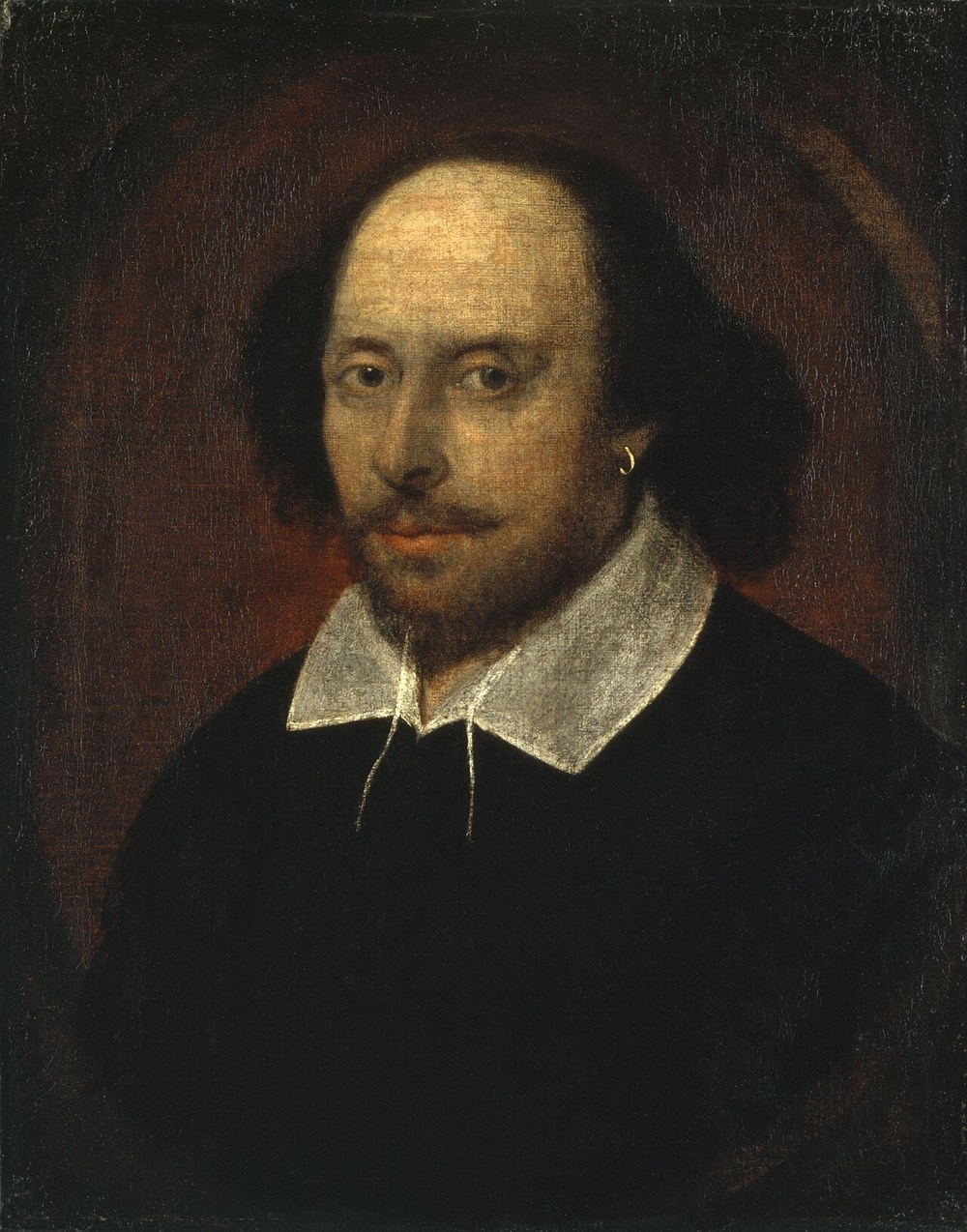
Shakespeare was born in Stratford-upon-Avon in 1564 and baptized there on 26 April. His exact birthday is not documented; 23 April is a later convention, so this entry does not assign a full birth date. Family and legal records establish important details, but gaps in the surviving evidence require restraint. His schooling is generally inferred rather than supported by an individual attendance record.
A working life in the theatre
By the early 1590s Shakespeare was active in London’s theatrical world. He became associated with the Lord Chamberlain’s Men, later the King’s Men, as an actor, writer and shareholder. The plays emerged within a collaborative commercial institution that depended on performers, patrons and paying audiences. His career therefore involved the practical demands of rehearsal, casting and production alongside the writing of dramatic literature.
History, comedy and tragedy
The histories examine kingship and contested authority; comedies such as Much Ado About Nothing explore misunderstanding, social performance and desire. Hamlet, Othello, King Lear and Macbeth turn decisions into crises of knowledge and responsibility. These groupings are useful entry points, but they are not rigid boundaries. Humour appears inside tragedy, while apparently festive comedies can expose exclusion, coercion and unequal power.
Poetry and the movement of language
Venus and Adonis and The Rape of Lucrece appeared during the 1590s, while the Sonnets were printed in 1609. Across drama and verse, shifts in rhythm, metaphor and voice can reveal a speaker discovering or concealing a thought. Characters do not simply express fixed ideas: their language changes as they persuade others, rationalize conduct or encounter consequences they had failed to anticipate.
Printing and the First Folio
Many plays circulated in individual editions during his lifetime. In 1623, seven years after his death, fellow actors John Heminges and Henry Condell helped bring together the First Folio. It preserved numerous plays that had not previously appeared in print. Modern texts consequently rely on editorial comparison and interpretation, not on a single uniform manuscript representing every work exactly as first performed.
A global and contested inheritance
Shakespeare died in Stratford in 1616. His plays subsequently developed lives through translation, adaptation, performance and criticism far beyond the conditions of the original theatres. Their continuing importance lies partly in the interpretive space they leave open. Reading a character’s speech as the author’s personal doctrine can flatten that dramatic complexity, just as treating later adaptations as original productions confuses distinct historical moments.
Career timeline
Baptized on 26 April; the exact birth date remains unrecorded.
Becomes associated with the company that anchors his theatrical career.
The company’s new theatre opens on London’s Bankside.
The sonnet collection appears in print.
A posthumous collected edition preserves 36 plays.
Selected works & milestones
Lord Chamberlain’s Men
Becomes associated with the company that anchors his theatrical career.
Globe Theatre
The company’s new theatre opens on London’s Bankside.
Sonnets
The sonnet collection appears in print.
First Folio
A posthumous collected edition preserves 36 plays.
- Shakespeare Birthplace Trust — the evidence for his birth
- Royal Shakespeare Company — life and theatrical context
- Folger Shakespeare Library — the First Folio
- William Shakespeare — biographical reference and bibliography
Published 2026-10-31. Sources reviewed for this edition. Independent coverage of public professional activity.