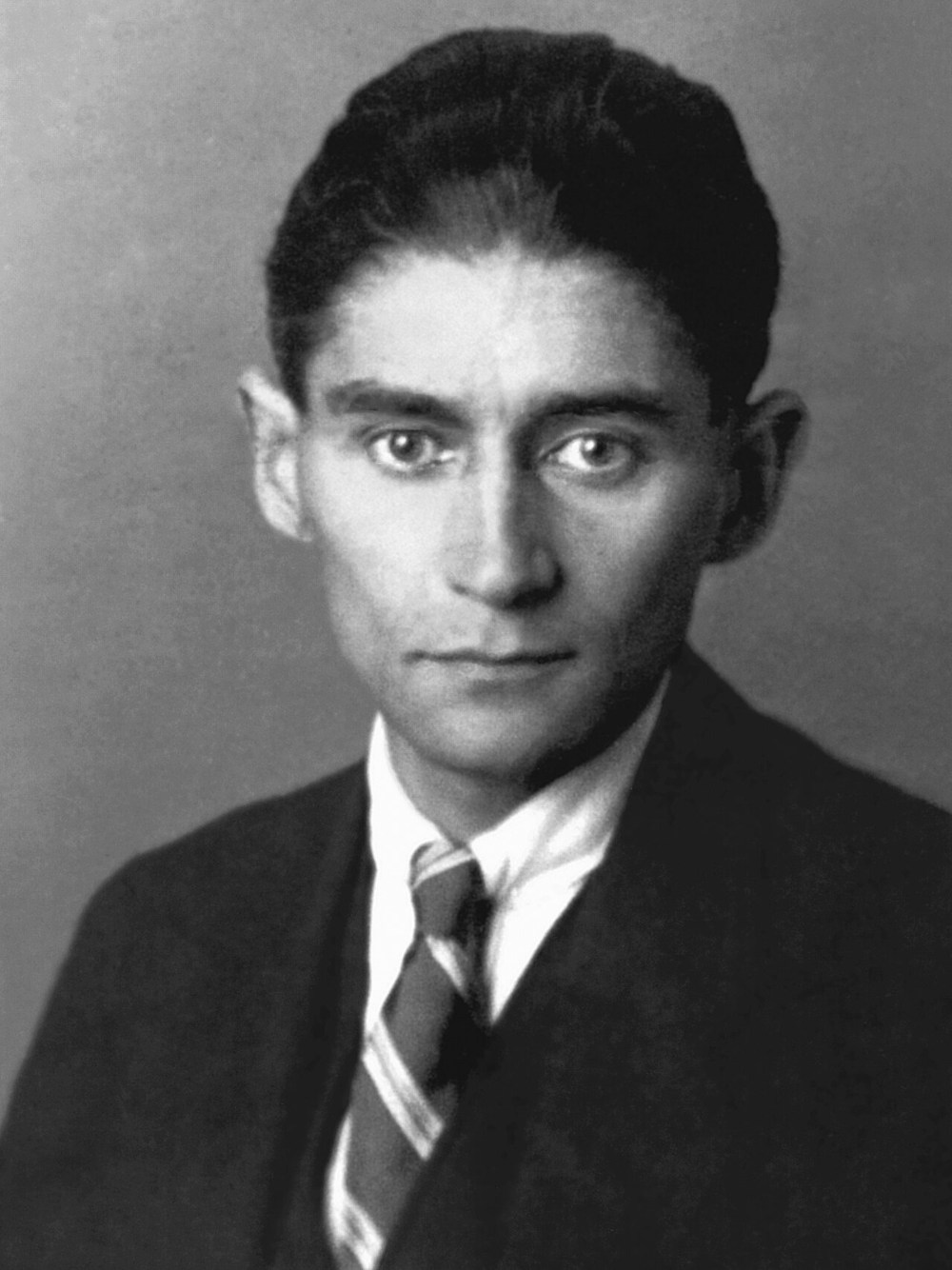
Contents — explore this biography
Prague and multiple cultural worldsInsurance work and literary disciplineThe ordinary voice and the impossible eventUnfinished novels and inaccessible authorityIllness, relationships and the surviving papersBeyond a familiar adjectivePrague and multiple cultural worlds
Kafka was born in Prague in 1883 into a German-speaking Jewish family. His education and social setting crossed linguistic, religious and political boundaries within the Habsburg Empire. He studied law and received a doctorate in 1906. The city and its communities supplied a complex context for his writing, although the fictional worlds cannot simply be decoded as direct maps of Prague or its inhabitants.
Insurance work and literary discipline
Employment in insurance, particularly work involving industrial accidents, occupied much of Kafka’s adult life. He wrote alongside professional responsibilities and maintained friendships within Prague’s literary circles. Max Brod, whom he met while a student, became an especially important advocate. The contrast between office work and nocturnal composition is biographically significant, but it should not obscure the practical competence he brought to the professional role.
The ordinary voice and the impossible event
The Judgment and The Metamorphosis establish extraordinary situations through controlled, often matter-of-fact narration. Gregor Samsa’s transformation is followed by questions of work, dependence and the response of his household. Kafka does not resolve the premise into a reassuring allegorical key. Its force depends partly on the coexistence of familiar obligations with an event that makes the assumptions behind those obligations suddenly visible and unstable.
Unfinished novels and inaccessible authority
The Trial and The Castle place central figures within processes they cannot adequately grasp. Their attempts to obtain explanations or recognition generate further uncertainty rather than a stable route toward resolution. These novels remained unfinished. That condition matters for interpretation: their published shape reflects manuscript survival and editorial decisions, so an apparent ending or sequence should not automatically be treated as the author’s final settled arrangement.
Illness, relationships and the surviving papers
Kafka’s later years were affected by tuberculosis, and his correspondence records important relationships alongside the writing. He died in June 1924. Instructions to destroy unpublished material created an enduring ethical problem for Brod, who chose preservation and publication. The surviving papers eventually reached major archives, including the Bodleian Libraries. Their history reveals how a literary reputation can depend on decisions made by others after an author’s death.
Beyond a familiar adjective
The adjective derived from Kafka’s name often describes bewildering bureaucracy, but the stories extend beyond administrative frustration. Family expectation, bodily vulnerability, comedy, guilt and the search for belonging all contribute to their strange pressure. Later criticism and adaptation have made his work globally influential. A responsible account preserves the ambiguity of the fiction rather than using the familiar label as a replacement for reading its individual scenes.
Career timeline
Completes his law doctorate in Prague.
Writes the story during a decisive period of literary development.
The novella appears in print.
Max Brod publishes the unfinished novel after Kafka’s death.
The unfinished novel is published posthumously.
Selected works & milestones
The Judgment
Writes the story during a decisive period of literary development.
The Metamorphosis
The novella appears in print.
The Trial
Max Brod publishes the unfinished novel after Kafka’s death.
The Castle
The unfinished novel is published posthumously.
- Franz Kafka Museum — life and work timeline
- Bodleian Libraries — the survival and publication of Kafka’s papers
- Bodleian Libraries — archival exhibition and death date
- Project Gutenberg — The Metamorphosis, primary literary text
- Franz Kafka — biographical reference and bibliography
Published 2026-10-31. Sources reviewed for this edition. Independent coverage of public professional activity.