Contents — explore this biography
Eric Blair and imperial experiencePoverty, reporting and a pen nameSpain and the struggle over political truthAnimal Farm and revolutionary hierarchyNineteen Eighty-Four and the pressure on realityEssays, archives and continuing disputesEric Blair and imperial experience
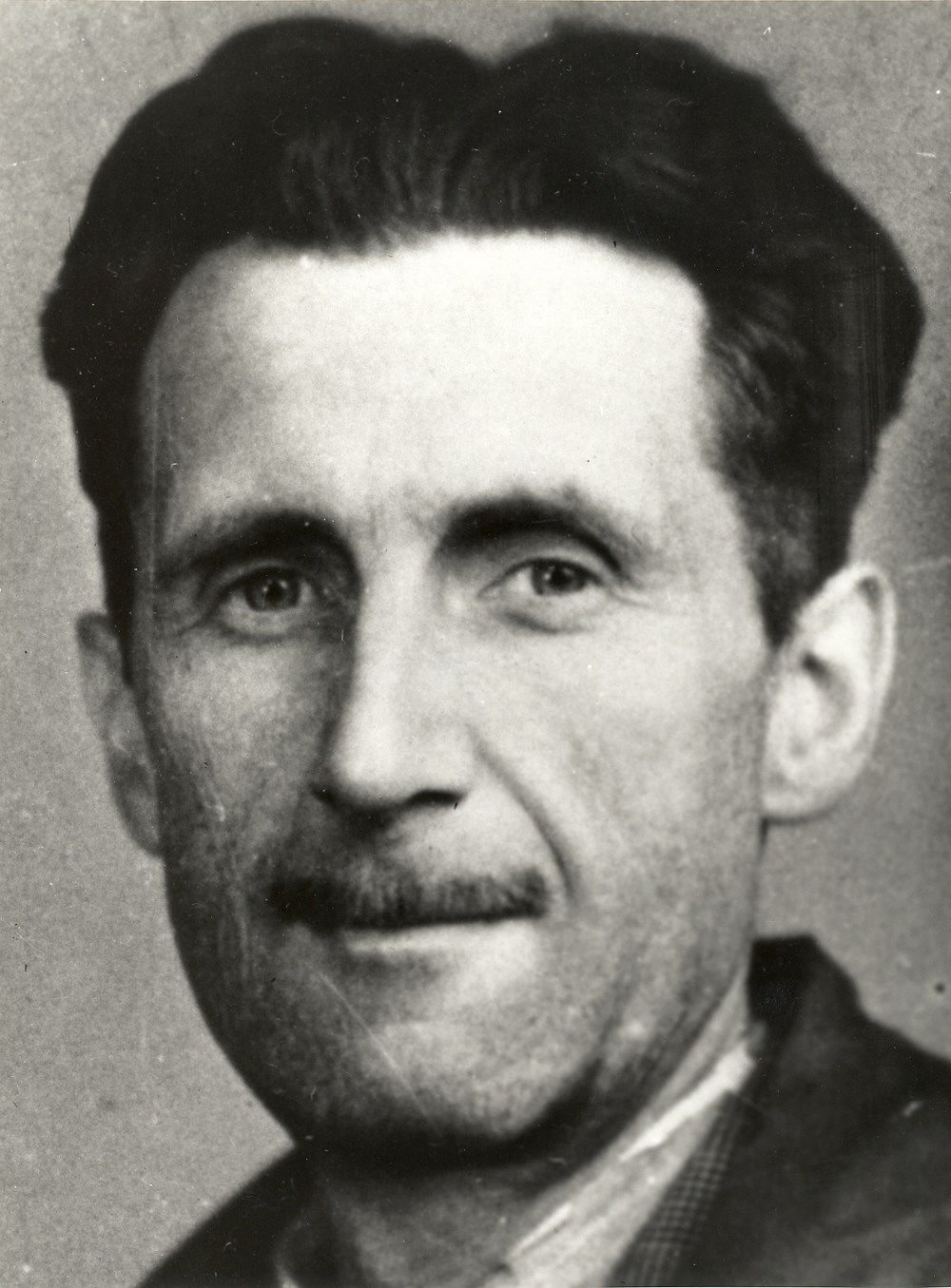
Orwell was born Eric Arthur Blair in Motihari in British India in 1903 and grew up largely in England. After schooling at Eton, he served in the Indian Imperial Police in Burma during the 1920s. He later rejected the imperial role. This experience informed fiction and essays, but the relationship between a retrospective literary account and a complete factual record of his service should remain distinct.
Poverty, reporting and a pen name
Down and Out in Paris and London appeared in 1933 under the name George Orwell. Writing about precarious work and poverty joined an emerging commitment to examine social arrangements from close observation. The Road to Wigan Pier extended that engagement to working-class life in northern England. These books also reveal the tensions between a writer’s social origins, his political convictions and the people whose experience he sought to represent.
Spain and the struggle over political truth
Orwell fought with a militia during the Spanish Civil War and was wounded. Homage to Catalonia records his experience and his confrontation with conflict within the anti-fascist side. The suppression of inconvenient evidence became an enduring concern. His opposition to authoritarian communism should not be confused with a rejection of every socialist commitment: his political writing continued to argue for a form of democratic socialism.
Animal Farm and revolutionary hierarchy
Published in 1945, Animal Farm uses a compact fable to trace a rebellion’s transformation into a renewed hierarchy. The animal figures make changes in language, privilege and historical memory visible without requiring a long realist narrative. Its historical references matter, but the book’s mechanism is also broader: those who control institutions can redefine a movement’s principles while claiming to remain their most faithful guardians.
Nineteen Eighty-Four and the pressure on reality
Nineteen Eighty-Four appeared in 1949, after difficult work completed during worsening illness. Surveillance, coercion and the systematic revision of records shape its imagined society. Winston Smith’s struggle concerns relationships and memory as well as political belief. The novel is more than a set of predictions about devices: it investigates what happens when power claims the right to determine the terms under which facts can be acknowledged.
Essays, archives and continuing disputes
Orwell died in London in 1950. His essays on language, literature and everyday life remain central to his reputation alongside the two best-known novels. The surviving archive at University College London supports continued research into his drafts and correspondence. His name is frequently invoked in political disputes; that familiarity makes it especially useful to distinguish his actual arguments, his contradictions and the later positions attributed to him.
Career timeline
Born on 25 June in Motihari, British India.
Publishes the book under the pen name George Orwell.
Publishes the account of his Spanish Civil War experience.
Publishes the political fable of revolution and renewed domination.
Publishes his final novel before his death the following year.
Selected works & milestones
Down and Out in Paris and London
Publishes the book under the pen name George Orwell.
Homage to Catalonia
Publishes the account of his Spanish Civil War experience.
Animal Farm
Publishes the political fable of revolution and renewed domination.
Nineteen Eighty-Four
Publishes his final novel before his death the following year.
- The Orwell Foundation — D. J. Taylor’s biographical account
- The Orwell Foundation and UCL — archival record and final years
- The Orwell Foundation — works and original essays
- George Orwell — biographical reference and bibliography
Published 2026-10-31. Sources reviewed for this edition. Independent coverage of public professional activity.