Contents — explore this biography
Journalism and wartime experienceParis and a developing methodWar, relationships and disillusionmentShort fiction and the unstated eventThe late novella and recognitionThe archive beyond the public personaJournalism and wartime experience
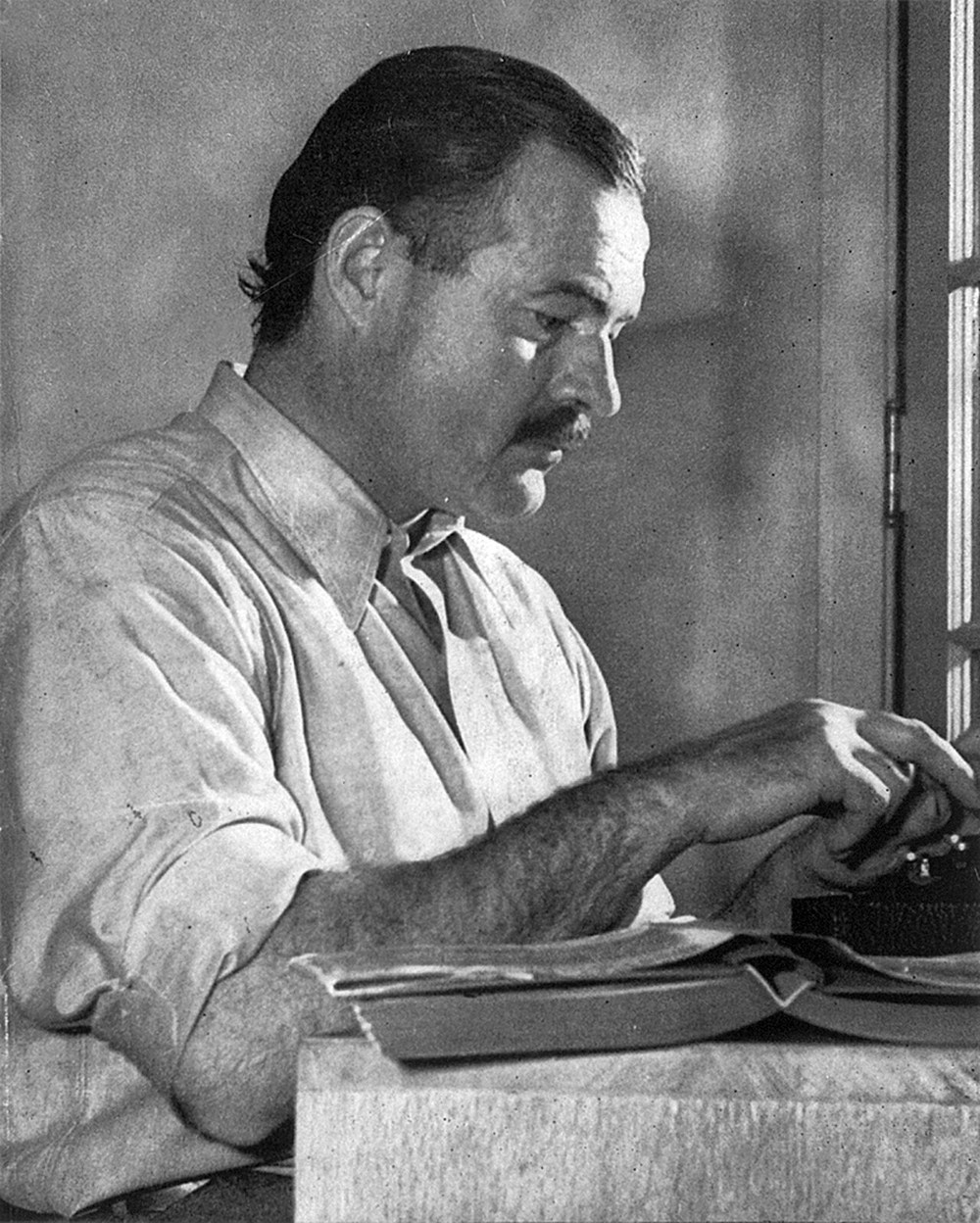
Hemingway was born in Oak Park, Illinois, in 1899 and began professional writing in journalism. During the First World War he served as a volunteer ambulance driver in Italy and was wounded. Later reporting took him back to Europe. These experiences supplied settings and situations, but his fiction is shaped through selection, omission and invention rather than functioning as an unedited record of events he personally witnessed.
Paris and a developing method
Living among expatriate writers and artists in Paris during the 1920s, he developed a style associated with concise sentences, precise observation and dialogue that leaves important feelings unstated. In Our Time and The Sun Also Rises helped establish his reputation. The apparent simplicity required careful construction. A scene’s pressure often comes from the distance between what people say and the experience they cannot directly or comfortably express.
War, relationships and disillusionment
A Farewell to Arms, published in 1929, draws on wartime experience to examine love, institutional demands and loss. Later, his reporting on the Spanish Civil War provided a setting for For Whom the Bell Tolls. These novels connect personal attachments with collective violence. They also complicate the public image of invulnerability that became attached to the author, because fear, dependence and damage remain central to the narrative experience.
Short fiction and the unstated event
The short stories are essential to Hemingway’s achievement. Their restricted viewpoints and carefully managed information ask the reader to infer emotional stakes from action, setting and conversation. This method does not mean that all interpretation is equally supported: what is withheld still leaves patterns in the text. The discipline of omission creates tension precisely because an apparently ordinary exchange can carry a consequence its participants struggle to name.
The late novella and recognition
The Old Man and the Sea appeared in 1952, presenting an ageing fisherman’s prolonged struggle at sea. The novella received the Pulitzer Prize in 1953, and Hemingway was awarded the Nobel Prize in Literature in 1954. Recognition concerned a career and a narrative method as well as one late book. Its story of endurance allows interpretations involving pride, skill and defeat without requiring a single reassuring moral.
The archive beyond the public persona
Hemingway died in Idaho in 1961. Manuscripts, correspondence and photographs preserved at the John F. Kennedy Presidential Library support study of revisions and the changing circumstances of his work. They help separate the labour of writing from the author’s highly visible reputation as an adventurer. Later readers can examine both his formal influence and the gendered assumptions within particular works, without reducing an extensive literary record to either celebration or dismissal.
Career timeline
Born on 21 July in Illinois.
Publishes the novel associated with the postwar expatriate generation.
Publishes the novel of war, attachment and disillusionment.
Publishes the late novella that receives the following year’s Pulitzer Prize.
Receives the prize for narrative mastery and influence on contemporary style.
Selected works & milestones
The Sun Also Rises
Publishes the novel associated with the postwar expatriate generation.
A Farewell to Arms
Publishes the novel of war, attachment and disillusionment.
The Old Man and the Sea
Publishes the late novella that receives the following year’s Pulitzer Prize.
Nobel Prize in Literature
Receives the prize for narrative mastery and influence on contemporary style.
- Nobel Prize — Hemingway’s career and literary method
- Nobel Prize — award and biographical facts
- John F. Kennedy Presidential Library — Hemingway archival holdings
- Ernest Hemingway — biographical reference and bibliography
Published 2026-10-31. Sources reviewed for this edition. Independent coverage of public professional activity.