Contents — explore this biography
A painter formed in FlorenceDevotion and an active workshopMythology as a language of cultureRome and the demands of narrativeLater work and changing reputationA painter formed in Florence
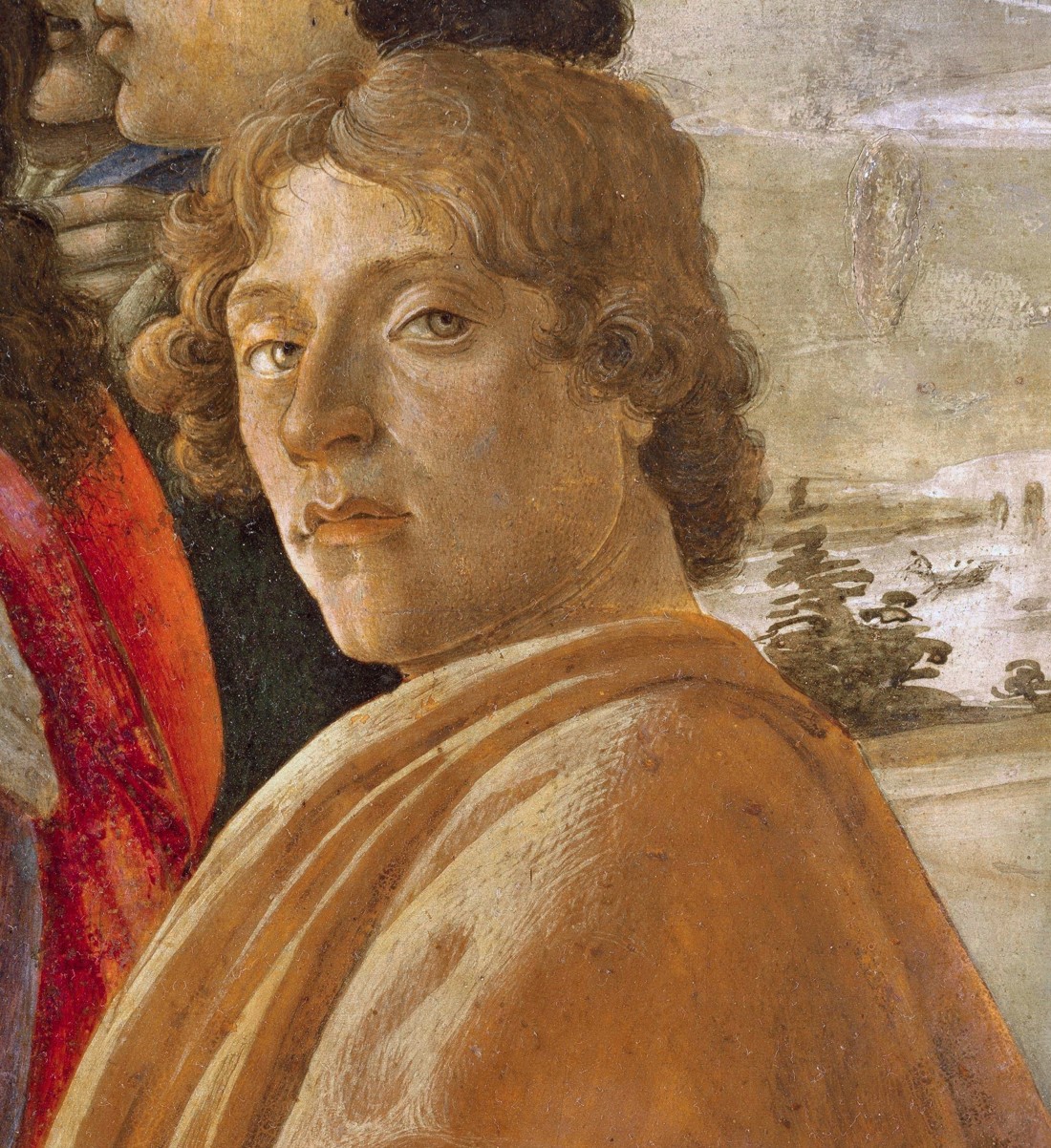
Sandro Botticelli was born Alessandro di Mariano Filipepi in Florence around 1445. His career developed in a city where workshops, religious institutions and wealthy households commissioned art for very different settings. Training associated with Filippo Lippi helped establish his command of graceful figures and expressive contours. Botticelli’s mature style gave line an organizing role: a gesture, a turn of the head or a flowing garment could carry emotional meaning without depending on monumental physical weight.
Devotion and an active workshop
Botticelli produced altarpieces and images of the Virgin and Child alongside the mythological pictures that later became especially famous. These devotional works served public worship and private contemplation. Their carefully arranged groups and sensitive exchanges between figures helped viewers enter a sacred narrative. His successful workshop also supplied versions and related compositions, making attribution and the distinction between the master’s hand and workshop participation important parts of studying his production. Painting was both individual invention and organized professional labour.
Mythology as a language of culture
Primavera assembles classical figures within an elaborately described garden. Venus, Cupid, the Graces and other characters create relationships that have invited differing interpretations, rather than yielding one universally accepted message. The Birth of Venus presents the goddess arriving at the shore on a shell, not a literal depiction of the instant of her birth. Both pictures connect ancient literary and visual traditions with the ambitions of Renaissance patrons. Their exact original purposes should not be reduced to an unsupported single explanation.
Rome and the demands of narrative
In 1481–1482 Botticelli worked in Rome on the decoration of the Sistine Chapel, joining other prominent painters in a major papal undertaking. Large narrative frescoes demanded coordination between figures, architecture and successive episodes. Back in Florence, his work continued across religious, allegorical and portrait subjects. The contrast between intimate devotional panels and expansive wall paintings shows the range hidden by the modern tendency to identify him chiefly with a handful of celebrated mythologies and their elegant female figures.
Later work and changing reputation
Botticelli’s later paintings often adopt heightened emotional intensity and deliberately compressed space. The Mystical Nativity, dated 1500, offers a particularly distinctive vision of Christian expectation. His final years unfolded amid Florence’s political and religious upheavals, although individual paintings cannot all be explained by one presumed allegiance. He died in 1510. Renewed admiration in the nineteenth century helped establish his modern reputation; today his work remains valuable for the tension between visual delicacy, complex symbolism and strongly organized narrative expression.
Career timeline
Born in Florence.
Documented as an independent painter with a workshop.
Worked on frescoes in the Sistine Chapel in Rome.
Dated The Mystical Nativity.
Died in Florence.
Selected works & milestones
Primavera
A gathering of classical figures within a richly described garden; Uffizi dating.
The Birth of Venus
Venus arrives at the shore in a large mythological composition.
Venus and Mars
An allegorical treatment of love, sleep and martial power.
The Mystical Nativity
A religious painting with an unusually charged symbolic programme.
- National Gallery — Botticelli biography
- Uffizi Galleries — Primavera
- Uffizi Galleries — The Birth of Venus
Published 2026-11-05. Sources reviewed for this edition. Independent coverage of public professional activity.