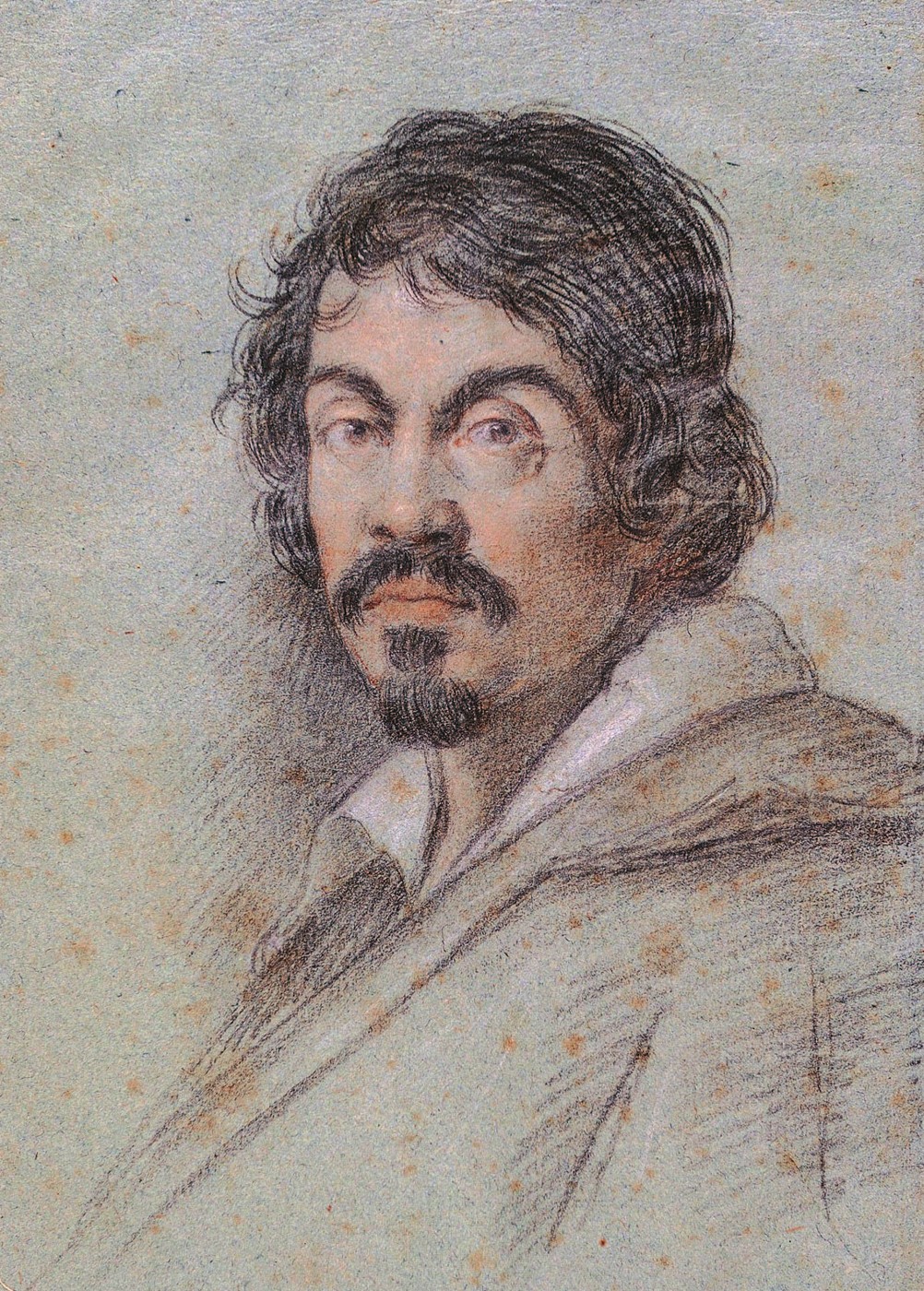
Contents — explore this biography
Lombard training and the move to RomePatronage and the breakthrough commissionsLight, bodies and the construction of dramaControversy and a mobile final careerA wider movement without a formal schoolLombard training and the move to Rome
Michelangelo Merisi, known as Caravaggio after the Lombard town associated with his family, was born in Milan in 1571. His apprenticeship with Simone Peterzano supplied a professional grounding before he moved to Rome in the early 1590s. There he encountered a competitive market for pictures and the need to secure patrons. Early paintings of musicians, card players, fruit and youthful figures show a painter testing how closely observed objects and bodies could create convincing, concentrated scenes.
Patronage and the breakthrough commissions
Cardinal Francesco Maria del Monte became an important supporter, providing access to a cultivated circle and helping Caravaggio move toward major public commissions. The paintings of Saint Matthew for the Contarelli Chapel, unveiled in 1600, made his approach visible in a Roman church. Sacred history appeared to unfold in spaces inhabited by people with recognizable gestures and contemporary clothing. The relationship between the viewer and the painted action became unusually direct, intensifying the devotional encounter rather than merely illustrating a familiar story.
Light, bodies and the construction of drama
Caravaggio’s strongly directed light is inseparable from his arrangement of figures. It isolates a face, clarifies a hand or makes a decisive moment legible against darkness. Yet his work is more than a formula of bright subjects and black backgrounds. A compressed setting, interrupted movement and carefully positioned bodies establish psychological relationships. Painting from models helped him insist on physical presence, while the resulting compositions remained deliberate constructions designed for particular patrons, locations and narrative purposes.
Controversy and a mobile final career
His treatment of sacred figures sometimes conflicted with expectations governing devotional images. The physical vulnerability of a body or the apparent ordinariness of a model could provoke rejection even when other collectors valued the same painting. In 1606 Caravaggio killed Ranuccio Tomassoni in a violent confrontation and fled Rome. He subsequently worked in Naples, Malta and Sicily, producing major religious paintings under changing circumstances. The movement of his final years belongs to the history of his commissions as well as his troubled personal record.
A wider movement without a formal school
Caravaggio died in 1610 while attempting to return toward Rome. His paintings influenced artists from Italy, the Netherlands, France and Spain, even though his impact did not depend on a conventional teaching workshop. Followers adapted different aspects of his example: concentrated illumination, close figures, everyday models or psychological immediacy. This diversity matters because Caravaggism was not a single fixed style. His achievement lies in making the distance between painted sacred history and the viewer’s own physical world newly unstable and compelling.
Career timeline
Born Michelangelo Merisi in Milan.
Began an apprenticeship with Simone Peterzano.
The Saint Matthew paintings in the Contarelli Chapel established his public reputation.
Fled Rome after killing Ranuccio Tomassoni.
Died at Porto Ercole.
Selected works & milestones
The Cardsharps
A scene of deception whose gestures organize the unfolding narrative.
The Calling of Saint Matthew
A religious encounter staged through light and human response.
The Supper at Emmaus
Recognition of Christ expressed through gesture and a table pushed toward the viewer.
The Beheading of Saint John the Baptist
A large, austere composition made during his time in Malta.
- National Gallery — Caravaggio biography
- Metropolitan Museum of Art — Caravaggio and his followers
- Thyssen-Bornemisza — Caravaggio
Published 2026-11-05. Sources reviewed for this edition. Independent coverage of public professional activity.