Contents — explore this biography
From tailoring to a Paris fashion houseSpace Age forms and new materialsReady-to-wear and a wider customer baseLicensing, international markets and cultureAn institutional and museum legacyFrom tailoring to a Paris fashion house
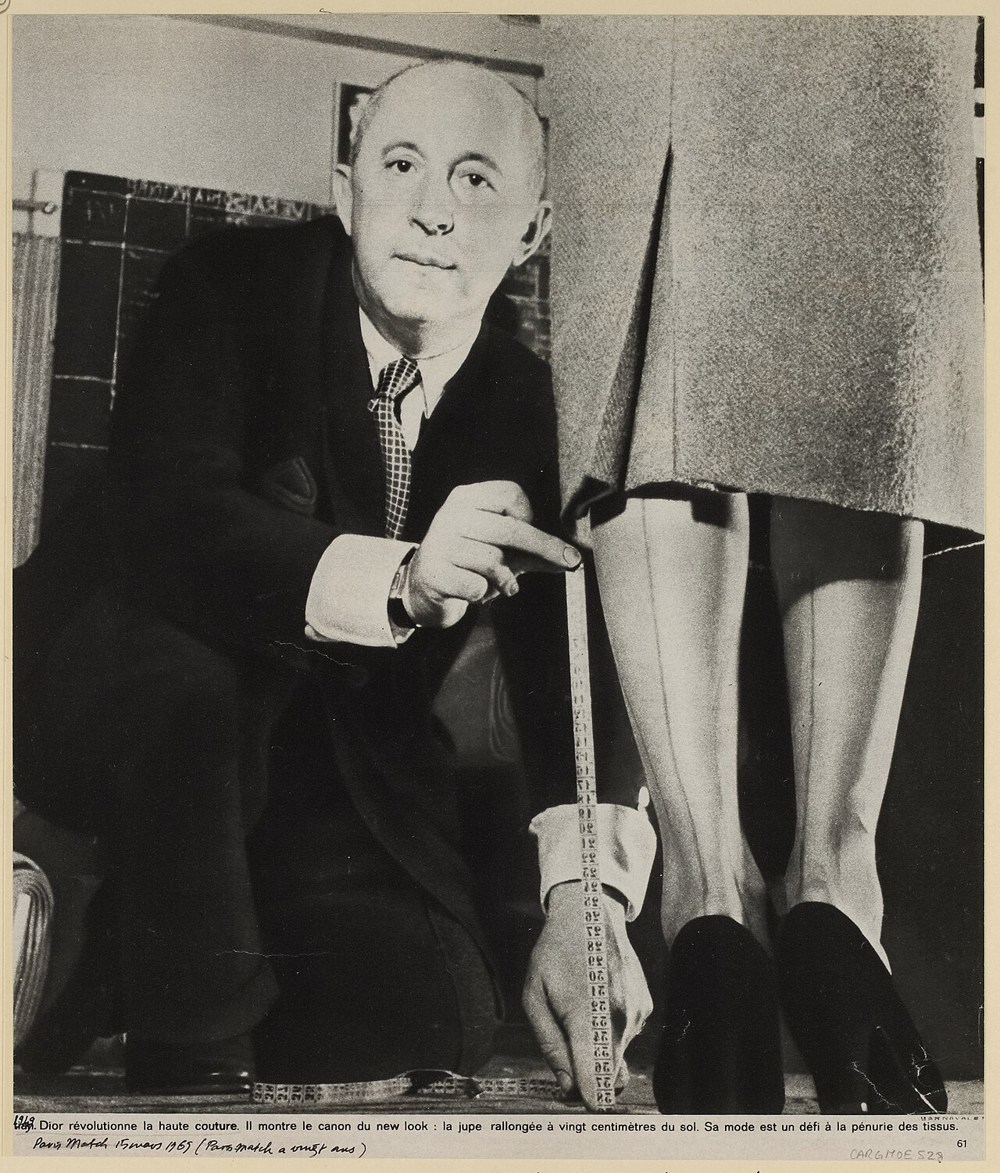
Pierre Cardin was born in Italy in 1922 and grew up in France after his family moved there in 1924. Training in tailoring gave him a practical foundation before his career developed in Paris. He worked within the city’s fashion industry, including at Christian Dior, before establishing his own house in 1950. This background is essential to understanding the geometric experiments that later made him famous. They were not merely graphic shapes placed on bodies: they depended on construction. His early knowledge of seams, fit and the manipulation of cloth supported a career in which clothing increasingly became an exploration of unfamiliar volumes.
Space Age forms and new materials
Cardin became closely associated with the futuristic language of 1960s fashion. Circular forms, geometric cutouts and strongly defined silhouettes gave many of his designs a sculptural quality. New materials and changing expectations about modern life offered opportunities to reconsider how clothing might look and function. The Space Age label describes this historical atmosphere as much as any literal connection with space travel. His work translated the period’s fascination with technology into garments for civilian life. That translation could be playful or theatrical, but it also questioned the inherited relationship between the body and the shapes that fashionable clothing was expected to follow.
Ready-to-wear and a wider customer base
In 1959 Cardin presented ready-to-wear through the Paris department store Printemps. The decision connected a couture-trained designer with a broader retail audience and forms part of his importance in the development of modern fashion business. Ready-to-wear changed the relationship between design, manufacturing and access: clients no longer had to encounter a house exclusively through individual couture appointments. Cardin’s career helped make that wider circulation visible. It should not be reduced to a claim that he invented ready-made clothing, which had a much longer history. His contribution lay in bringing a prominent designer identity into a changing commercial system.
Licensing, international markets and culture
Cardin extended his name across numerous licensed products and pursued markets beyond the established Western fashion capitals. This approach made the brand a business system reaching far beyond garments. It also raises a useful distinction between the direct design of an object and the authorization of a name under licence. His entrepreneurial career belongs to both histories. Cultural activity provided another outlet: the Espace Cardin, opened in 1970, connected his interests with performance and artistic presentation. The combination of clothing, products, international activity and cultural venues made his career unusually broad, while also complicating any attempt to judge it solely through a runway collection.
An institutional and museum legacy
Cardin was elected to the Académie des beaux-arts in 1992, and the awards bearing his name have supported several artistic disciplines since 1993. These institutional connections show how his ambitions extended beyond the commercial fashion calendar. A major retrospective at the Brooklyn Museum in 2019 revisited the experimental clothing within the larger course of his career. He died in December 2020. His legacy therefore contains several distinct achievements: technical imagination, the dissemination of designer fashion and a far-reaching model of brand licensing. The surviving garments allow those developments to be studied alongside one another without treating commercial reach as a substitute for design analysis.
Career timeline
Born in Sant’Andrea di Barbarana, Italy.
Established his fashion house in Paris.
Presented ready-to-wear through Printemps.
Opened Espace Cardin in 1970 and entered the Académie des beaux-arts in 1992.
Died on 29 December.
Selected works & milestones
Pierre Cardin house
Established an independent fashion business in Paris.
Printemps ready-to-wear
Connected designer fashion with department-store retail.
Space Age clothing
Explored geometric volumes and futuristic silhouettes.
Espace Cardin
Created a venue linking his career with performance and culture.
- Académie des beaux-arts — Pierre Cardin
- FIT Museum — Paris Refashioned
- Smithsonian National Museum of American History — Cardin
- FIDM Museum — Pierre Cardin
- French Ministry of Culture — Pierre Cardin tribute
Published 2026-11-09. Sources reviewed for this edition. Independent coverage of public professional activity.