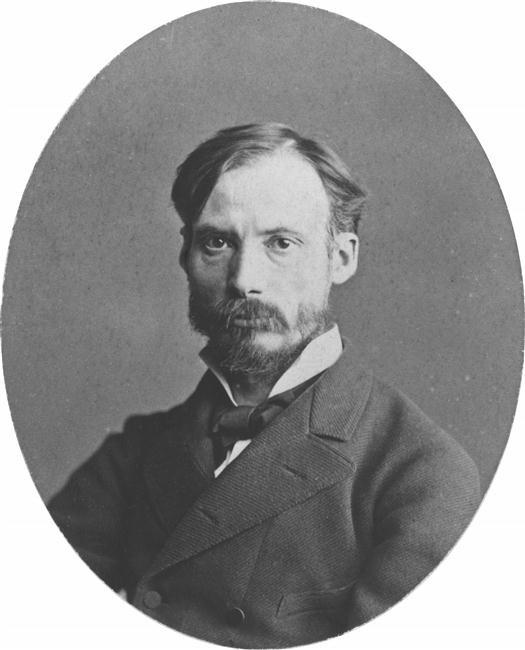
Contents — explore this biography
Craft training and the move toward paintingThe formation of an Impressionist approachModern sociability on an ambitious scaleTravel and a renewed interest in drawingLate work and an enduring debateCraft training and the move toward painting
Born in Limoges in 1841, Pierre-Auguste Renoir developed his early practical skills through decorative work, including painting porcelain. That experience made handling pigment and shaping a pleasing surface familiar activities before he established an independent artistic career. In Paris he studied painting and met Claude Monet, Alfred Sisley and Frédéric Bazille through Charles Gleyre’s studio. These friendships connected formal training with an expanding interest in working outside and observing contemporary surroundings. Museum visits also gave him sustained contact with earlier European painting.
The formation of an Impressionist approach
Renoir and Monet worked closely beside the Seine in 1869, testing ways to register moving water, reflected light and people enjoying suburban leisure. Broken brushwork and colour contrasts allowed a picture to convey changing sensations without carefully enclosing every object. Renoir participated in the first Impressionist exhibition in 1874. His contribution to the movement placed the human figure at its centre: faces, clothes, gestures and proximity between people were as important to his pictures as atmospheric effects.
Modern sociability on an ambitious scale
Dance at Le Moulin de la Galette and Luncheon of the Boating Party transform gatherings of friends and acquaintances into complex compositions. They appear relaxed, yet their arrangements depend on controlled exchanges between figures, diagonals, patches of light and the surrounding setting. The boating-party painting was developed over an extended period rather than captured in one spontaneous session. Its combination of portraiture, still life and landscape demonstrates how the language of Impressionism could sustain a large, carefully organized social scene.
Travel and a renewed interest in drawing
A visit to Italy in 1881 strengthened Renoir’s engagement with Raphael and classical figure painting. During the following years he gave greater emphasis to contour, stable form and the construction of the body. The change did not erase his earlier interest in colour; it altered the balance between drawing and paint. Works such as The Umbrellas reveal a career with successive approaches rather than one permanent Impressionist formula. Portrait commissions and relationships with collectors also helped make his professional position more secure.
Late work and an enduring debate
Renoir spent his later years in southern France, where serious arthritis complicated the physical work of painting. He continued developing figure subjects and worked on sculpture with assistance. He died at Cagnes-sur-Mer in 1919. His reputation has often focused on pleasure, warmth and beauty, but those qualities rest on demanding compositional decisions. Considering the changes across his career makes it possible to see both his innovations in depicting modern social life and his persistent dialogue with established traditions of the painted body.
Career timeline
Born in Limoges.
Worked beside Monet on scenes along the Seine.
Participated in the first Impressionist exhibition.
Travelled to Italy, deepening his interest in classical painting.
Died at Cagnes-sur-Mer.
Selected works & milestones
Dance at Le Moulin de la Galette
An ambitious representation of Parisian leisure.
Luncheon of the Boating Party
A group scene combining portraiture, landscape and still life.
The Umbrellas
A street scene reflecting changes in his handling of form.
The Large Bathers
A major exploration of the figure and classical composition.
- National Gallery — artist biography
- Thyssen-Bornemisza — life and work
- Phillips Collection — Luncheon of the Boating Party
Published 2026-11-05. Sources reviewed for this edition. Independent coverage of public professional activity.