Contents — explore this biography
Training and the discipline of drawingFrom colour theory to a painting methodA monumental view of suburban leisureTonal drawings and the world of performanceA short career with a wide aftermathTraining and the discipline of drawing
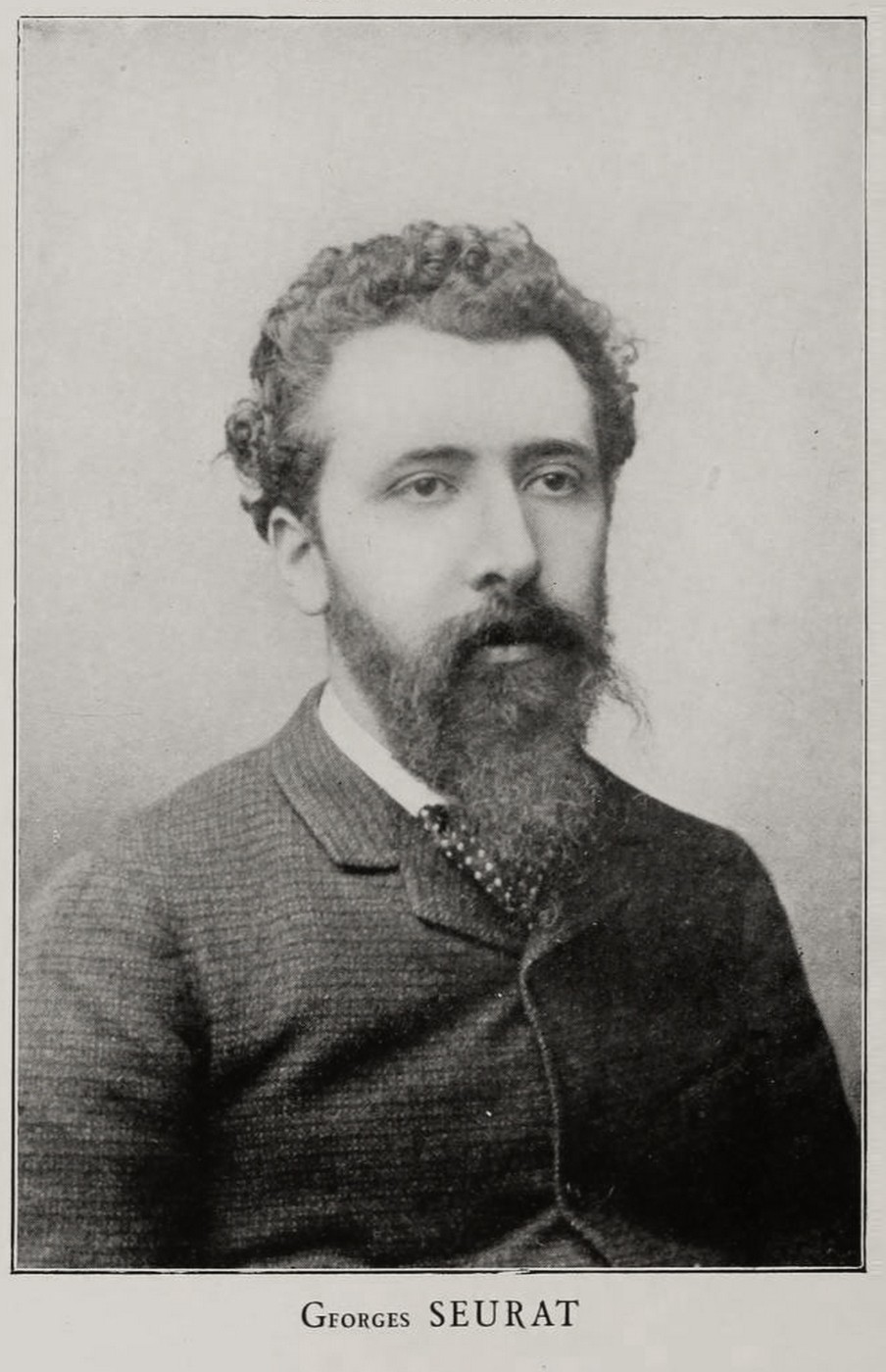
Georges Seurat was born in Paris in 1859 and received a conventional artistic education before developing an unconventional painting method. At the École des Beaux-Arts he studied with Henri Lehmann, whose teaching connected him with the tradition of Ingres. He also examined earlier paintings in the Louvre. His training helps explain the controlled poses and monumental arrangements in his mature work. Innovation in colour did not require him to abandon the careful organization of figures that he had learned through drawing.
From colour theory to a painting method
Seurat became interested in theories of colour, contrast and visual perception. He explored how small touches of different pigments could produce relationships distinct from colours extensively mixed on the palette. The resulting technique is often called pointillism, while Neo-Impressionism describes the broader artistic movement associated with him and Paul Signac. The paintings are not simply scientific demonstrations. Decisions about rhythm, scale, placement and subject remain essential, and their visual effects depend on the whole arrangement rather than on isolated dots.
A monumental view of suburban leisure
Bathers at Asnières and A Sunday on La Grande Jatte examine recreation beside the Seine on a scale traditionally associated with more elevated subjects. Figures appear separated, posed and unusually still, giving contemporary leisure an almost ceremonial character. Seurat prepared La Grande Jatte through numerous drawings and painted studies, then developed the large canvas over time. Its appearance at the final Impressionist exhibition in 1886 announced a method that retained modern subject matter while departing from the impression of rapid, spontaneous execution.
Tonal drawings and the world of performance
Alongside the bright divisions of his paintings, Seurat produced drawings in Conté crayon that build forms through fine gradations of dark and light. Paper texture becomes active in the image, allowing figures to emerge without hard outlines. His later paintings turned toward entertainment: sideshows, popular dance and the circus offered arrangements of performers, spectators and artificial illumination. Repetition and directional movement became increasingly explicit. These works suggest that a methodical surface could convey spectacle and energy as readily as the quiet of a riverside afternoon.
A short career with a wide aftermath
Seurat died in Paris in 1891 at only thirty-one, leaving a small body of major paintings and many studies. The brevity of his career makes its development especially striking. He helped establish a path beyond Impressionism in which modern subjects could be governed by strongly articulated formal systems. Later artists drew different lessons from his colour divisions, geometry and sense of pictorial order. Looking at the studies alongside the finished canvases reveals experimentation and revision beneath a surface that can initially seem perfectly predetermined.
Career timeline
Born in Paris.
Entered the École des Beaux-Arts.
Presented Bathers at Asnières at an independent exhibition.
Exhibited La Grande Jatte at the final Impressionist exhibition.
Died in Paris at the age of thirty-one.
Selected works & milestones
Bathers at Asnières
A large composition of recreation beside the Seine.
A Sunday on La Grande Jatte
A defining work of Neo-Impressionist colour and structure.
Circus Sideshow
A nighttime performance scene with artificial illumination.
The Circus
A late exploration of spectacle and dynamic rhythm.
- National Gallery — artist biography
- Art Institute of Chicago — making La Grande Jatte
- Metropolitan Museum — study for La Grande Jatte
- National Gallery of Art — artist collection
Published 2026-11-05. Sources reviewed for this edition. Independent coverage of public professional activity.