Contents — explore this biography
Aix-en-Provence and an unsettled beginningLearning through ImpressionismStill life as a laboratory of seeingLandscape, portraits and the bathersRecognition and a modern legacyAix-en-Provence and an unsettled beginning
Paul Cézanne was born in Aix-en-Provence in 1839. His father’s expectations initially directed him toward law, but drawing classes and a growing commitment to painting pulled him elsewhere. His friendship with the writer Émile Zola linked his provincial youth with wider artistic ambitions. In Paris he studied at the Académie Suisse and examined paintings in museums. His early pictures could be dark, heavily worked and dramatically expressive, far from the measured arrangements now most closely associated with his mature reputation.
Learning through Impressionism
Contact with Camille Pissarro helped Cézanne reconsider both his palette and his working method. Painting from nature encouraged greater attention to relationships between colours and to the construction of a scene through repeated observation. He exhibited with the Impressionists in 1874 and 1877, but his ambitions gradually diverged from theirs. Fleeting sensation became a point of departure for a more sustained problem: how to give visible experience a coherent structure without reducing it to the formulas of academic drawing.
Still life as a laboratory of seeing
Cézanne repeatedly painted fruit, bottles, cloths and familiar studio objects. These modest subjects allowed him to investigate how volumes occupy space and how one colour changes the appearance of another. Tables can seem tilted and contours can shift, yet the arrangement remains deliberately balanced. The discrepancies are part of the painting’s construction, inviting the viewer to follow the acts of looking that produced it. Instead of functioning only as decorative objects, his still lifes became extended investigations into perception and pictorial organization.
Landscape, portraits and the bathers
The countryside around Aix, especially Mont Sainte-Victoire, provided a recurring field of study. Cézanne organized its planes through touches of colour that connect foreground and distance while preserving a sense of material weight. His portraits and Card Players compositions apply a comparable concentration to bodies and objects. The late bathers bring groups of figures into architectural relationships with trees and open ground. Across these subjects, repetition is productive: returning to a motif permits new solutions rather than merely reproducing a successful earlier image.
Recognition and a modern legacy
Cézanne’s reputation among younger artists increased in the 1890s, helped by the dealer Ambroise Vollard. He died in Aix in 1906, and the following year’s retrospective brought his work further attention. Pablo Picasso and other artists found possibilities in his treatment of planes, contours and shifting viewpoints. His influence should not make him appear merely a preliminary stage of Cubism, however. His paintings remain independent achievements, preserving the tension between the world observed, the time spent observing it and the ordered surface of a canvas.
Career timeline
Born in Aix-en-Provence.
Travelled to Paris to pursue art.
Exhibited with the Impressionists.
Vollard presented a major exhibition of his paintings.
Died in Aix-en-Provence.
Selected works & milestones
Still Life with Fruit Dish
An investigation of objects, colour and pictorial space.
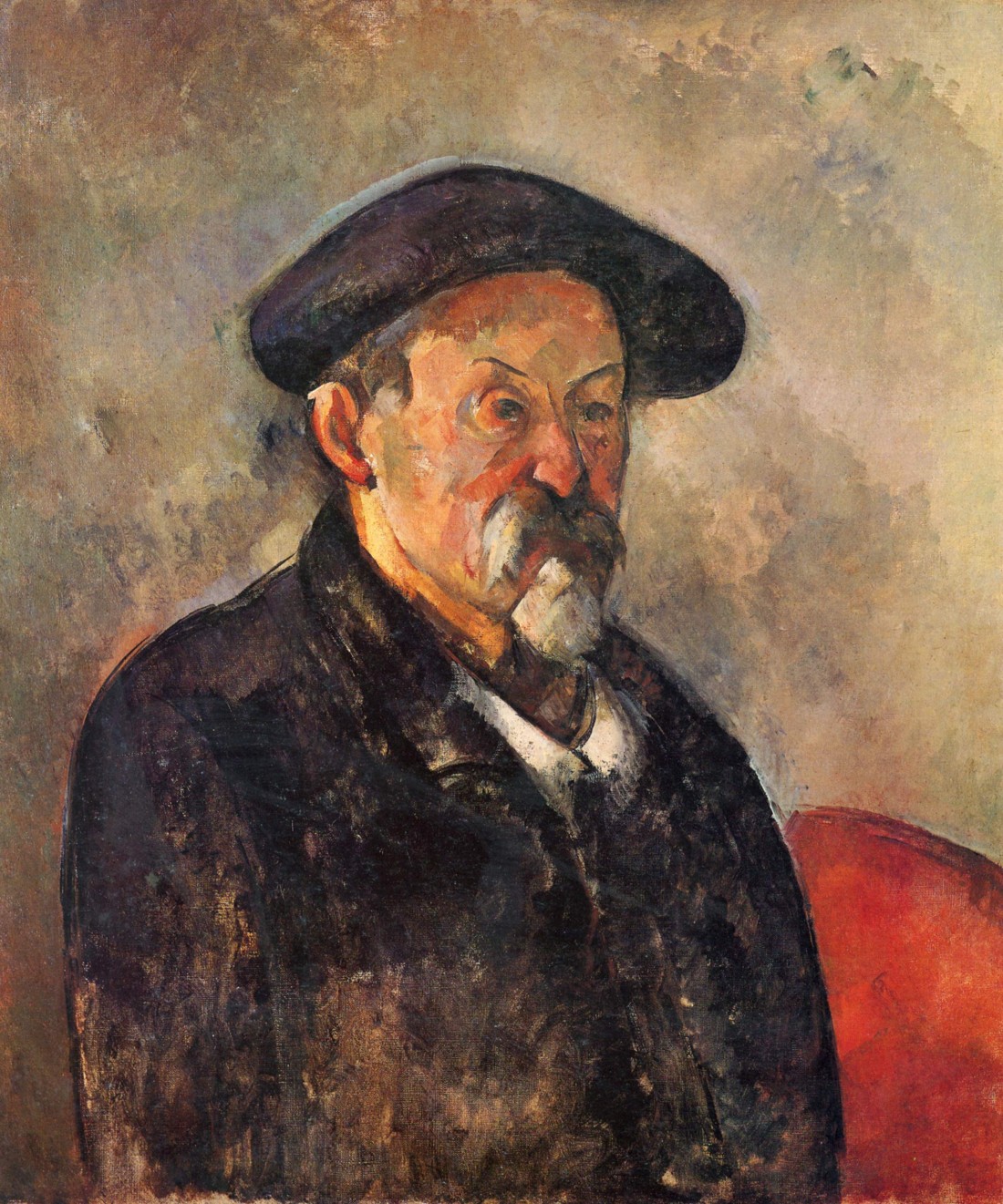
Self Portrait
A measured examination of the artist and his surroundings.
The Card Players
A series exploring concentrated figures and stable compositions.
The Large Bathers
A monumental late grouping of figures and landscape.
- National Gallery — artist biography
- MoMA — collection and artist record
- Thyssen-Bornemisza — biography
- National Gallery — Self Portrait
Published 2026-11-05. Sources reviewed for this edition. Independent coverage of public professional activity.