Contents — explore this biography
Royal family and early educationLegal and university studiesCrown-prince responsibilitiesThe accession of 1999Institutions and the public recordDynasty and contemporary roleRoyal family and early education
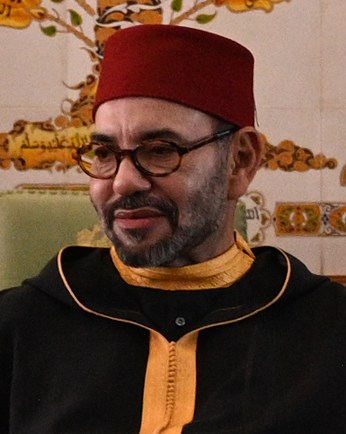
Mohammed VI was born in Rabat on 21 August 1963, a son of King Hassan II. He belongs to the Alaouite dynasty. His schooling and early public appearances took place while his father was sovereign. The crown-prince period therefore forms a substantial part of his biography, but it is distinct from the reign that began after Hassan’s death.
Legal and university studies
He studied law at Mohammed V University and later completed doctoral work in Nice in 1993. University qualifications are recorded here as educational milestones rather than treated as royal honors. They provide context for a public career involving legal and institutional questions, while the constitutional powers of the monarchy arise from the state’s framework and do not depend on academic credentials.
Crown-prince responsibilities
Before accession, Mohammed carried out official engagements and representative missions as crown prince. Such work placed him in contact with national and international institutions without making him the reigning head of state. The distinction is useful when comparing accounts of public appearances across the reigns of Hassan II and Mohammed VI, particularly when a later royal title is used in retrospective coverage.
The accession of 1999
He became king on 23 July 1999 following his father’s death. The enthronement ceremony followed on 30 July. The two dates describe succession and its later ceremonial marking, respectively. The monarchy also has a religious dimension through the title Commander of the Faithful, a role that should be distinguished from the activities of the elected government and other state institutions.
Institutions and the public record
His reign has included constitutional changes, development programmes and sustained diplomacy. The 2011 constitution is a central institutional milestone, although assessing its operation requires more than reading an announcement of reform. Morocco’s monarchy has meaningful political authority. It should not be described as equivalent in function to a sovereign whose constitutional duties are largely ceremonial.
Dynasty and contemporary role
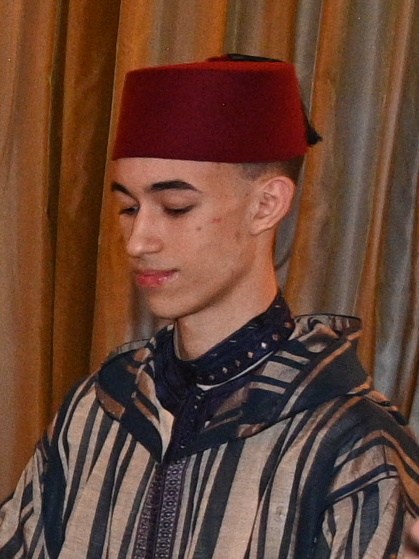
The Alaouite family connection places him within a longer dynastic history, while the timeline identifies the stages of his own public life. Crown Prince Moulay Hassan belongs to the succession context, not the current sovereign office. Official Moroccan biographies establish educational and accession milestones; the profile avoids speculative wealth claims and does not present every national development as a personal royal achievement.
Career timeline
Completes undergraduate law studies.
Completes doctoral study in Nice.
Succeeds Hassan II as king.
The enthronement ceremony takes place.
A new constitution becomes a central milestone of his reign.
Selected works & milestones
Legal education
University preparation before accession.
Doctoral study
Completes further legal scholarship in France.
Accession and enthronement
Succession and ceremony occur on separate dates.
Constitutional framework
An institutional milestone during his reign.
- Mohammed VI — biographical reference and cited sources
- Government of Morocco — official biography
- Moroccan diplomatic service — monarchy and political system
Published 2026-10-31. Sources reviewed for this edition. Independent coverage of public professional activity.