Contents — explore this biography
Paris, family and the formation of a writerEarly books and the apprenticeship of translationThe long construction of In Search of Lost TimeMemory, society and the changing meaning of experienceRecognition and the posthumous shape of the workParis, family and the formation of a writer
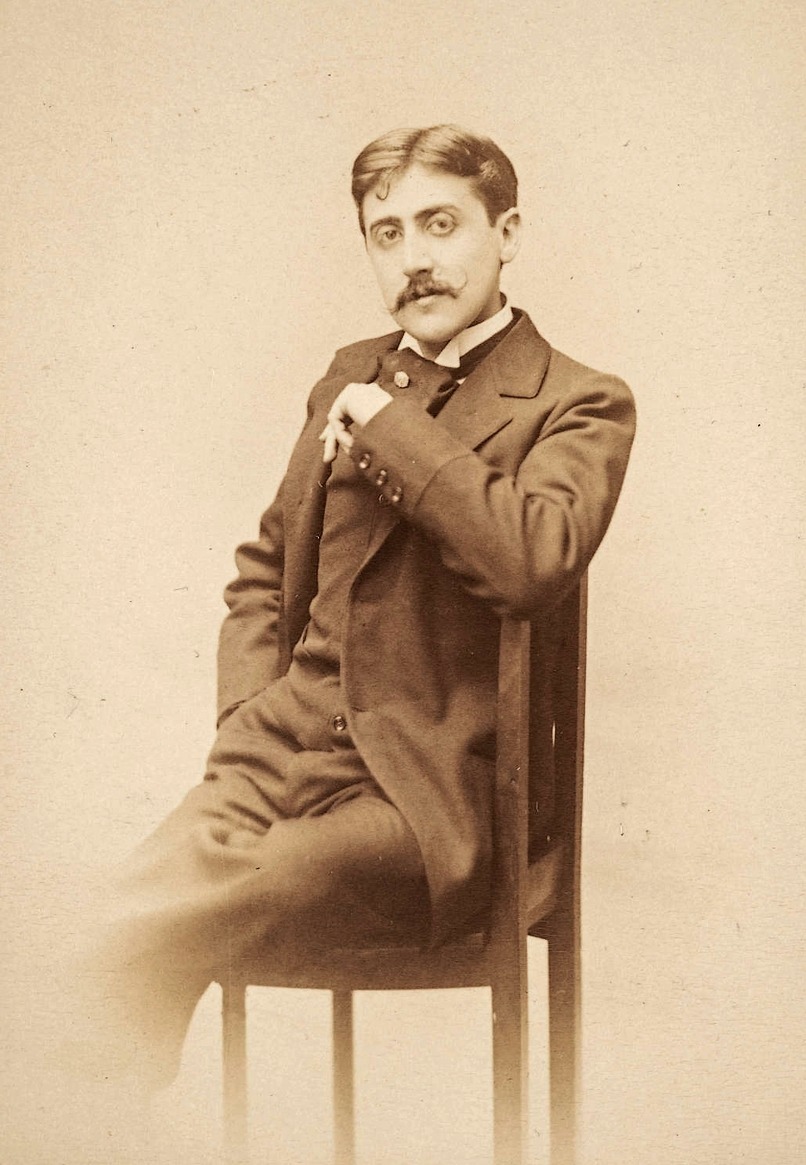
Marcel Proust was born in Auteuil, Paris, in 1871, into a family whose intellectual and social circumstances became important resources for his writing. His father was a physician, while his mother came from a cultivated Jewish family. Asthma affected his life from childhood, but neither illness nor later seclusion fully explains his literary development. Education, correspondence, friendships and the social life of Paris supplied another kind of apprenticeship. His attention to conversation and manners became a means of observing how people disclose ambitions that their own accounts of themselves may conceal.
Early books and the apprenticeship of translation
Les Plaisirs et les Jours appeared in 1896, bringing together shorter prose and poetry. A separate, unfinished early novel was eventually published posthumously as Jean Santeuil. These projects show an author developing methods rather than arriving with his mature design already complete. Proust also devoted considerable work to translating and interpreting John Ruskin, publishing La Bible d’Amiens in 1904 and Sésame et les Lys in 1906. Reading, architecture and visual art became occasions for examining the relationship between perception and expression. The translator’s task helped him formulate questions that his later fiction would pursue on a much larger scale.
The long construction of In Search of Lost Time
Du côté de chez Swann, the first part of À la recherche du temps perdu, appeared in 1913. The wider sequence continued to expand through drafts, revisions and additions, making its manuscript history central to understanding the finished work. The Bibliothèque nationale de France preserves extensive evidence of that creative labour. A self-contained first volume can therefore also be read as the opening of an architecture that was still changing. Proust’s achievement involved organizing a large network of people, places and recurring perceptions without reducing their significance to a straightforward sequence of biographical events.
Memory, society and the changing meaning of experience
Proust’s fiction is often associated with involuntary memory, but its range also includes jealousy, social aspiration, sexuality, artistic vocation and the instability of judgment. A sensation can return the narrator to an earlier experience while revealing that deliberate recollection had failed to preserve its force. Social encounters undergo comparable changes as admiration gives way to knowledge or one hierarchy replaces another. The narrator’s first interpretation of a person is rarely the last word. These patterns ask readers to notice how time alters the meanings of experiences that seemed settled when they were first encountered.
Recognition and the posthumous shape of the work
Proust received the Prix Goncourt in 1919 for À l’ombre des jeunes filles en fleurs. He continued working until his death in 1922, leaving later parts of the sequence to appear posthumously, with publication extending to Le Temps retrouvé in 1927. That history matters when considering editions and the editorial decisions behind them. His legacy is not merely a reputation for long sentences or a familiar episode involving a madeleine. It is a sustained investigation of how art can reorganize experience, connecting private sensation with the social worlds through which a life acquires its changing shape.
Career timeline
Born in Auteuil, Paris.
Les Plaisirs et les Jours was published.
Du côté de chez Swann opened In Search of Lost Time.
Received the Prix Goncourt for À l’ombre des jeunes filles en fleurs.
Died while the later volumes were still being prepared for publication.
Selected works & milestones
Les Plaisirs et les Jours
An early collection of prose and poetry.
Du côté de chez Swann
The first published part of In Search of Lost Time.
Prix Goncourt
Awarded for À l’ombre des jeunes filles en fleurs.
Le Temps retrouvé
The final part of the sequence appeared posthumously.
- University of Illinois — Kolb-Proust biography
- BnF — Marcel Proust manuscripts
- Musée d’Orsay — Marcel Proust
- Société des Amis de Marcel Proust — works
Published 2026-11-07. Sources reviewed for this edition. Independent coverage of public professional activity.