Contents — explore this biography
Legal education and an unexpected South African careerSatyagraha and the discipline of resistanceReturn to India and a mass independence movementSalt, civil disobedience and imprisonmentIndependence, communal violence and a disputed legacyLegal education and an unexpected South African career
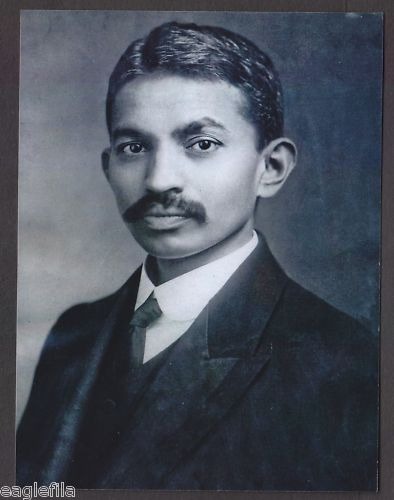
Mohandas Karamchand Gandhi was born in Porbandar in 1869 and trained in law in London. In 1893 he traveled to South Africa for legal work, entering a setting in which racial discrimination shaped everyday life and political opportunity. His stay extended over two decades and transformed the direction of his career. Organizing Indian communities, negotiating with authorities and experiencing imprisonment helped him develop methods that linked public claims with disciplined collective action. This experience preceded his leadership in India and makes clear that his political approach emerged through practice and revision rather than arriving as a completed doctrine.
Satyagraha and the discipline of resistance
Gandhi’s concept of satyagraha connected resistance to a commitment to truth and nonviolence. It demanded preparation, restraint and a willingness to endure penalties rather than merely expressing disagreement. Campaigns in South Africa provided an early setting for this method. His thought also linked political action with daily conduct, communal life and ideas about self-reliance. These principles were not always accepted by colleagues or opponents, and their application could generate difficult tensions. The historical importance of the method lies partly in its effort to make the means of struggle answerable to the kind of political life being sought.
Return to India and a mass independence movement
Gandhi returned to India in 1915 and became a central figure in campaigns involving peasants, workers and opposition to colonial rule. Ashram life and the promotion of hand-spinning connected his politics with everyday practices and economic independence. His leadership helped broaden participation in the independence movement, but the movement included many organizations, competing strategies and leaders whose ideas differed from his. He opposed untouchability, while disagreements with B. R. Ambedkar exposed deep divisions over caste and representation. Recognizing those disputes prevents a collective and contested struggle from being reduced to one unchallenged national voice.
Salt, civil disobedience and imprisonment
The 1930 Salt March made a tax on an essential commodity the focus of a highly visible challenge to British authority. Starting from Sabarmati Ashram, Gandhi and companions marched to Dandi, where he broke the salt law. The campaign connected a concrete daily necessity with the wider claim to self-government and helped bring international attention to Indian resistance. Subsequent negotiations, arrests and renewed campaigns demonstrated that symbolic action did not remove the difficulty of political settlement. In 1942 the Quit India movement brought another confrontation with colonial power and another period of imprisonment for its leadership.
Independence, communal violence and a disputed legacy
India became independent in 1947 amid Partition and extensive communal violence. Gandhi sought reconciliation and used fasting as part of efforts to oppose violence, but he could not prevent the catastrophe surrounding the transfer of power. He was assassinated in Delhi in January 1948. His writings and example influenced later civil rights movements, including Martin Luther King Jr.’s approach to nonviolent protest. His legacy remains subject to critical historical study, including scrutiny of his early racial views and social positions. Its continuing force lies in the demanding relationship he proposed between ethical conduct, mass participation and resistance to domination.
Career timeline
Born in Porbandar.
Traveled to South Africa for legal work and developed a public organizing career.
Returned to India.
Led the Salt March from Sabarmati to Dandi.
Assassinated in Delhi after Indian independence and Partition.
Selected works & milestones
South African satyagraha
Developed organized nonviolent resistance through campaigns against discriminatory laws.
Hind Swaraj
A statement of his ideas about self-rule and civilization.
Salt March
A major campaign of civil disobedience against the colonial salt law.
Quit India movement
Called for an end to British rule during the Second World War.
- Gandhi Smriti and Darshan Samiti — chronology
- Ministry of Culture — Mahatma Gandhi
- Sabarmati Ashram — institutional history
- Mani Bhavan — detailed chronology
- Stanford King Institute — Gandhi
- South African History Online — critical historical perspective
- Mahatma Gandhi resource archive — Gandhi and Ambedkar
Published 2026-11-09. Sources reviewed for this edition. Independent coverage of public professional activity.