Contents — explore this biography
Education, ministry and a public vocationMontgomery and organized nonviolent protestBirmingham, Washington and national legislationVoting rights, poverty and the Vietnam WarAssassination and the meaning of the legacyEducation, ministry and a public vocation
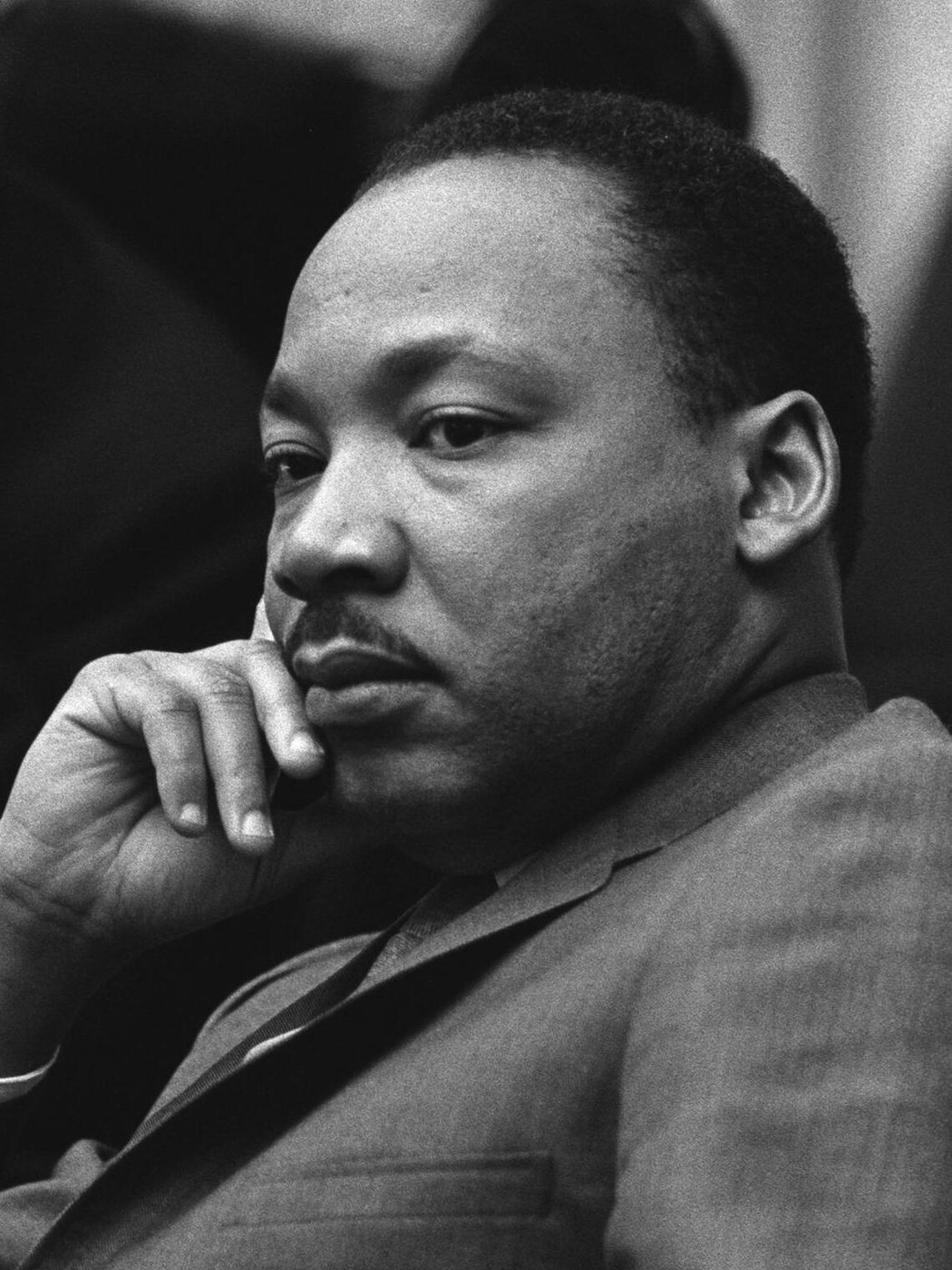
King was born in Atlanta in 1929 and trained for the Baptist ministry, studying at Morehouse College, Crozer Theological Seminary and Boston University. His religious formation informed a public language of justice and moral responsibility. It also placed him within networks of Black churches that supplied meeting spaces, leadership and practical support for civil-rights organizing.
Montgomery and organized nonviolent protest
The Montgomery bus boycott began in 1955 following Rosa Parks’s arrest. King emerged as a leader of the Montgomery Improvement Association, but the boycott depended on sustained participation, transport networks and local organizers. Its success helped establish nonviolent direct action as a powerful strategy, joining economic pressure and public protest with challenges pursued through the courts.
Birmingham, Washington and national legislation
King’s role in the 1963 Birmingham campaign and March on Washington brought national attention to segregation and racial violence. His Letter from Birmingham Jail addressed the demand that campaigners wait for justice. The movement’s work contributed to the political climate surrounding the Civil Rights Act of 1964 and Voting Rights Act of 1965, alongside many other campaigners and institutions.
Voting rights, poverty and the Vietnam War
Awarded the Nobel Peace Prize in 1964, King continued organizing rather than treating recognition as the movement’s endpoint. He supported voting-rights protests in Selma and increasingly emphasized economic inequality. His public opposition to the Vietnam War and plans for a Poor People’s Campaign widened his agenda, while also producing criticism and tension among former allies.
Assassination and the meaning of the legacy
King was assassinated in Memphis on 4 April 1968 while supporting striking sanitation workers. His legacy includes speeches and writings, but also an organizing practice built around collective action and disciplined protest. Reducing his career to a single inspirational speech obscures his later challenges to poverty, militarism and the structures that maintained racial inequality.
Career timeline
Born in Atlanta.
Helped lead the Montgomery bus boycott.
Delivered his address at the March on Washington.
Awarded the Nobel Peace Prize.
Assassinated in Memphis while supporting sanitation workers.
Selected works & milestones
Montgomery bus boycott
A sustained community campaign against segregated transport.
Letter from Birmingham Jail
An argument for nonviolent action against unjust laws.
March on Washington address
A major speech linking civil rights and democratic promises.
Economic justice campaigns
Expanded organizing around poverty, work and national priorities.
- United States National Archives — King
- Nobel Prize — biographical record
- Nobel Prize — award and facts
- Biographical references and further reading
Published 2026-11-02. Sources reviewed for this edition. Independent coverage of public professional activity.