Contents — explore this biography
Chemistry before microbiologyFermentation and practical problemsContamination, disease and experimental reasoningVaccination and the challenge of rabiesThe institute and an enduring research modelChemistry before microbiology
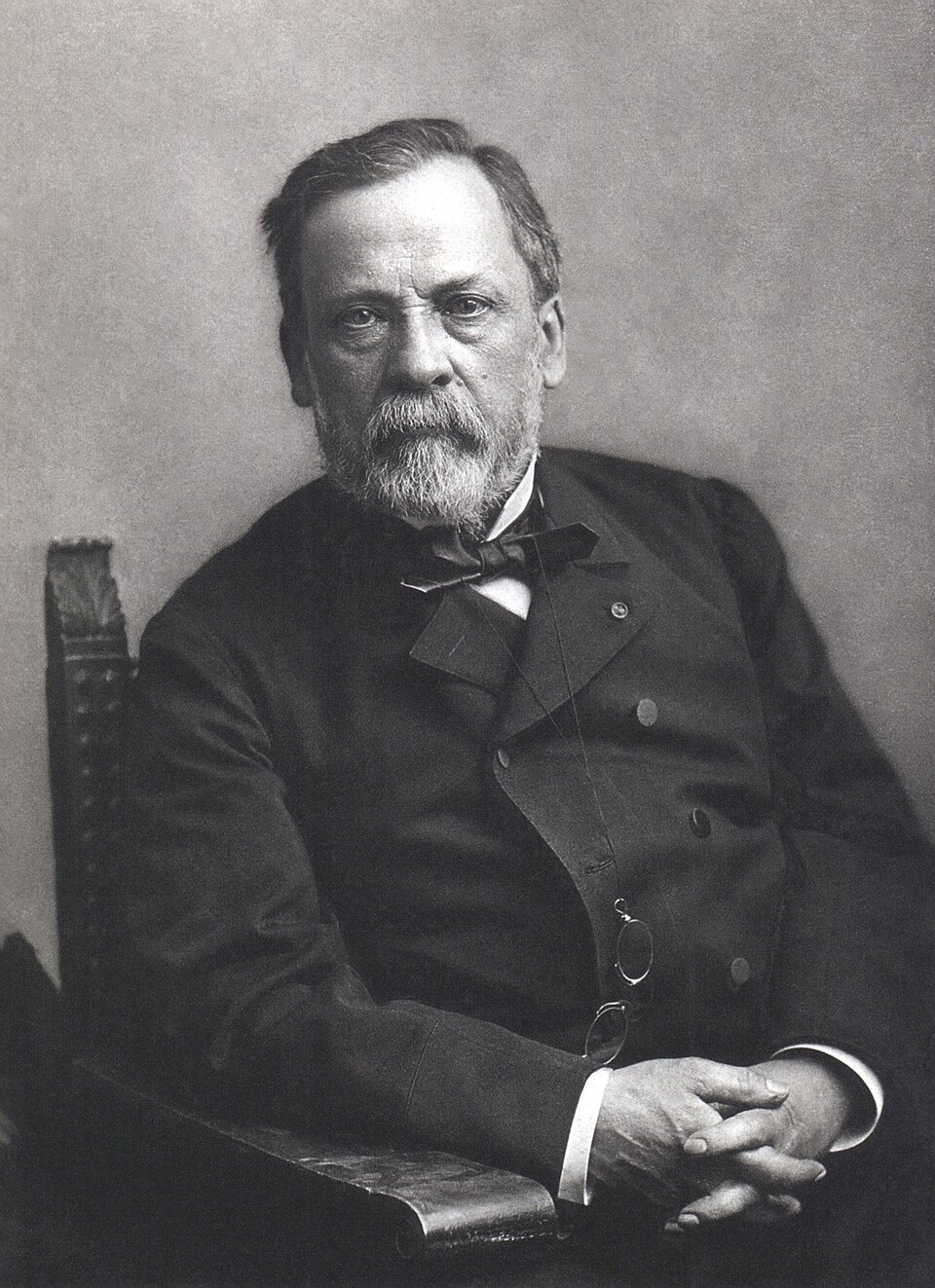
Louis Pasteur was born in Dole, France, in 1822 and trained as a chemist. His early scientific reputation developed through investigations of crystals and molecular asymmetry, rather than through medical practice. By examining compounds that shared a chemical composition but differed in their relationship to polarized light, he contributed to understanding molecules as structures with spatial properties. This beginning is important to his biography because it connects his later work on living processes with a habit of studying small differences experimentally. Pasteur’s subsequent influence on medicine came from laboratory research, not from a career as a practising physician.
Fermentation and practical problems
In the 1850s, Pasteur investigated fermentation, showing that different microorganisms were associated with particular transformations of organic material. These studies brought chemistry into contact with the activities of living organisms and with problems faced by producers of wine and other foods. His work on spoilage helped establish controlled heating as a preservation method, later widely known as pasteurization. The practical importance went beyond one product: processes that had sometimes appeared unpredictable could be examined through identifiable organisms and conditions. Industrial questions and basic scientific questions therefore developed together rather than as separate phases of his work.
Contamination, disease and experimental reasoning
Pasteur’s experiments challenged the idea that microorganisms regularly arose spontaneously in the materials being studied. Carefully controlled vessels and exposure conditions helped distinguish contamination from the environment from the appearance of life without an existing source. His investigations also extended to silkworm diseases and animal infections. The wider emergence of germ theory involved many researchers, and should not be reduced to a single discovery by one person. Pasteur’s contribution was especially influential in connecting experimental microbiology with prevention, encouraging attention to cleanliness, sterilization and the biological causes of changes that had previously been explained in other ways.
Vaccination and the challenge of rabies
Pasteur and his collaborators investigated vaccination through work on animal diseases, including chicken cholera and anthrax. In 1885, their rabies programme reached a defining public moment when Joseph Meister, a boy bitten by a dog, received a course of treatment and survived. The episode made the laboratory a destination for people seeking help after potentially rabid animal bites. It also created pressure for a permanent institution capable of combining research and treatment. These developments belonged to a period before modern clinical-trial standards; their historical significance should be understood alongside the experimental practices and uncertainties of that time.
The institute and an enduring research model
The Institut Pasteur officially opened in Paris in 1888, supported by a public subscription and built around research, teaching and the response to infectious disease. Pasteur died in 1895, but the institution continued through colleagues and subsequent generations of scientists. Its development illustrates how a scientific legacy can become larger than an individual’s published results. His name remains attached to food preservation, microbiology and vaccination, yet his career also demonstrates the importance of teams, specialized methods and durable institutions. The connection between basic investigation and practical public benefit is central to understanding the continuing influence of his work.
Career timeline
Born in Dole, France.
Completed his doctorate in science.
Published important research on fermentation.
Rabies treatment of Joseph Meister became a landmark in vaccination history.
The Institut Pasteur opened in Paris.
Selected works & milestones
Molecular asymmetry
Early crystallographic work advanced the study of molecular structure.
Studies on Wine
Published investigations related to fermentation and preservation.
Anthrax vaccination
A landmark public demonstration of the vaccination programme.
Institut Pasteur
An institution linking research, teaching and infectious-disease work.
- Institut Pasteur — scientific legacy
- Institut Pasteur — institutional history
- Pasteur family association — chronological biography
- Bibliothèque nationale de France — Louis Pasteur
Published 2026-11-05. Sources reviewed for this edition. Independent coverage of public professional activity.