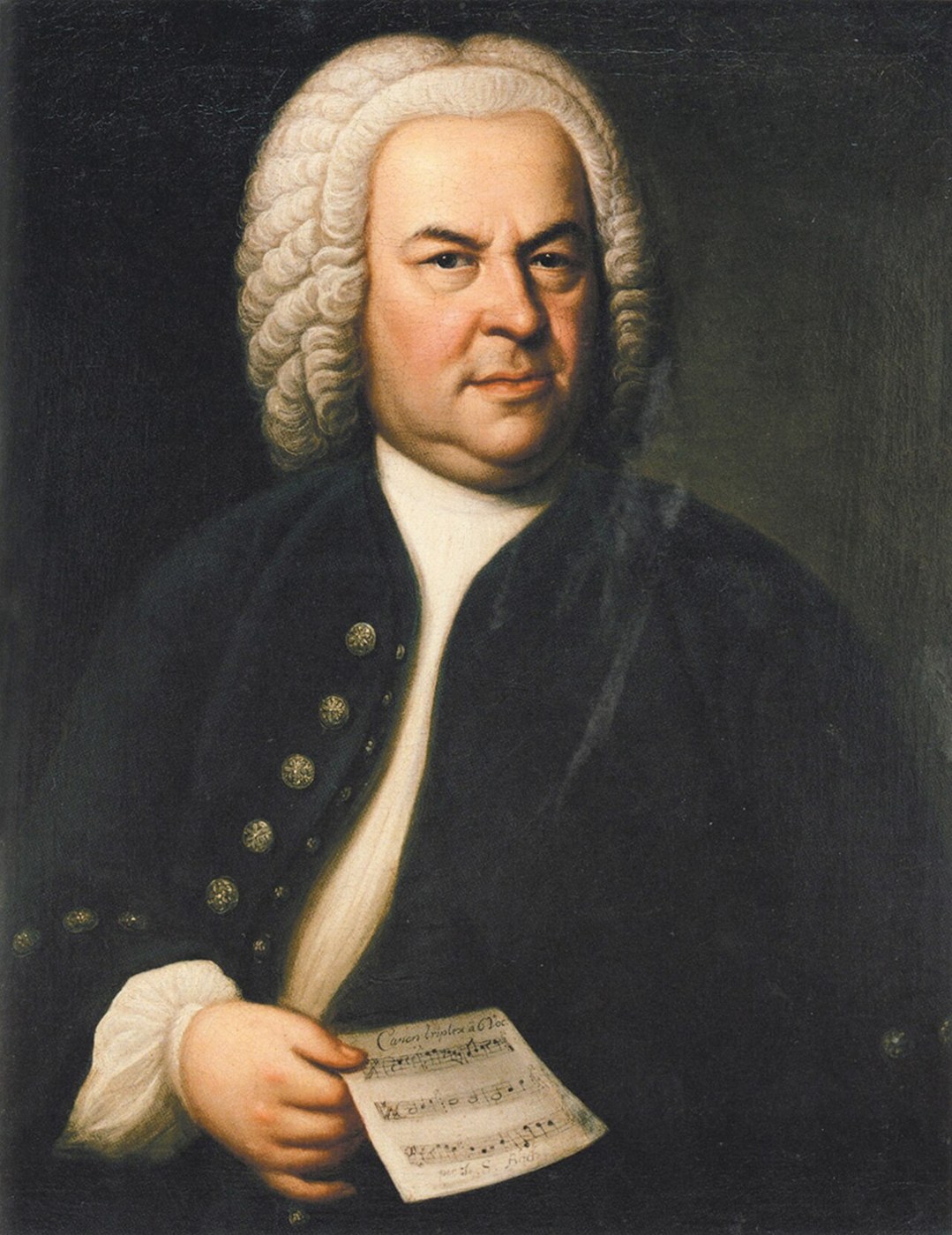
Contents — explore this biography
A musical family and a keyboard educationChurch and court appointmentsLeipzig and the sacred cantataCounterpoint, collections and musical architectureThe afterlife of a working composerA musical family and a keyboard education
Bach was born in Eisenach in 1685 into a family with a long musical tradition. After losing his parents as a child, he continued his education with his older brother. Training, copying music and practical employment helped develop his command of keyboard playing and composition within the interconnected musical cultures of central and northern Germany.
Church and court appointments
Posts in Arnstadt, Mühlhausen and Weimar brought experience as an organist and composer. At Köthen, where he worked for Prince Leopold, instrumental music occupied an especially important place. These appointments shaped the music he was expected to supply. Bach’s repertoire therefore reflects institutions, available performers and practical duties as well as personal artistic decisions.
Leipzig and the sacred cantata
In 1723 Bach became Thomaskantor in Leipzig, assuming responsibilities for church music and musical education. His cantatas connected scriptural texts, chorales, solo singing and instrumental writing within the church calendar. The St John Passion and St Matthew Passion developed larger dramatic and devotional structures, drawing on the resources and conventions of Lutheran musical life.
Counterpoint, collections and musical architecture
The Well-Tempered Clavier, Brandenburg Concertos and Goldberg Variations demonstrate different approaches to musical organization. Bach worked with patterns, tonal relationships and independent lines without separating technical craft from expressive effect. His collections also served performers and learners, allowing a single publication or manuscript group to explore the possibilities of a form or instrumental combination systematically.
The afterlife of a working composer
Bach died in Leipzig in 1750. His music remained important to musicians and later gained a broader public presence through publication, scholarship and performances, including the nineteenth-century revival of the St Matthew Passion. His legacy includes the work of preserving and interpreting manuscripts: modern audiences encounter both the historical compositions and decisions made by editors, conductors and performers.
Career timeline
Born in Eisenach.
Began a major period of work in Weimar.
Moved to the court at Köthen.
Became Thomaskantor in Leipzig.
Died in Leipzig.
Selected works & milestones
Brandenburg Concertos
Six concertos presented in a dedication to the Margrave of Brandenburg.
The Well-Tempered Clavier, Book I
Preludes and fugues exploring all major and minor keys.
St Matthew Passion
A large-scale sacred setting of the Passion narrative.
Goldberg Variations
A keyboard variation cycle published in the Clavier-Übung series.
Published 2026-11-02. Sources reviewed for this edition. Independent coverage of public professional activity.