Contents — explore this biography
Early life and an unusually broad athletic educationMilitary service and the path through professional baseballThe Brooklyn debut and the demands of integrationSporting achievement beyond the landmark first seasonPublic advocacy and a legacy carried by institutionsEarly life and an unusually broad athletic education
Jack Roosevelt Robinson was born in Cairo, Georgia, in 1919 and grew up in California. His sporting ability extended across several disciplines rather than pointing immediately toward a baseball career. At UCLA he earned varsity letters in baseball, basketball, football and track, and won the NCAA long-jump championship in 1940. This breadth matters to understanding his later play: speed, balance and competitive awareness had been developed in different settings. His opportunities were nevertheless shaped by segregation, showing how athletic talent and access to an institution could remain separate questions in American society.
Military service and the path through professional baseball
Robinson served in the United States Army during the Second World War. His resistance to segregation, including refusing a bus driver’s order to move to the back, formed part of a wider record of asserting equal treatment. He was acquitted of military charges and received an honourable discharge in 1944. After playing for the Kansas City Monarchs in the Negro Leagues, he entered the Brooklyn Dodgers organization. A successful season with the Montreal Royals in 1946 demonstrated that the transition was a competitive sporting project as well as a challenge to baseball’s racial restrictions.
The Brooklyn debut and the demands of integration
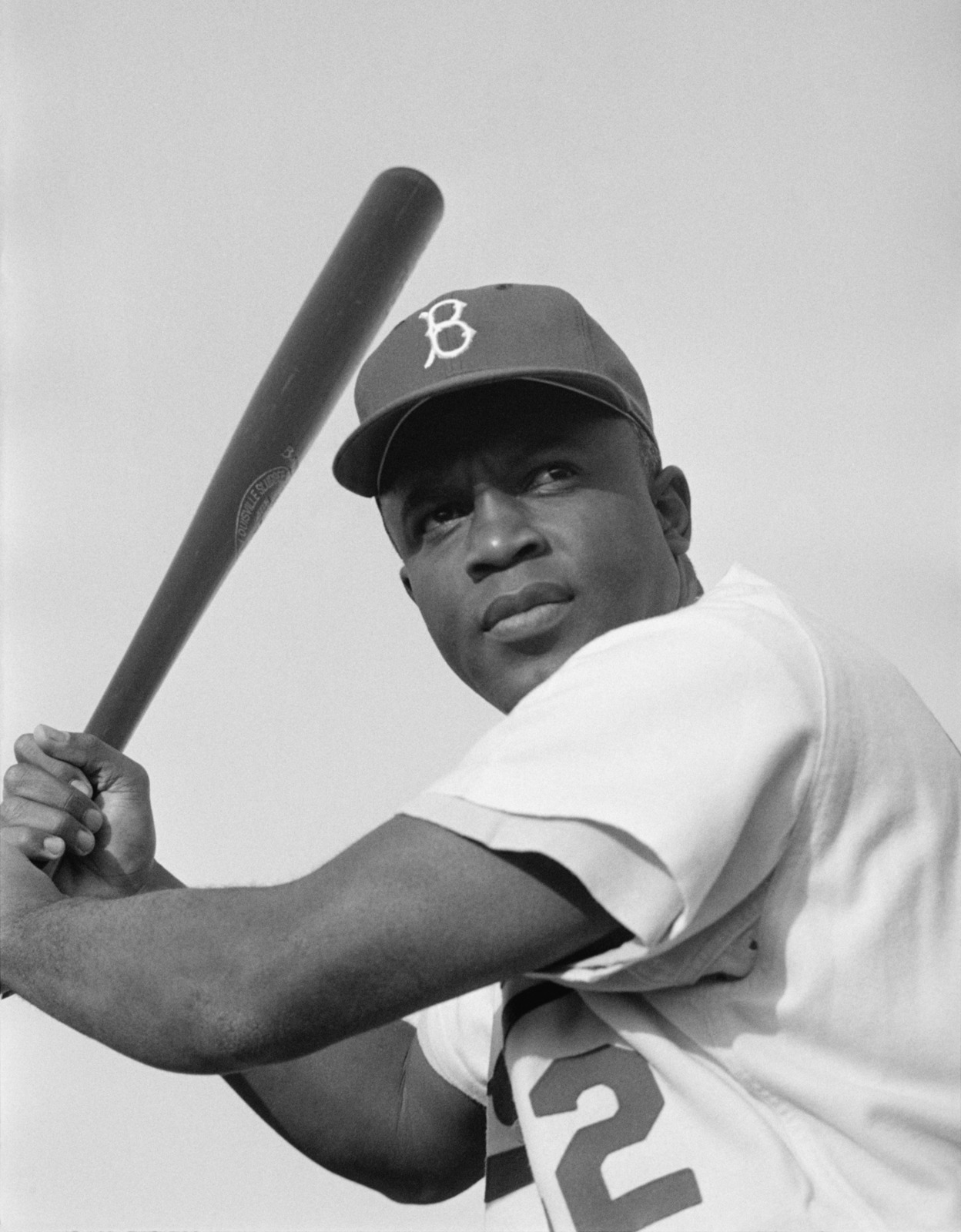
On April 15, 1947, Robinson made his National League debut for the Brooklyn Dodgers. He became the first Black player in the twentieth century to appear in the American or National League, a historically precise description that recognizes earlier Black professional players and the separate Negro Leagues. His presence exposed him and his family to sustained hostility, while demanding performance at the highest level. He won the inaugural Rookie of the Year award that season. The significance of the debut therefore lies both in a changed institutional boundary and in the continuing work required after that boundary was crossed.
Sporting achievement beyond the landmark first season
Robinson’s career deserves attention beyond the symbolic importance of 1947. He won the National League Most Valuable Player award in 1949, leading the league in batting average and stolen bases. The Dodgers won six National League pennants during his ten seasons with the club and captured the World Series in 1955. His style combined aggressive baserunning with the ability to influence a game through pressure, anticipation and positional versatility. These qualities made him a valuable player in ordinary competitive terms. They also prevented opponents from treating integration as an issue detached from the actual quality of the baseball being played.
Public advocacy and a legacy carried by institutions
After his playing career, Robinson continued to speak about civil rights and participated in public debate, business and community activity. He entered the Baseball Hall of Fame in 1962 and died in 1972. The Jackie Robinson Foundation, established in 1973 under Rachel Robinson’s leadership, extended his legacy through education and opportunity. Annual commemorations of his major-league debut preserve a recognizable historical date, but the deeper subject is the relationship between access and sustained participation. His life shows that entry into an institution can be a beginning, while equal treatment and meaningful influence remain continuing struggles.
Career timeline
Born in Cairo, Georgia.
Won the NCAA long-jump championship while attending UCLA.
Debuted for the Brooklyn Dodgers on April 15.
Received the National League Most Valuable Player award.
Died after a sporting career and continuing civil-rights advocacy.
Selected works & milestones
Major-league debut and Rookie of the Year
A landmark first season with Brooklyn.
National League MVP
Recognized for outstanding competitive performance.
World Series championship
Helped the Dodgers win the title.
Baseball Hall of Fame
Elected in his first year of eligibility.
- National Baseball Hall of Fame — Jackie Robinson
- Jackie Robinson estate — college and military years
- National Park Service — Jackie Robinson
- Jackie Robinson Foundation — institutional history
Published 2026-11-07. Sources reviewed for this edition. Independent coverage of public professional activity.