Contents — explore this biography
London, training and early ambitionLearning from earlier paintingTravel, sketchbooks and the studioLight in an industrial ageThe bequest and the scope of his achievementLondon, training and early ambition
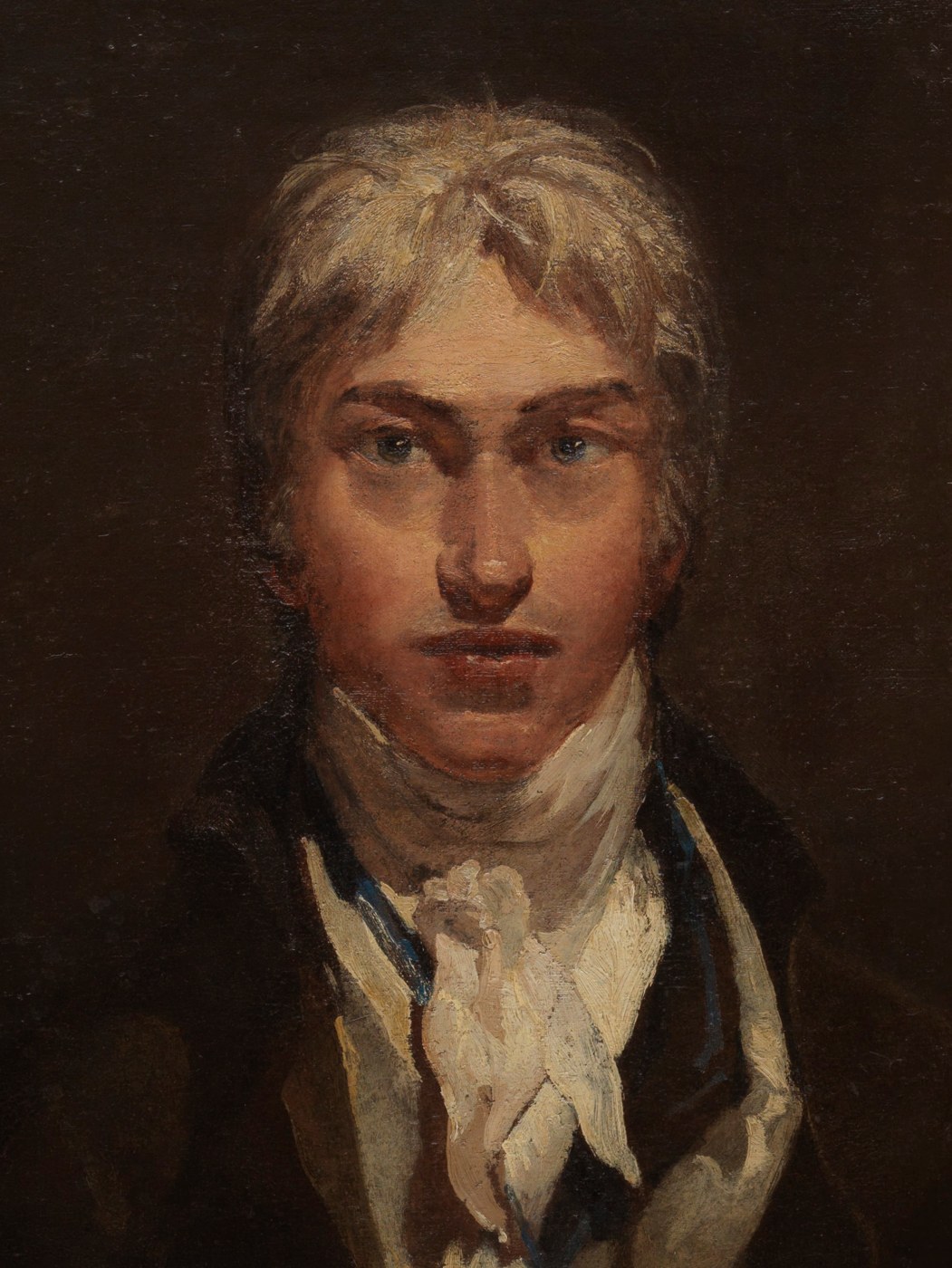
Joseph Mallord William Turner was born in London in 1775. He entered the Royal Academy Schools in 1789 and began exhibiting watercolours the following year. Early work belonged to the established practice of topographical drawing, where accurate buildings and recognizable locations mattered to purchasers. Yet travel, study and close observation gradually expanded his ambitions. Landscape became a field in which he could address history and human experience, rather than merely describe a place or provide a picturesque souvenir.
Learning from earlier painting
Turner studied Dutch marine painting and the ideal landscapes of Claude Lorrain, building a career that repeatedly measured modern achievement against earlier masters. His first exhibited oil painting appeared at the Royal Academy in 1796, and he was elected a full Academician in 1802. Classical stories, harbours and episodes of danger provided subjects for increasingly ambitious compositions. The apparent freedom of his later brushwork emerged from this long engagement with established pictorial structures and the competitive culture of public exhibition.
Travel, sketchbooks and the studio
Journeys through Britain and continental Europe supplied Turner with a vast working archive of sketches and watercolours. These records allowed him to revisit buildings, coastlines and changing weather when making more elaborate works. They were not simply miniature versions of finished paintings: some isolate a colour effect or a structural relationship with remarkable economy. His studio practice could combine remembered experience, direct observation and imaginative transformation, creating pictures that invite viewers to feel the conditions of seeing as well as identify a location.
Light in an industrial age
In The Fighting Temeraire, Turner places an old warship beside a steam tug, giving a technological transition the emotional charge of a farewell. Rain, Steam and Speed turns a railway journey into an encounter with weather, motion and partial visibility. Such works do not treat industry as separate from landscape. Their forms emerge within light and atmosphere, challenging expectations of crisp description. The critic John Ruskin became an influential defender of Turner’s capacity to make perception and natural forces central to painting.
The bequest and the scope of his achievement
Turner died in 1851, leaving a large body of work intended for the nation. Legal proceedings shaped the eventual settlement, which preserved both completed paintings and an enormous studio archive. Many works subsequently entered Tate’s care. His reputation has often focused on late pictures that seem to anticipate abstraction, but that description alone narrows a career rooted in travel, history and professional ambition. The enduring achievement is his ability to make colour and illumination carry the emotional and intellectual weight of a subject.
Career timeline
Born in London.
Entered the Royal Academy Schools.
Elected a full Royal Academician.
Exhibited The Fighting Temeraire.
Died in London, leaving a major bequest to the nation.
Selected works & milestones
Dido Building Carthage
An ambitious classical landscape in dialogue with Claude.
The Fighting Temeraire
A warship’s final journey set against changing technology.
The Slave Ship
A seascape confronting the violence of the slave trade.
Rain, Steam and Speed
A railway train emerging through atmosphere and motion.
- National Gallery — biography
- National Gallery — the Turner bequest
- National Gallery — landscape traditions
- Museum of Fine Arts, Boston — The Slave Ship
Published 2026-11-05. Sources reviewed for this edition. Independent coverage of public professional activity.