Contents — explore this biography
Training and entry into court culturePortraits, status and observationThe independent language of printsWar without a consoling heroPrivate paintings and a changing legacyTraining and entry into court culture
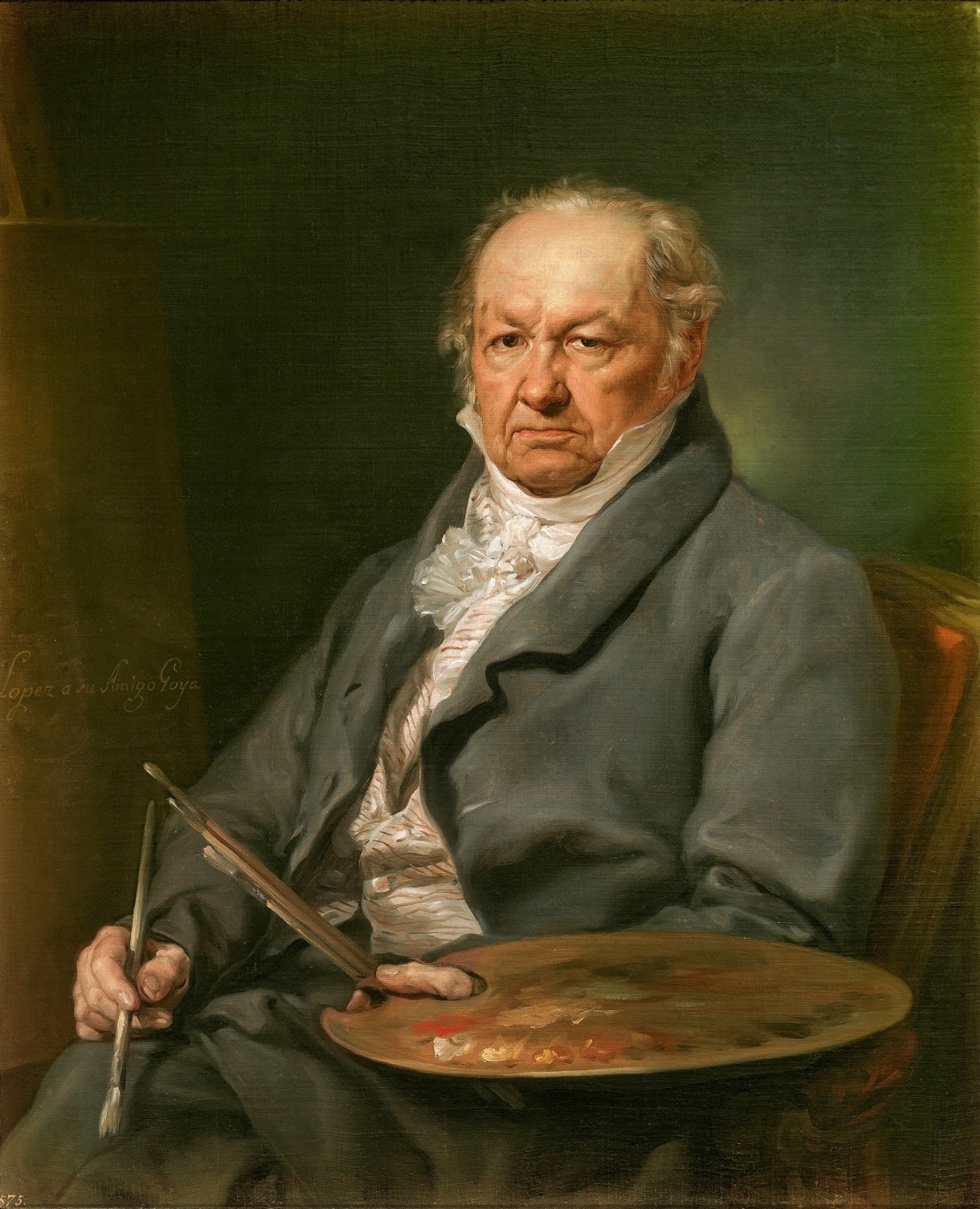
Francisco Goya was born in Fuendetodos in 1746 and trained in Zaragoza before developing his career in Madrid. His early opportunities included religious commissions and painted designs for royal tapestries. These cartoons translated scenes of recreation and everyday life into carefully structured decorative images. They also taught him to work within institutional expectations. The painter later associated with disturbing visions first established himself through practical commissions, professional networks and a sophisticated understanding of how pictures served their patrons.
Portraits, status and observation
Goya became a painter to the king in 1786 and first court painter in 1799. Portrait commissions brought him into contact with the monarchy, aristocratic families and intellectual circles. Rich fabrics and official distinctions advertise rank, but faces and gestures often resist a simple impression of grandeur. His pictures reward attention to both social display and individual presence. Charles IV of Spain and His Family brings these concerns together in an ambitious group portrait that also includes the artist at his easel.
The independent language of prints
After a serious illness in the early 1790s, Goya became deaf. His graphic work developed an increasingly searching treatment of ignorance, superstition and the abuse of power. Published in 1799, Los Caprichos combined inventive compositions with brief verbal captions. Etching and aquatint made possible sharp outlines, atmospheric darkness and sudden contrasts. The resulting images are not straightforward illustrations of a single political programme; their disturbing ambiguity encourages viewers to examine how reason, fear and habit shape behaviour.
War without a consoling hero
The French invasion of Spain and the Peninsular War profoundly affected Goya’s work. His Disasters of War prints describe suffering through fragmented encounters, damaged bodies and civilians caught within violence. The series was not published during his lifetime. In 1814 he painted The Third of May 1808, commemorating executions in Madrid through a confrontation between vulnerable individuals and an anonymous firing squad. These works deny the comforting distance often created by heroic battle painting and leave moral judgement with the viewer.
Private paintings and a changing legacy
The paintings made on the walls of Goya’s house, later called the Black Paintings, belong to a more private setting than the royal portraits. Their unstable spaces and unsettling figures resist a single explanation, and their later transfer to canvas complicates their material history. Goya moved to Bordeaux in 1824 and died there in 1828. His influence rests on the range of questions his art could hold together: observation and fantasy, patronage and independence, public ceremony and the experiences institutions prefer to conceal.
Career timeline
Born in Fuendetodos.
Appointed painter to the king.
Published Los Caprichos and became first court painter.
Painted The Second and Third of May 1808.
Died in Bordeaux.
Selected works & milestones
Los Caprichos
A print series examining folly, superstition and social behaviour.
Charles IV of Spain and His Family
An ambitious portrait of the royal household.
The Third of May 1808
A depiction of executions following the Madrid uprising.
The Disasters of War
Prints confronting violence and deprivation, published posthumously.
- National Gallery — biography
- Metropolitan Museum of Art — Goya and the Enlightenment
- Museo del Prado — The Drowning Dog
Published 2026-11-05. Sources reviewed for this edition. Independent coverage of public professional activity.