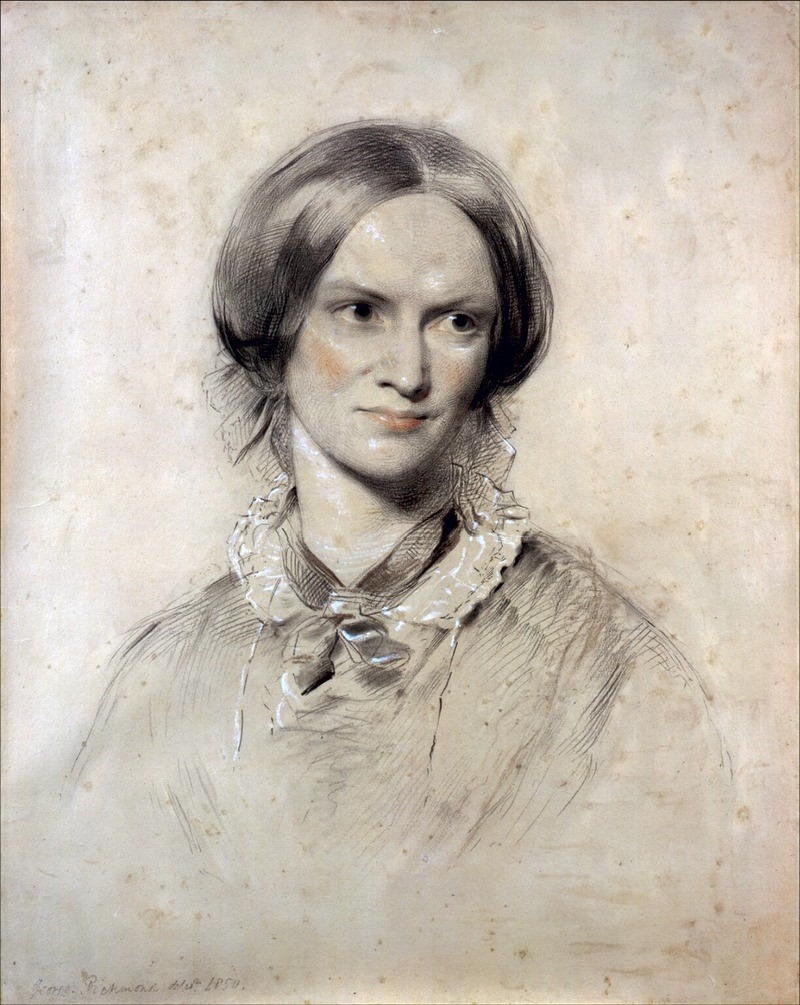
Contents — explore this biography
Family, education and imaginative apprenticeshipTeaching, Brussels and the problem of independenceCurrer Bell and the success of Jane EyreShirley, Villette and the range of her fictionLoss, public reputation and literary afterlifeFamily, education and imaginative apprenticeship
Charlotte Brontë was born in Thornton, Yorkshire, in 1816 and grew up at Haworth Parsonage. Her father Patrick encouraged his children’s education, while the household also endured the early deaths of their mother and two eldest sisters. Charlotte and her surviving siblings developed elaborate imaginary worlds, writing stories and tiny books that supplied a sustained apprenticeship in narrative. Her later novels should not be reduced to a record of family suffering. They also grew from energetic experimentation, wide reading and the practical experience of finding a voice within the restrictions of nineteenth-century domestic and professional life.
Teaching, Brussels and the problem of independence
Charlotte worked as a teacher and governess, occupations that provided income but exposed the restricted opportunities available to educated women without substantial wealth. In 1842 she travelled with Emily to study at the Pensionnat Héger in Brussels and later returned there to teach. The experience broadened her linguistic and cultural education. Its importance to her fiction lies in more than a search for one-to-one correspondences between real people and invented characters. Class position, dependence, isolation and the desire for recognition became narrative problems. Her heroines’ efforts to interpret unfamiliar environments make education inseparable from the exercise of judgment.
Currer Bell and the success of Jane Eyre
The sisters’ poetry collection appeared in 1846 under the names Currer, Ellis and Acton Bell. Charlotte used Currer Bell again for Jane Eyre, published in 1847 after her earlier manuscript The Professor had failed to find a publisher. Jane’s first-person narrative makes the work of self-definition central to the reader’s experience. The novel combines Gothic mystery with attention to employment, religious authority, inequality and emotional dependence. Its heroine insists on the significance of her own perceptions, even when social rank offers little support. The power of the book comes partly from that tension between vulnerability and an uncompromising claim to personhood.
Shirley, Villette and the range of her fiction
Shirley followed in 1849 and placed women’s lives within a broader account of industrial conflict and social change. Villette, published in 1853, returned to a more concentrated first-person form, with Lucy Snowe interpreting her position in a foreign city. Across these novels, Charlotte changes the relationship between narration and what can be known about another person. Silence and uncertainty become structural features rather than gaps that readers can always resolve. The books demonstrate a range beyond the familiar plot of Jane Eyre. Their questions about work, belief and emotional autonomy remain active even when their narrative methods differ.
Loss, public reputation and literary afterlife
Between 1848 and 1849 Charlotte lost Branwell, Emily and Anne, and she took an important role in presenting her sisters’ writing to later readers. In 1854 she married Arthur Bell Nicholls, her father’s curate. She died in 1855, aged thirty-eight, while The Professor remained unpublished; it appeared posthumously in 1857. Elizabeth Gaskell’s biography helped establish a powerful account of her life, but biography and fiction require different kinds of evidence. Charlotte’s continuing importance rests on the formal and moral force of her novels, where the need to speak for oneself is tested against dependence, authority and the uncertain interpretation of others.
Career timeline
Born in Thornton, Yorkshire.
Travelled to Brussels to study with Emily.
Jane Eyre was published under the name Currer Bell.
Villette was published.
Died after a short marriage to Arthur Bell Nicholls.
Selected works & milestones
Poems by Currer, Ellis, and Acton Bell
A joint volume by Charlotte, Emily and Anne.
Jane Eyre
A first-person novel of identity, work and emotional independence.
Shirley
Fiction connecting women’s lives with industrial and social conflict.
Villette
A novel of perception, isolation and uncertain attachment.
- National Portrait Gallery — Charlotte Brontë
- Brontë Parsonage Museum — the lives of the Brontës
- Westminster Abbey — the Brontë sisters
- Morgan Library — Charlotte’s imaginary worlds
Published 2026-11-07. Sources reviewed for this edition. Independent coverage of public professional activity.