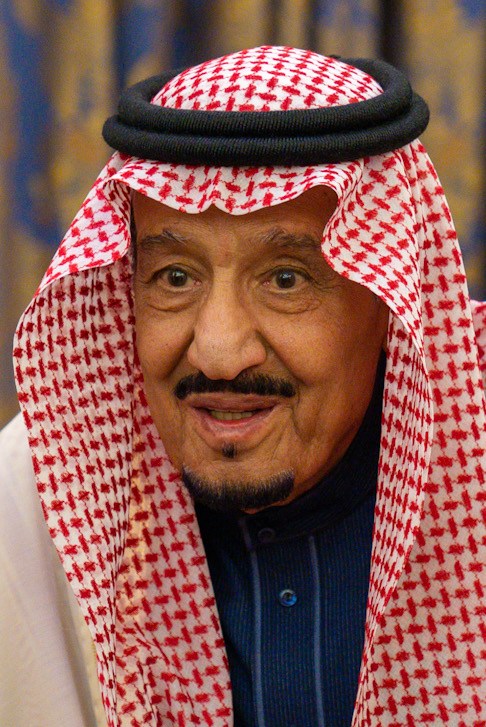
Contents — explore this biography
Family and early lifeGovernor of RiyadhDefense and the successionAccession in January 2015The crown prince and governmentPublic record and historical contextFamily and early life
Salman was born in Riyadh in 1935, a son of Abdulaziz, the founder of the modern Saudi state. His life links the founding generation with later transitions within the House of Saud. He received his early education in Riyadh. His family background explains his place in the dynasty, while his long record in public administration explains the responsibilities he held before becoming king.
Governor of Riyadh
His extended period as governor of Riyadh, principally from 1963 to 2011, coincided with the capital’s rapid physical and administrative expansion. The position involved provincial government and relationships with national institutions. Urban growth resulted from state investment and the work of many organizations, so a biography can identify the governor’s role without assigning every change in the capital to one person.
Defense and the succession
Salman became minister of defense in 2011 and crown prince in 2012. These appointments moved him from provincial administration into national responsibilities and the immediate succession. The crown-prince period was separate from the reign of his brother Abdullah. It provides context for the transition of 2015 rather than constituting an earlier start to Salman’s kingship.
Accession in January 2015
He became King of Saudi Arabia on 23 January 2015 after Abdullah’s death. The title Custodian of the Two Holy Mosques is associated with the sovereign’s responsibilities concerning the holy sites in Mecca and Medina. Saudi Arabia’s monarchy is institutionally different from the constitutional monarchies in this collection: the sovereign has substantial governing authority alongside the state’s other bodies.
The crown prince and government
Mohammed bin Salman became crown prince in 2017 and prime minister in 2022. Salman remains king in the official records used for this profile. The distinction matters because current reporting frequently concentrates on the crown prince’s policy responsibilities. Identifying both offices prevents the mistaken impression that a change in the premiership was itself an accession to the throne.
Public record and historical context
His reign encompasses major economic and social policy programmes as well as contentious foreign-policy developments. Assessing those policies requires evidence about individual decisions and outcomes. This biography establishes the main offices and dates rather than estimating private family wealth. The separate profile of Mohammed bin Salman provides a second view of the division of roles within the current royal leadership.
Career timeline
Begins the main period of his governorship of Riyadh.
Becomes minister of defense.
Is appointed crown prince.
Succeeds Abdullah as king.
Mohammed bin Salman becomes prime minister while Salman remains king.
Selected works & milestones
Riyadh governorship
A lengthy period in provincial administration.
Defense ministry
Moves into a senior national portfolio.
Crown prince
Becomes heir to King Abdullah.
Accession
Begins his reign as King of Saudi Arabia.
- Salman bin Abdulaziz Al Saud — biographical reference and cited sources
- Australian Department of Foreign Affairs — current Saudi leadership
- Saudi Government — Cabinet chaired by King Salman, October 2026
Published 2026-10-31. Sources reviewed for this edition. Independent coverage of public professional activity.