Contents — explore this biography
A writer who became a biologistPublic service and scientific communicationThe ocean booksSilent Spring and public accountabilityA lasting ecological perspectiveA writer who became a biologist
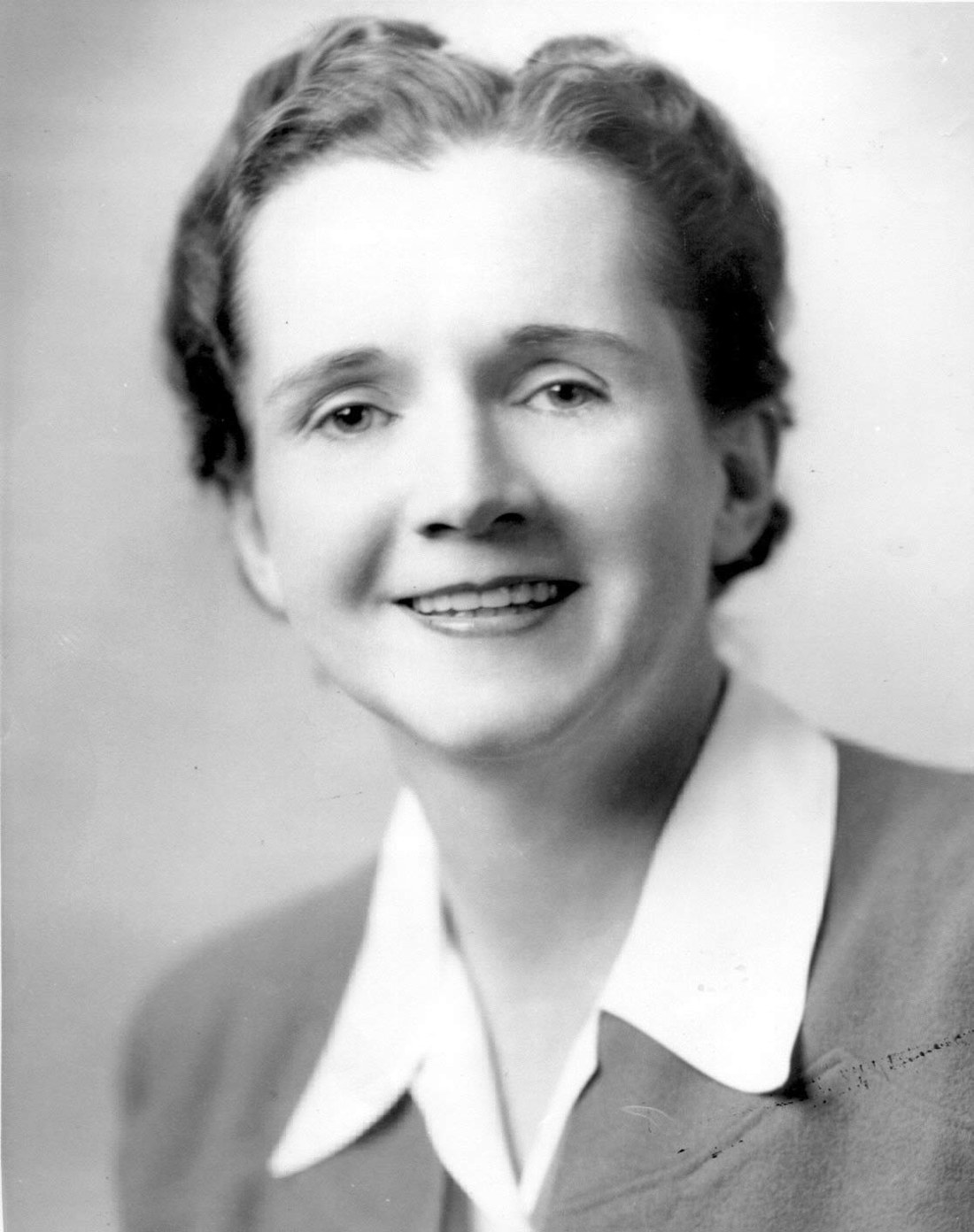
Rachel Carson was born in Springdale, Pennsylvania, in 1907. Childhood observation of the natural world accompanied an early ambition to write. At Pennsylvania College for Women she changed her focus from English to biology, later studying zoology at Johns Hopkins. Financial and family responsibilities constrained her academic options. Rather than separating literature from science, she developed a career in which precise observation and accessible prose reinforced one another.
Public service and scientific communication
Carson began writing radio material for the United States Bureau of Fisheries in 1935 and secured a scientific appointment the following year. Her government work included explaining marine life and research to broad audiences; she eventually became editor-in-chief of Fish and Wildlife Service publications. This experience trained her to translate technical information without losing the relationships between organisms, habitats and human decisions. It also exposed her to scientific networks and evidence beyond the scope of a single laboratory.
The ocean books
Under the Sea-Wind appeared in 1941, describing marine life through closely observed ecological relationships. The Sea Around Us, published in 1951, brought Carson a much larger audience and won the National Book Award for nonfiction. The Edge of the Sea followed in 1955, turning attention toward coastal habitats. Together these books made natural history vivid without abandoning scientific explanation. Their success allowed her to leave government employment and devote more time to research and writing.
Silent Spring and public accountability
Published in 1962, Silent Spring examined the ecological consequences of widespread chemical pesticide use. Carson drew together research on persistence, movement through environments and effects on organisms beyond the intended targets. Her argument challenged indiscriminate application and inadequate scrutiny rather than claiming that every use of every pesticide was identical. Industry criticism and public controversy followed. She continued to advocate stronger investigation and oversight, including testimony before a United States Senate committee in 1963.
A lasting ecological perspective
Carson died in Silver Spring, Maryland, in 1964. Her writing helped broaden public expectations that environmental decisions should be tested against evidence and long-term consequences. Later changes in regulation emerged from many scientists, campaigners and institutions, so they cannot be attributed to one book alone. Her distinctive contribution was to make ecological interdependence understandable: an intervention aimed at one species can move through water, soil and food webs, affecting a much wider living system.
Career timeline
Born in Springdale, Pennsylvania.
Joined the federal fisheries service as an aquatic biologist.
Published The Sea Around Us.
Published Silent Spring.
Testified before the United States Senate about environmental protection.
Selected works & milestones
Under the Sea-Wind
A natural-history account of marine organisms and their environments.
The Sea Around Us
An award-winning exploration of the ocean.
The Edge of the Sea
An account of coastal habitats and their living communities.
Silent Spring
An influential examination of pesticide use and ecological consequences.
- United States Fish and Wildlife Service — biography
- National Park Service — life and writing
- Linda Lear — Rachel Carson biography
- Biographical references
Published 2026-11-05. Sources reviewed for this edition. Independent coverage of public professional activity.