Contents — explore this biography
Oregon and CaltechExplaining the chemical bondProteins and molecular biologyChemistry and two Nobel awardsPublic controversy and later researchA productive and uneven legacyOregon and Caltech
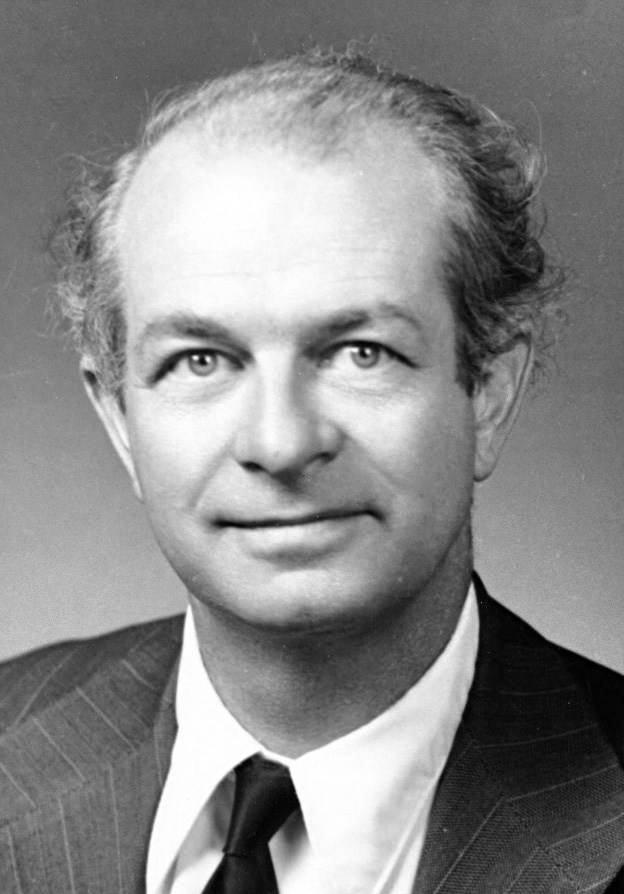
Pauling was born in Portland in 1901 and studied chemical engineering at Oregon Agricultural College before completing his doctorate at Caltech. Work in Europe brought him into contact with quantum mechanics during its formative years. He returned to Caltech, where he built a research career linking emerging physical theory with chemical structure. His training crossed disciplinary boundaries without treating mathematics as a substitute for experimental evidence.
Explaining the chemical bond
He applied quantum ideas to the nature of chemical bonding, helping chemists reason about molecular geometry, resonance and electronegativity. The Nature of the Chemical Bond appeared in 1939 and became a major synthesis. These concepts offered ways to connect structure with properties across many substances. They were not the invention of chemical bonding itself, but a powerful interpretation of why particular atomic arrangements are stable.
Proteins and molecular biology
With collaborators including Robert Corey and Herman Branson, Pauling proposed important protein structures, notably the alpha helix in 1951. Work on sickle-cell anaemia also helped establish the idea that a disease could be understood in molecular terms. These achievements involved teams and distinct lines of evidence. His incorrect DNA model of 1953 is part of the same scientific record, demonstrating that expertise does not prevent a consequential mistake.
Chemistry and two Nobel awards
The 1954 Nobel Prize in Chemistry recognized his work on the chemical bond and complex substances. He later received the 1962 Nobel Peace Prize, awarded in 1963, for campaigning against nuclear weapons testing. The awards belonged to different kinds of activity. Scientific distinction gave him a public platform, but his peace work involved political advocacy and organization rather than a second discovery in chemistry.
Public controversy and later research
His opposition to nuclear testing attracted both support and political hostility. Later he became closely associated with research and public claims concerning vitamins, particularly vitamin C. Those claims require their own experimental assessment; neither Nobel award independently establishes a medical treatment’s effectiveness. A biography can acknowledge this important phase without converting the authority earned in chemical structure into blanket validation of later health propositions.
A productive and uneven legacy
Pauling died in 1994. His influence on chemistry remains substantial because bonding concepts, molecular geometry and structural reasoning became tools used by generations of researchers. The wider life also includes activism, public controversy and scientific errors. Keeping those strands distinct produces a more complete portrait of an unusually broad thinker and avoids the assumption that an exceptional career must be uniformly correct across every field it touches.
Career timeline
Completes doctoral research before a period of European study.
Publishes The Nature of the Chemical Bond.
With collaborators, proposes influential protein structural models.
Receives the Nobel Prize in Chemistry.
Receives the 1962 Peace Prize, presented after its 1963 announcement.
Selected works & milestones
Chemical-bond synthesis
Publishes The Nature of the Chemical Bond.
Alpha helix
With collaborators, proposes influential protein structural models.
Chemistry Nobel
Receives the Nobel Prize in Chemistry.
Peace Nobel
Receives the 1962 Peace Prize, presented after its 1963 announcement.
- Oregon State University — biographical timeline
- Nobel Prize — Chemistry biography
- Science History Institute — chemistry and public career
- Nobel Prize — Peace award record
- Linus Pauling — biographical reference and bibliography
- Birth date — institutional biographical record
Published 2026-10-31. Sources reviewed for this edition. Independent coverage of public professional activity.