Contents — explore this biography
Western beginnings and artistic training in New YorkWork, patronage and the emergence of a public careerLee Krasner, Springs and a changing working environmentPoured paint, bodily movement and pictorial decisionsLater experiments and a contested modern legacyWestern beginnings and artistic training in New York
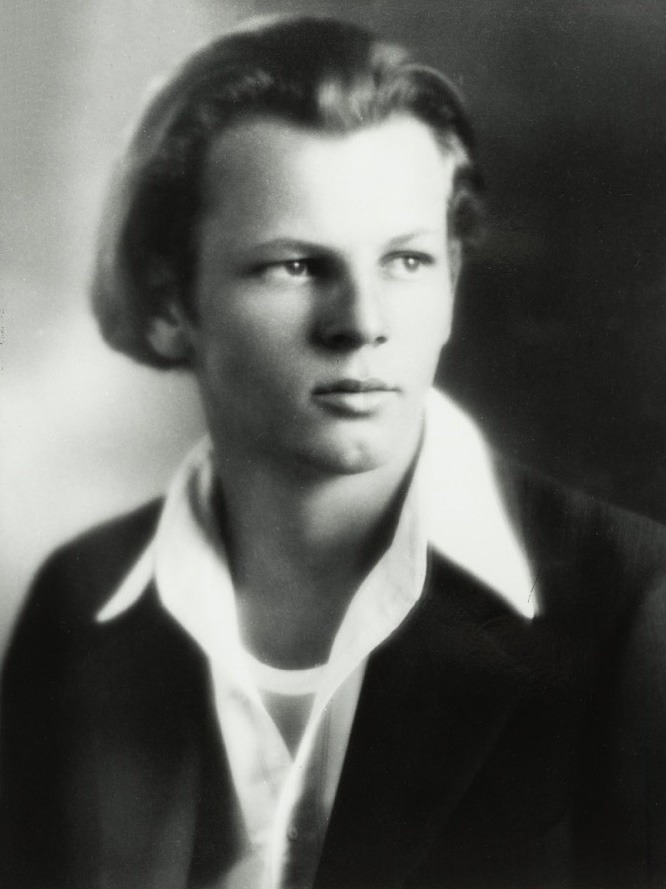
Jackson Pollock was born in Cody, Wyoming, in 1912 and grew up in the western United States before moving to New York in 1930. At the Art Students League he studied with Thomas Hart Benton, whose rhythmic compositions offered an important early example even as Pollock later moved away from recognizable regional subjects. His formation also involved encounters with Mexican muralism, modern European painting and experimental approaches to materials. The eventual poured paintings were not the sudden invention of an untrained outsider. They developed from years of looking, practice, technical exploration and an increasingly independent understanding of pictorial space.
Work, patronage and the emergence of a public career
During the Depression Pollock worked within the federal art programmes, an institutional setting that helped sustain many American artists. In the early 1940s his paintings increasingly attracted attention from the New York avant-garde. Peggy Guggenheim became an essential patron, presenting his first solo exhibition at Art of This Century in 1943 and commissioning the large painting Mural. Such support provided both resources and a setting in which ambitious work could be seen. The relationship between painter, dealer, critic and museum matters here: public recognition depended on an emerging cultural network as well as on studio experimentation.
Lee Krasner, Springs and a changing working environment
Pollock married the painter Lee Krasner in 1945, and they moved to Springs on Long Island. Krasner was an accomplished artist whose own work and professional judgment formed an important part of their shared environment. Pollock converted a barn into a studio, gaining room to work on larger canvases. The move is often treated as the setting for a heroic solitary breakthrough, but it also depended on practical arrangements and sustained artistic exchange. Understanding Krasner’s independent career helps resist the tendency to reduce her role to support for a more publicly famous husband.
Poured paint, bodily movement and pictorial decisions
By the later 1940s Pollock was developing the poured and dripped paintings most closely associated with his name. Working with canvas placed on the floor allowed him to approach it from different directions and distribute paint through movement, gravity and changing tools. Chance played a part, but the process also involved judgments about rhythm, density, interruption and the relationship between marks. Paintings such as Number 1A, 1948 and One: Number 31, 1950 invite the eye to move across an extensive field rather than settle immediately on a central figure. Their apparent spontaneity should not obscure the decisions that structured them.
Later experiments and a contested modern legacy
Pollock’s later work included black paintings and renewed suggestions of figures, demonstrating that his development did not stop with a single signature technique. He died in a car accident in 1956. Subsequent exhibitions, criticism and market attention made him an emblem of postwar American painting, sometimes encouraging a simplified mythology of instinct and rebellion. A fuller biography returns to the material paintings, the historical conditions in which they were made and the people whose work intersected with his. His importance lies partly in expanding what painting could record and how a viewer could encounter a painted surface.
Career timeline
Born in Cody, Wyoming.
Moved to New York and studied at the Art Students League.
Held his first solo exhibition at Art of This Century.
Married Lee Krasner and moved to Springs.
Died in a car accident on Long Island.
Selected works & milestones
The She-Wolf
An early major painting acquired by MoMA.
Mural
A large commission for Peggy Guggenheim.
Number 1A, 1948
A major example of poured painting.
One: Number 31, 1950
A large all-over composition in MoMA’s collection.
- MoMA — Jackson Pollock
- Guggenheim — Jackson Pollock
- Smithsonian American Art Museum — Jackson Pollock
- Archives of American Art — biographical note
Published 2026-11-09. Sources reviewed for this edition. Independent coverage of public professional activity.