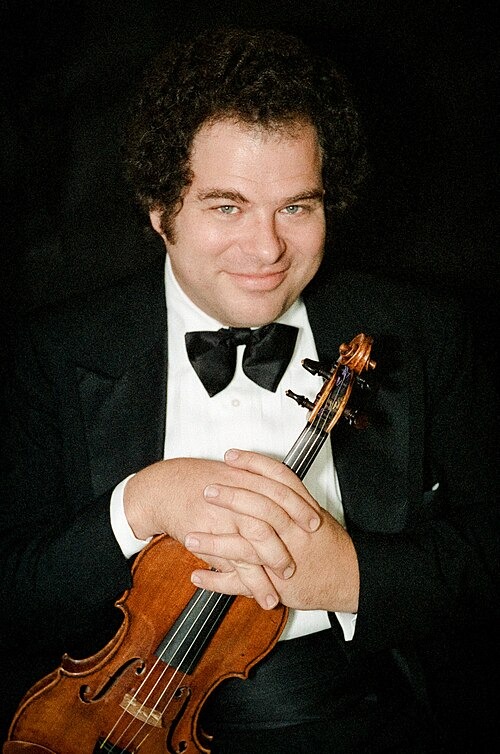
Contents — explore this biography
Early study and the journey to New YorkA competition breakthrough and an international careerRecordings, chamber music and music for the screenTeaching as a long-term commitmentRecognition, access and a public musical presenceEarly study and the journey to New York
Itzhak Perlman was born in Tel Aviv in 1945 and received his early musical training there before continuing his studies in New York. His appearance on The Ed Sullivan Show in 1958 introduced a young violinist to a substantial American television audience. At Juilliard he studied with Ivan Galamian and Dorothy DeLay, teachers associated with an exceptionally influential tradition of violin training. These experiences connected specialist instruction with an unusually public beginning. His later career would continue to move between the concentrated demands of instrumental preparation and the broader communication required by concert performance, broadcasting and teaching.
A competition breakthrough and an international career
Perlman won the Leventritt Competition in 1964, an important step toward a sustained international performing career. His work with major orchestras, conductors and recital partners made him a central figure in classical violin performance. The musical achievement involved more than the execution of difficult passages. A concerto soloist must shape a line within an orchestral structure, while a recital requires an intimate and flexible relationship with a collaborating pianist. His reputation developed through these different settings, supported by the distinctive sound, phrasing and expressive breadth that audiences encountered repeatedly in performances and recordings over many years.
Recordings, chamber music and music for the screen
Perlman’s recorded repertoire ranges across concertos, recital works and chamber music, preserving collaborations with different generations of performers. His violin solos for John Williams’s score to Steven Spielberg’s Schindler’s List brought his playing to a particularly wide film audience in 1993. The role required a musical voice able to carry emotional weight within the film’s historical drama without becoming a substitute for the story itself. His activities have also included klezmer and other projects beyond a narrow definition of the concert canon. These recordings show how a strongly recognizable instrumental identity can remain responsive to changing musical contexts.
Teaching as a long-term commitment
Education has become an essential part of Perlman’s professional life. Through Juilliard and the Perlman Music Program, developed with his wife Toby Perlman, he has worked with young musicians on the relationship between technical preparation, interpretation and ensemble responsibility. This kind of teaching involves habits that cannot be captured entirely in a competition result or a brief public masterclass. Students need time to listen, revise and develop judgment within a supportive musical community. His educational work therefore belongs alongside the performing career, extending its influence through the preparation of musicians who will make their own artistic decisions.
Recognition, access and a public musical presence
Perlman has received major civic and artistic honours, including Kennedy Center recognition in 2003 and the Presidential Medal of Freedom in 2015. His public role has also included advocacy for people with disabilities, informed by his own experience of polio in childhood. The subject is part of his biography without explaining away the artistic work or turning it into a simplified story of personal triumph. His career combines performance, conducting, recording and education. Its continuing significance lies in the way these activities support one another: musical accomplishment can create a platform for teaching and public participation, while those responsibilities can deepen the meaning of performance.
Career timeline
Born in Tel Aviv.
Appeared on The Ed Sullivan Show and continued his studies in New York.
Won the Leventritt Competition.
Performed the violin solos for Schindler’s List.
Received the Presidential Medal of Freedom.
Selected works & milestones
Leventritt Competition
A breakthrough recognition for the young violinist.
Schindler’s List soundtrack
Performed the violin solos in John Williams’s film score.
Kennedy Center Honors
Recognition of his contributions to American cultural life.
Presidential Medal of Freedom
A civic honour recognizing music, teaching and advocacy.
- Itzhak Perlman — official biography
- The Perlman Music Program — faculty biography
- PBS American Masters — performer biography
- Royal Albert Hall — artist record
- Juilliard — faculty biography
Published 2026-11-09. Sources reviewed for this edition. Independent coverage of public professional activity.