Contents — explore this biography
A writer formed outside a conventional pathThe making of an individual voiceSiddhartha and SteppenwolfSwitzerland and The Glass Bead GameNobel recognition and later readershipA writer formed outside a conventional path
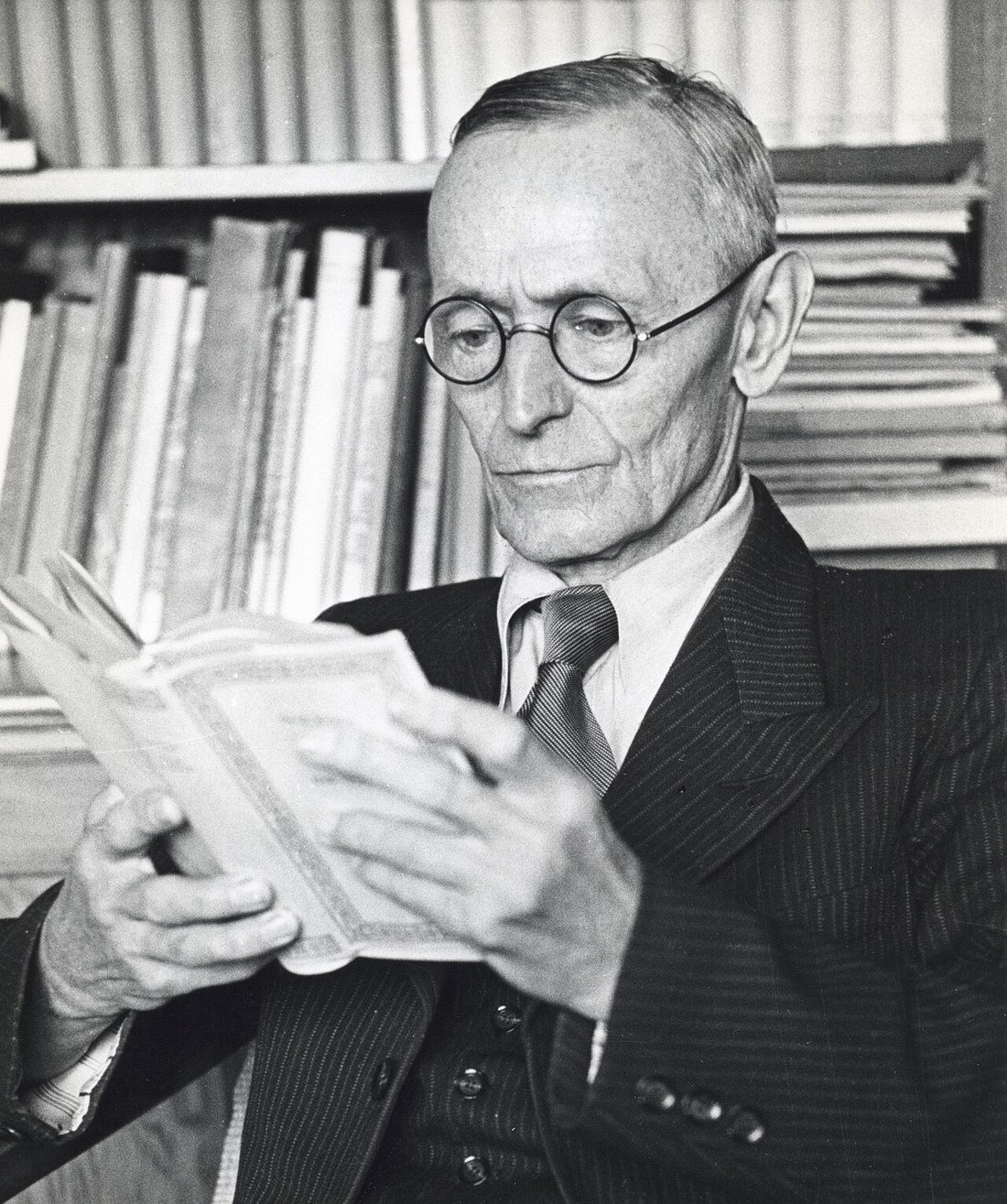
Hesse was born in Calw in 1877 into a family with missionary connections to India. An unsettled education was followed by work in bookshops and the gradual development of a literary career. His experience of discipline, religious expectation and intellectual independence supplied material for fiction concerned with the pressure institutions place on individual development.
The making of an individual voice
Early success with Peter Camenzind in 1904 established Hesse as a novelist. Beneath the Wheel examined education and conformity, while Demian, published in 1919, explored the formation of identity through an inward, symbolic narrative. These books differ in structure and setting, but repeatedly ask how a person can recognize convictions that are genuinely their own.
Siddhartha and Steppenwolf
Siddhartha appeared in 1922, drawing on Hesse’s engagement with Asian religious and philosophical traditions without functioning as a doctrinal textbook. Steppenwolf followed in 1927 with a very different urban and psychological setting. Read together, the novels show his use of contrasting narrative worlds to investigate division, self-knowledge and the limits of respectable social identities.
Switzerland and The Glass Bead Game
Hesse settled in Switzerland and became a Swiss citizen in 1924. The Glass Bead Game, published in 1943, imagines a scholarly order devoted to intellectual synthesis. Its account of Josef Knecht examines the relationship between cultivated inward life and responsibility beyond an institution. This tension complicates any reading of Hesse as simply advocating withdrawal from the world.
Nobel recognition and later readership
Hesse received the Nobel Prize in Literature in 1946 and died in Montagnola in 1962. Later translations brought his novels to new generations, including readers interested in individual freedom and spiritual exploration. His lasting appeal comes from the conflicts enacted by his characters, rather than from a single formula for personal transformation extracted from their stories.
Career timeline
Born in Calw.
Published Peter Camenzind.
Published Demian and moved to Montagnola.
Published The Glass Bead Game.
Awarded the Nobel Prize in Literature.
Selected works & milestones
Demian
A symbolic novel about identity and intellectual independence.
Siddhartha
A fictional journey through spiritual searching and experience.
Steppenwolf
A study of divided identity and bourgeois life.
The Glass Bead Game
An imagined intellectual order and its relationship with the world.
- Hermann Hesse — biographical chronology
- Nobel Prize — biographical record
- Nobel Prize — award and facts
- Biographical references and further reading
Published 2026-11-02. Sources reviewed for this edition. Independent coverage of public professional activity.